Case imagesEnlarge
Adhesive rehabilitation documented for teaching
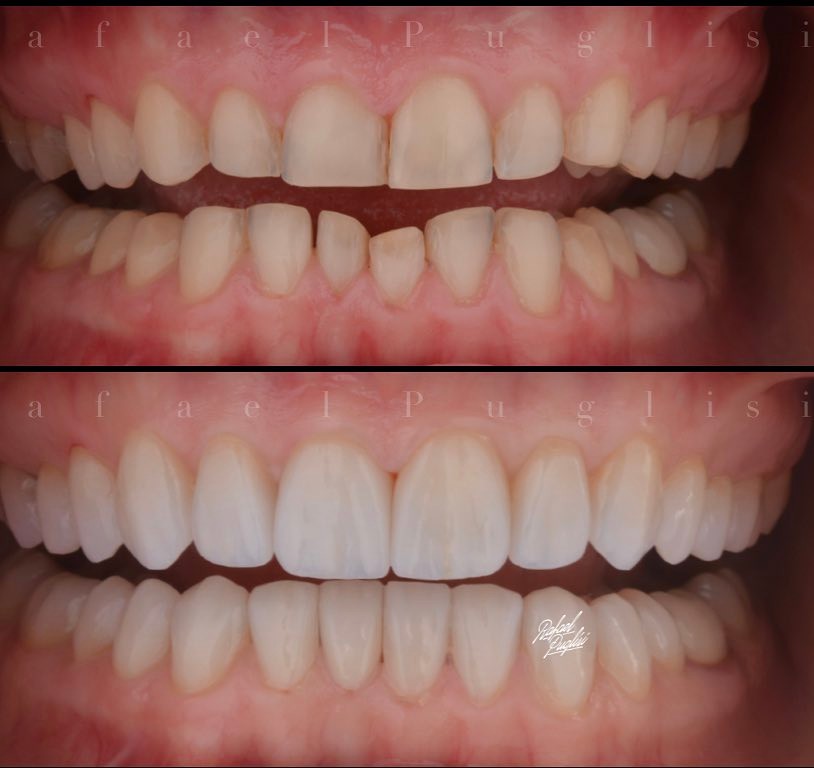
The full-mouth adhesive oral rehabilitation was also documented for the production of teaching material by the Institute’s team.
Sources
- Rafa Puglisi. Original publication.
Every smile has its own story. Explore treatments carried out at Instituto Rafa Puglisi and the care behind each case.
The full-mouth adhesive oral rehabilitation was also documented for the production of teaching material by the Institute’s team.
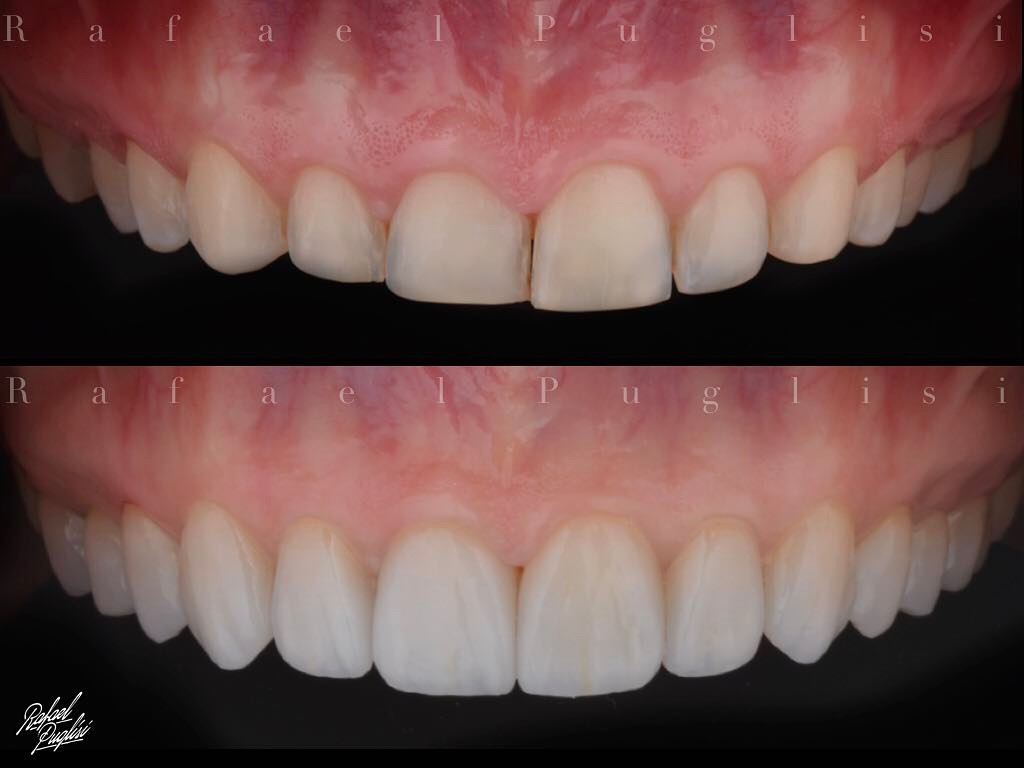
Treatment used 12 ultrathin dental veneers and functional planning in the restorative work. The montage records two frontal views of the upper teeth.
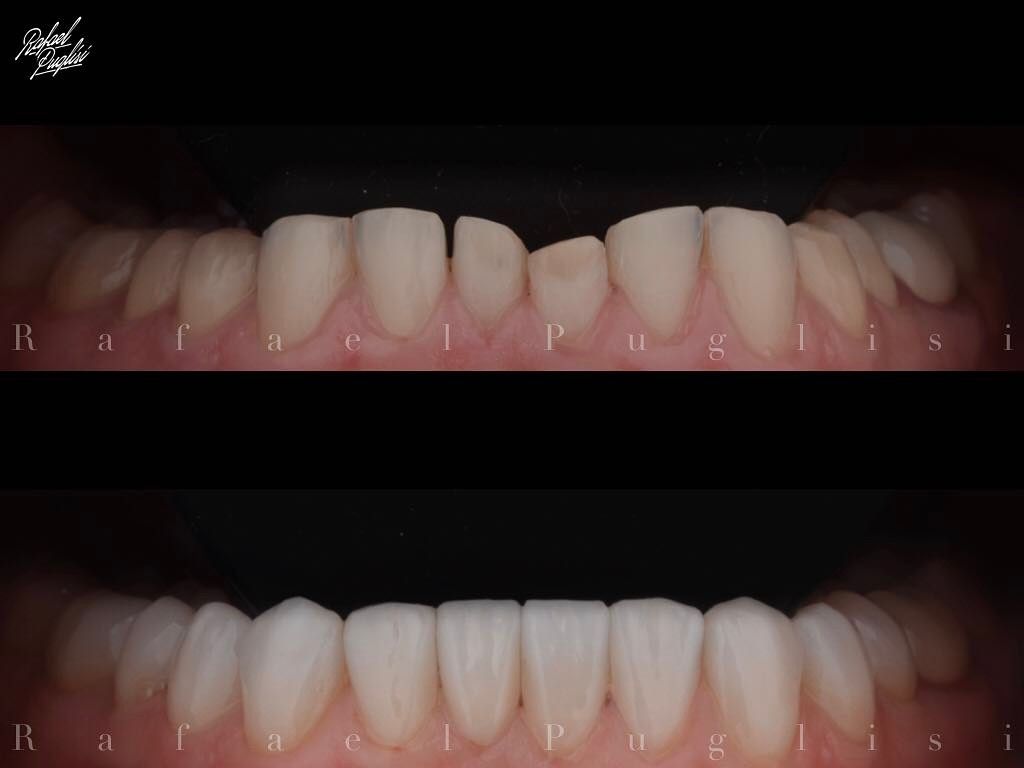
The ultrathin veneers for the lower teeth were planned by the oral rehabilitation team and finished by hand by Lab Puglisi. The montage brings together two views of that arch.
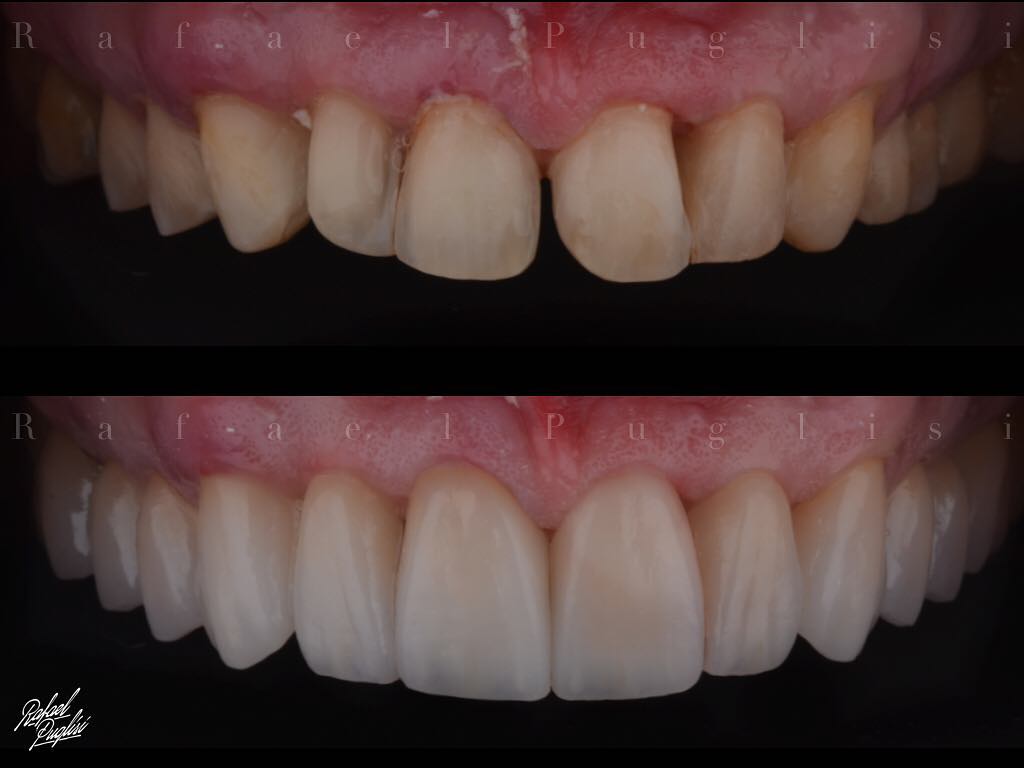
The smile reconstruction of a 57-year-old patient focused on function and aesthetics. The montage presents two records of the upper arch.
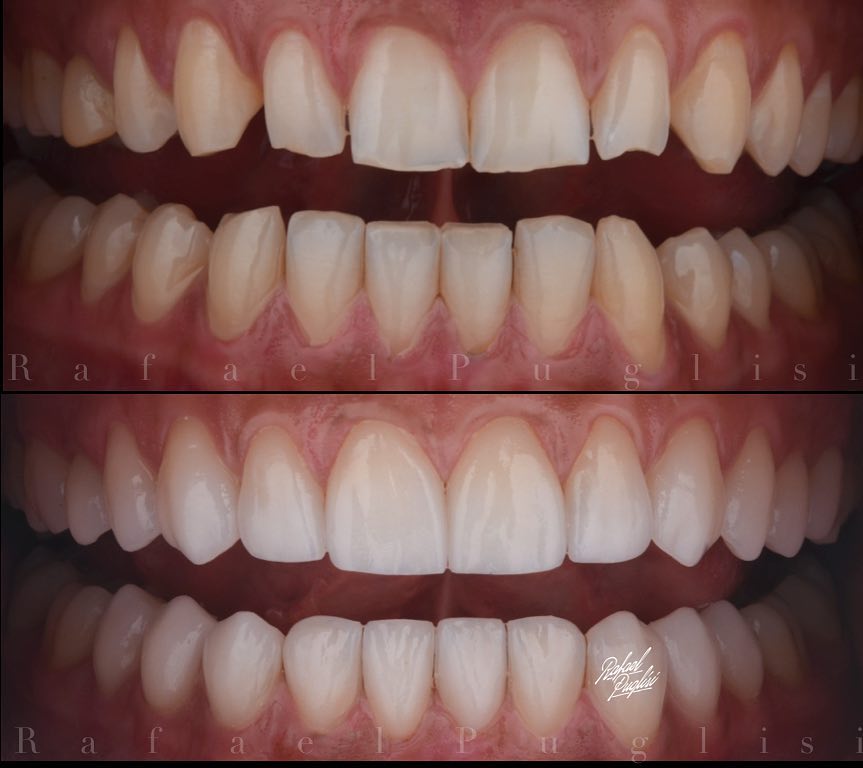
The full-mouth adhesive oral rehabilitation involved the clinical team and Lab Puglisi. The montage brings together frontal records of the upper and lower arches.
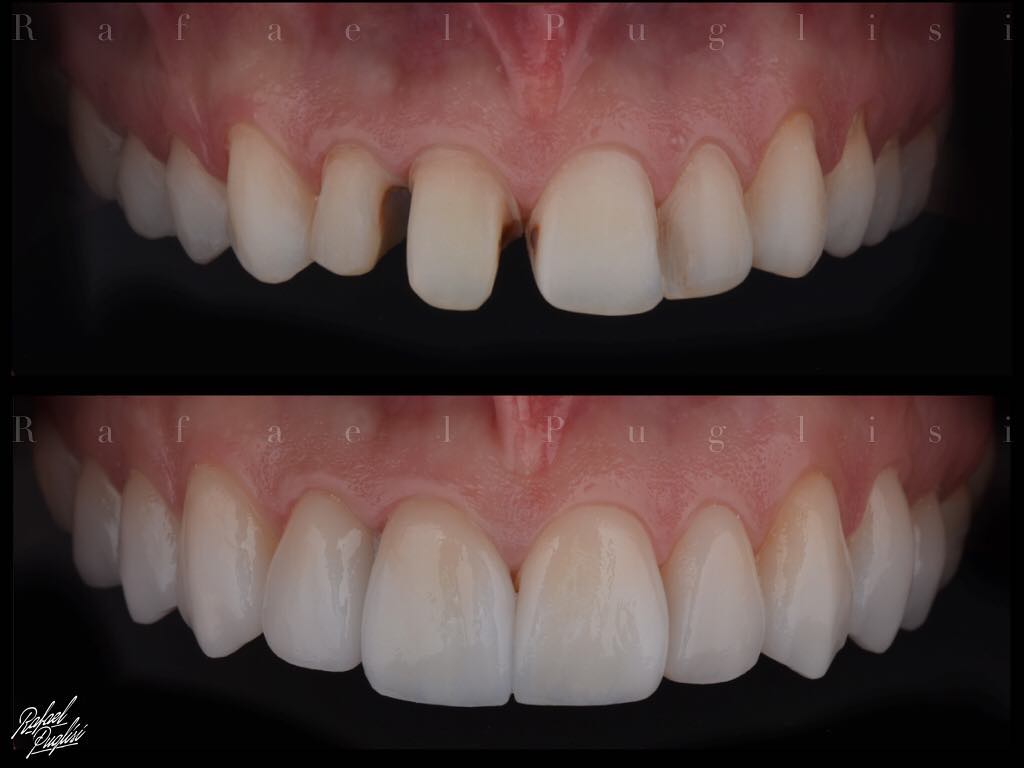
The case was carried out over three sessions, with cementation and stages documented in software during a live broadcast. The montage presents two records of the upper teeth.
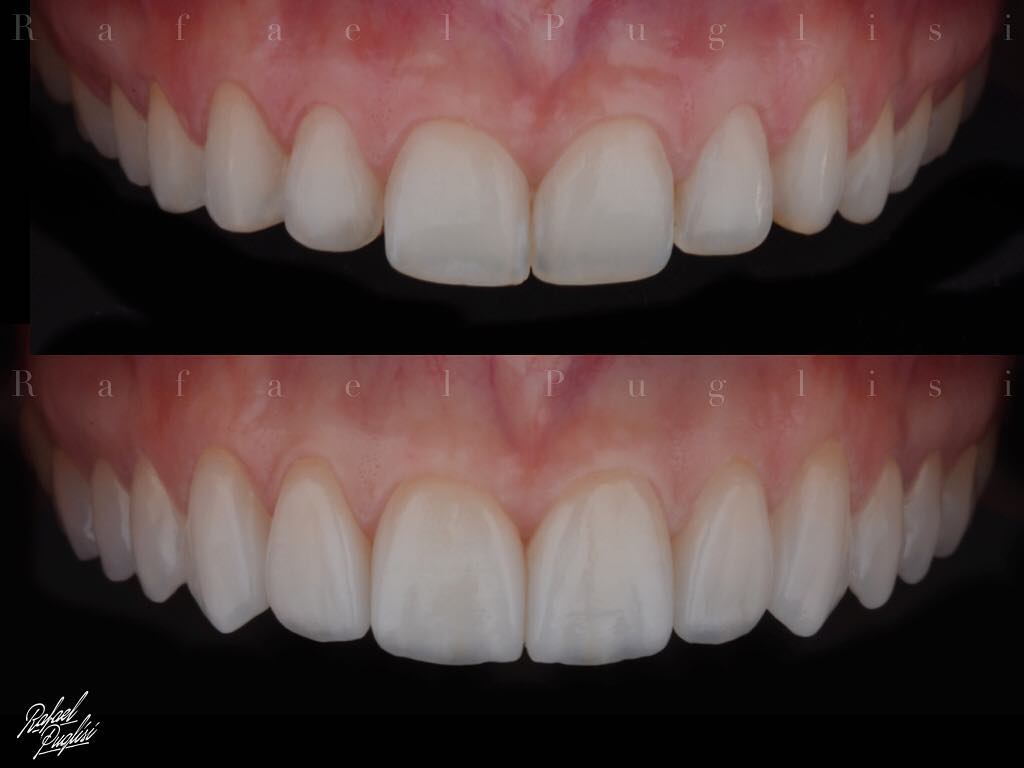
Treatment used micropreparations and ultrathin dental veneers produced by Lab Puglisi. It was carried out over three sessions and aimed to restore functional guidance.
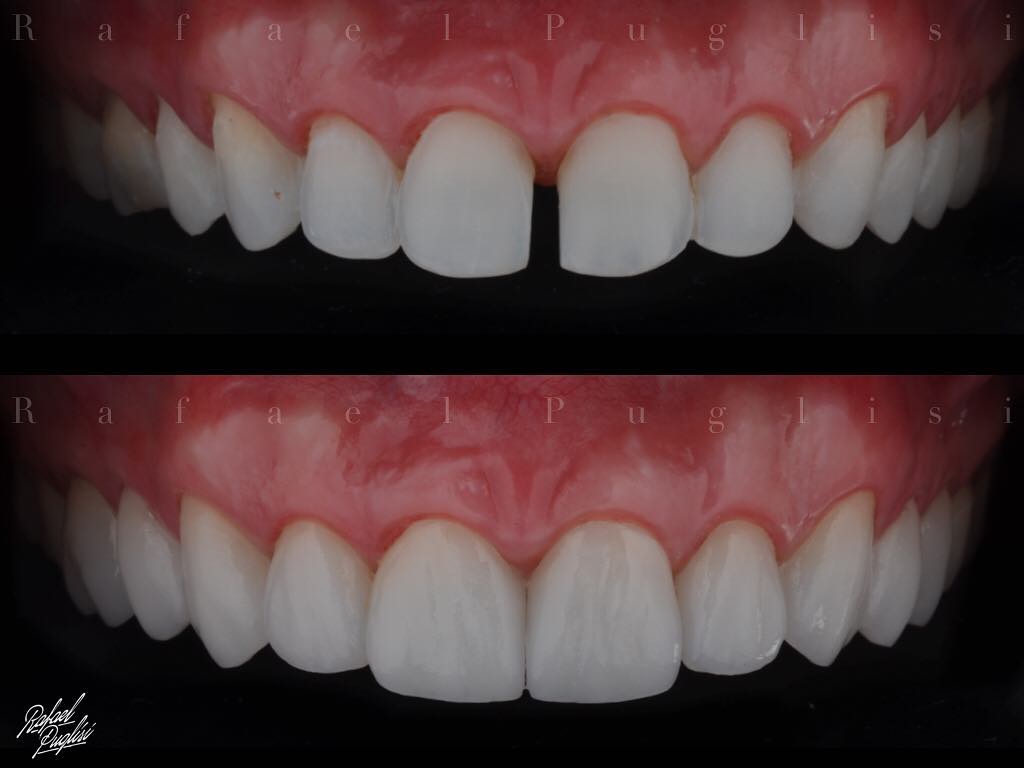
The patient had old additions of composite resin. The upper image records the moment after composite removal, and the lower image presents ten ultrathin dental veneers in the anterior teeth, produced by Lab Puglisi. An associated publication describes diastema closure in the composition of the smile.
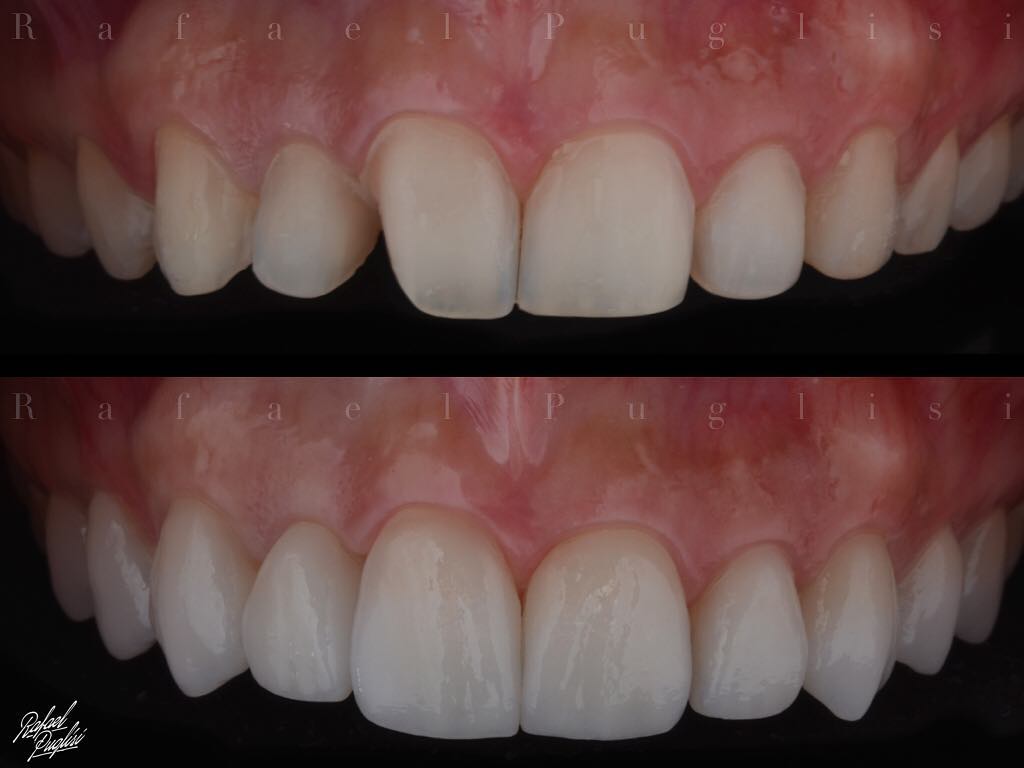
The correction with ultrathin dental veneers involved a case with old veneers on teeth 11 and 12. The extent of decay in those teeth required more invasive adjustments. The photograph was taken during the cementation session.
The complete case was carried out over three sessions, including adjustments to the teeth that already had old veneers.
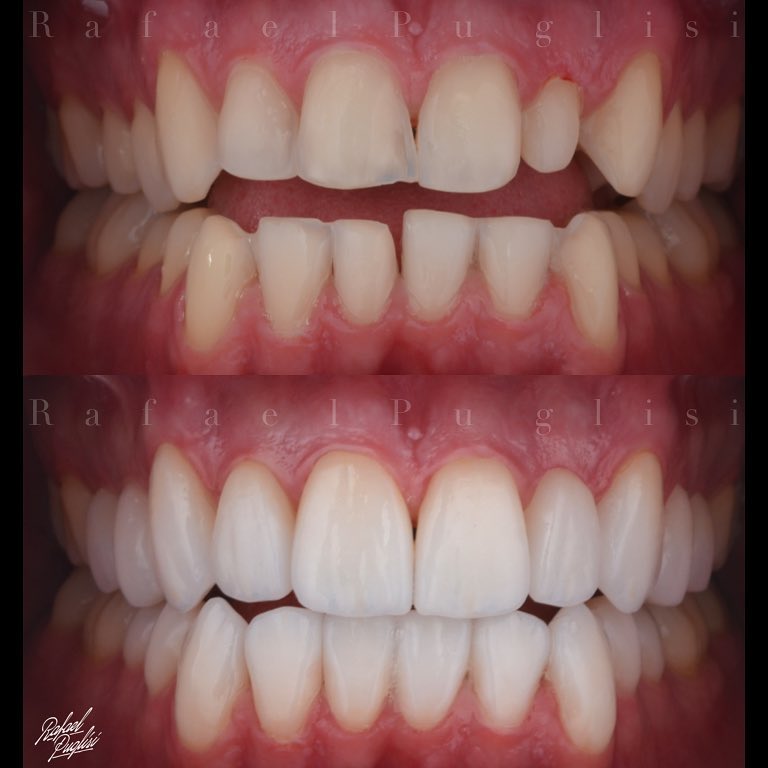
The patient was referred with crown discolouration, periodontal issues and old restorations. The multidisciplinary team continued care, which was completed with prosthetic work by Lab Puglisi.
The adhesive rehabilitation was carried out without metals.
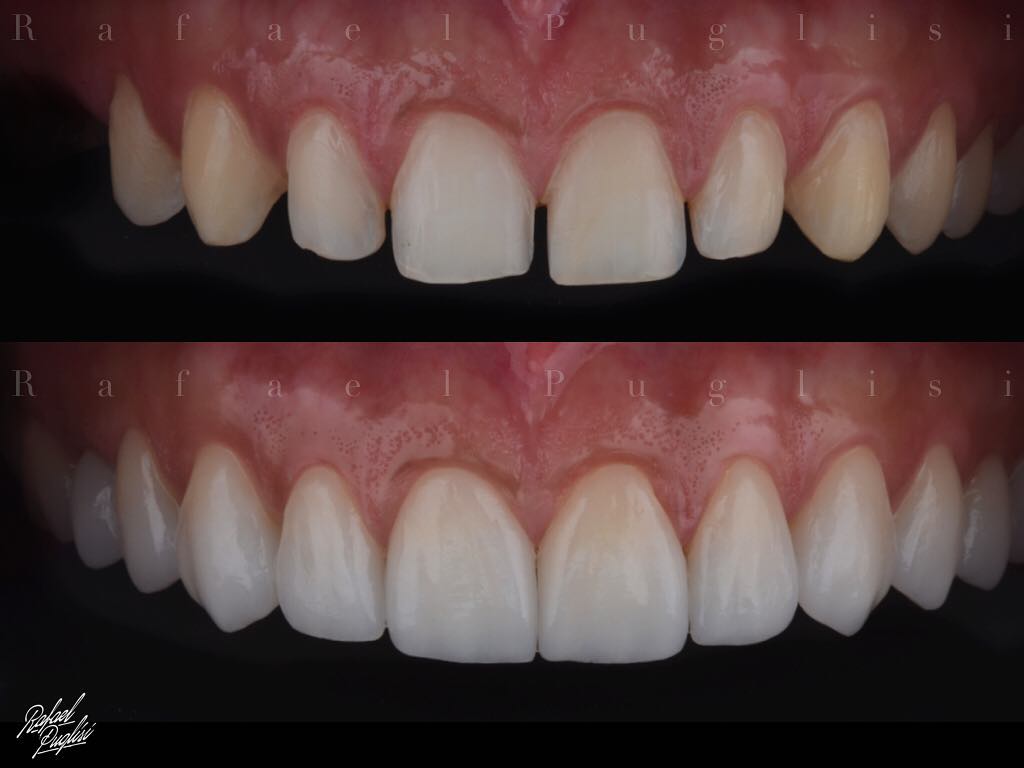
The patient sought the team’s care because of problems with the fit of ultrathin dental veneers after two years. The account identifies one photograph taken just after removal and another immediately after cementation of the new pieces.
Another publication of the montage describes the first frame as after removal of composite resins, with the teeth still unprepared, and the second as the presentation of the ultrathin dental veneers.
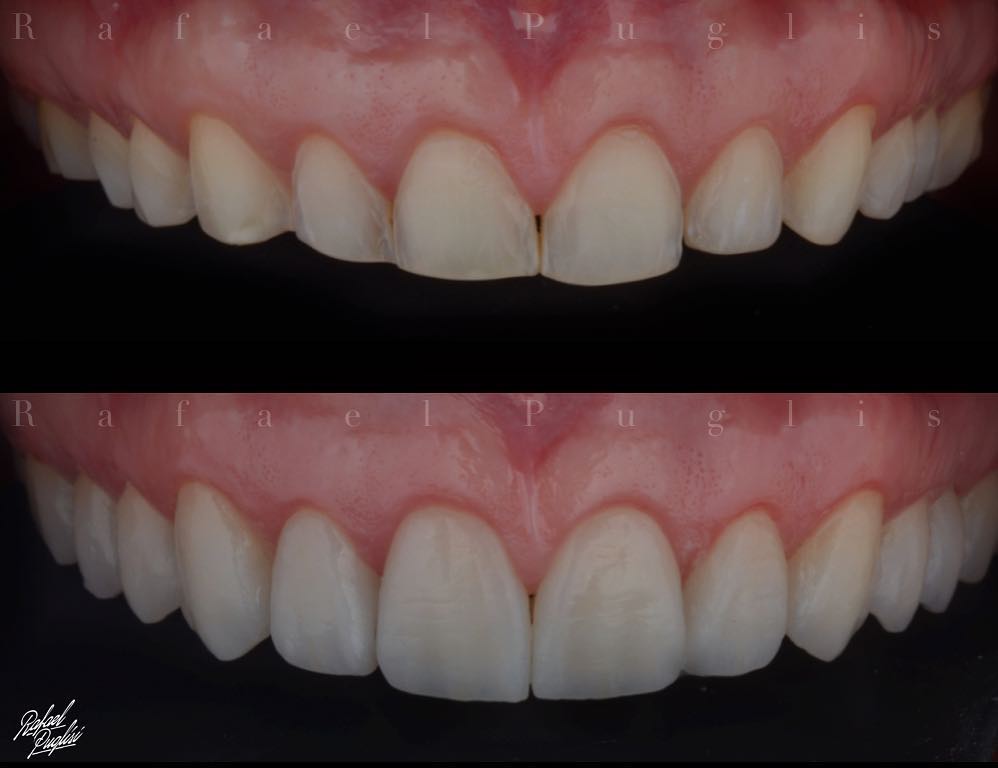
Treatment with ultrathin dental veneers focused on smile composition and functional correction. The case was carried out in three sessions over three weeks.
Care begins by understanding you. Talk to the team and book your assessment.
Each treatment has an individual indication. The images show specific cases, and results vary from person to person.