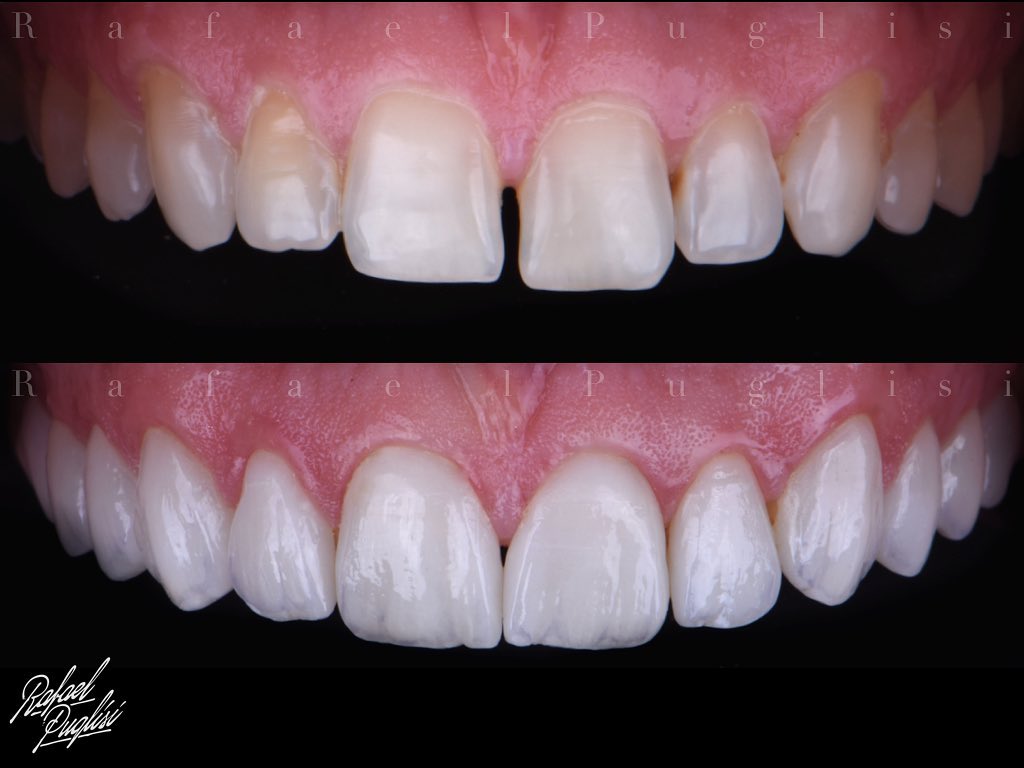
Case imagesEnlarge
Veneers produced in the institution’s laboratory
The ultrathin dental veneers were produced in the institution’s laboratory. Two photographs compare the upper teeth.
Sources
- Rafa Puglisi. Original publication.
Every smile has its own story. Explore treatments carried out at Instituto Rafa Puglisi and the care behind each case.
The ultrathin dental veneers were produced in the institution’s laboratory. Two photographs compare the upper teeth.
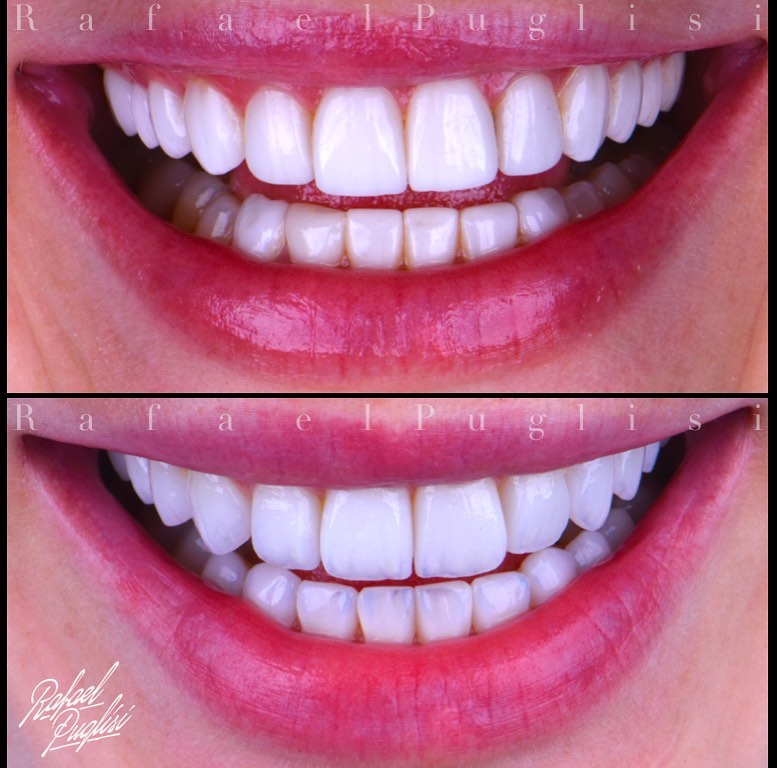
The retreatment with laser involved 24 ultrathin dental veneers produced in the institution’s laboratory.
The intended change in the set of 24 pieces focused on the appearance of the white shade. The reported aim was to replace an effect considered artificial with an appearance closer to natural tooth colour.
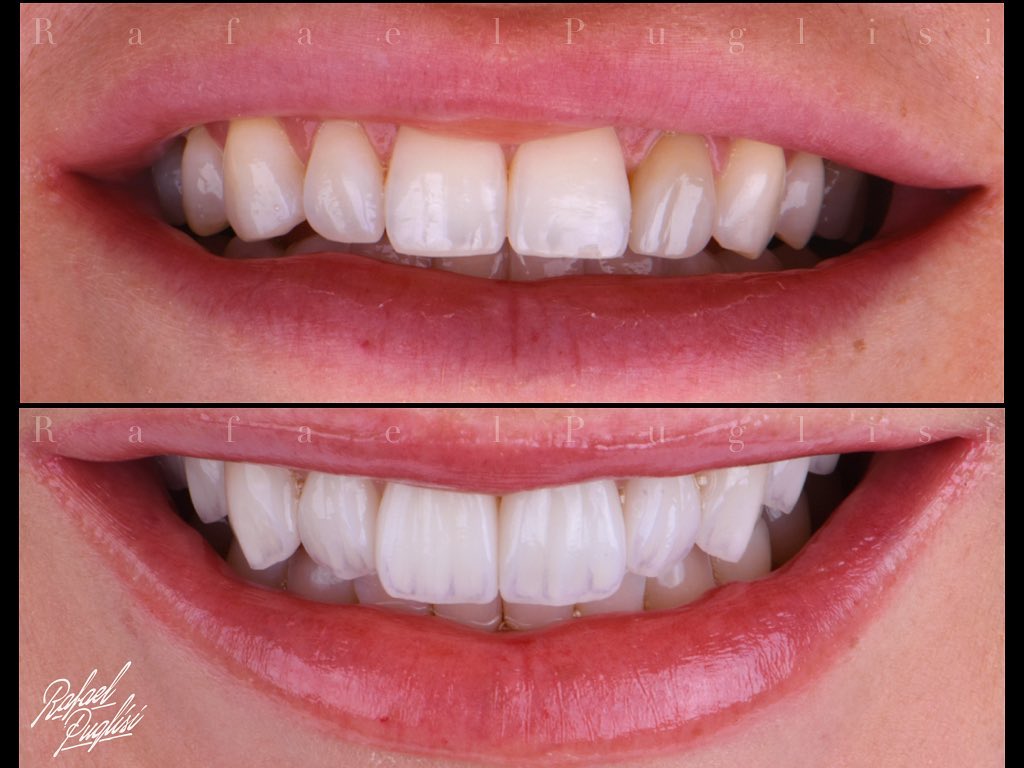
The patient wished for white teeth with natural features. Planning aimed to mask two lateral incisors darkened after root canal treatment and to work on transparency at the edges of the ceramics.
The patient also approved the proposed tooth anatomy presented for treatment. This choice used version R2.0 of Rafael Puglisi’s digital library as a reference, bringing shape definition together with masking the darkened lateral incisors.
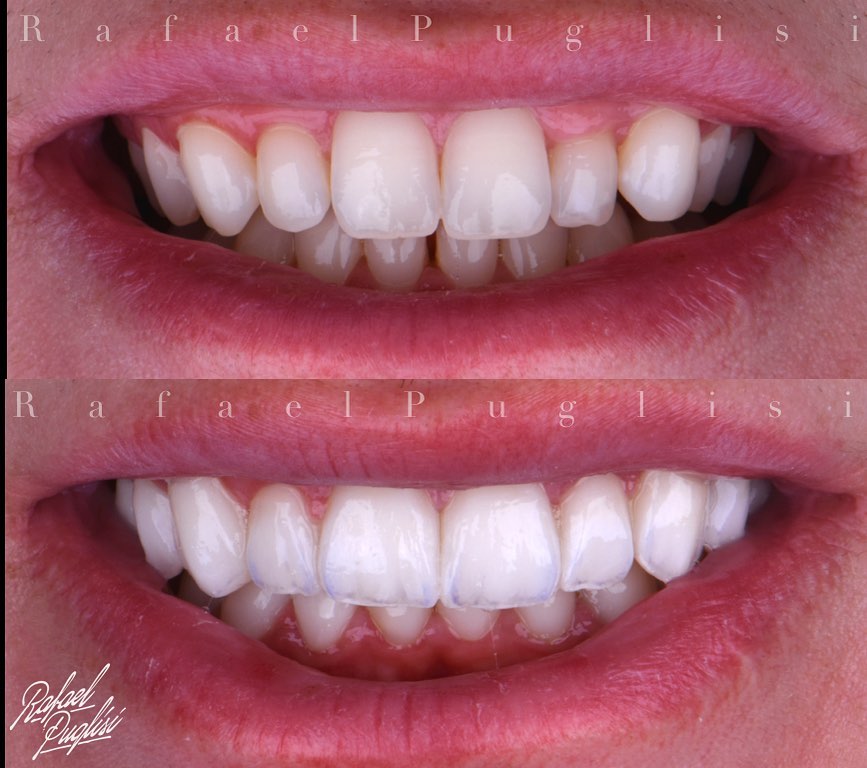
Treatment combined gum reshaping with bone intervention and ceramic veneers. Planning also considered lateral bite movements.
For the ceramic pieces, the proposal included whiter teeth with transparency and translucency. These attributes were worked on alongside gum intervention and planning of lateral movements, forming the aesthetic and functional aspects described for this case.
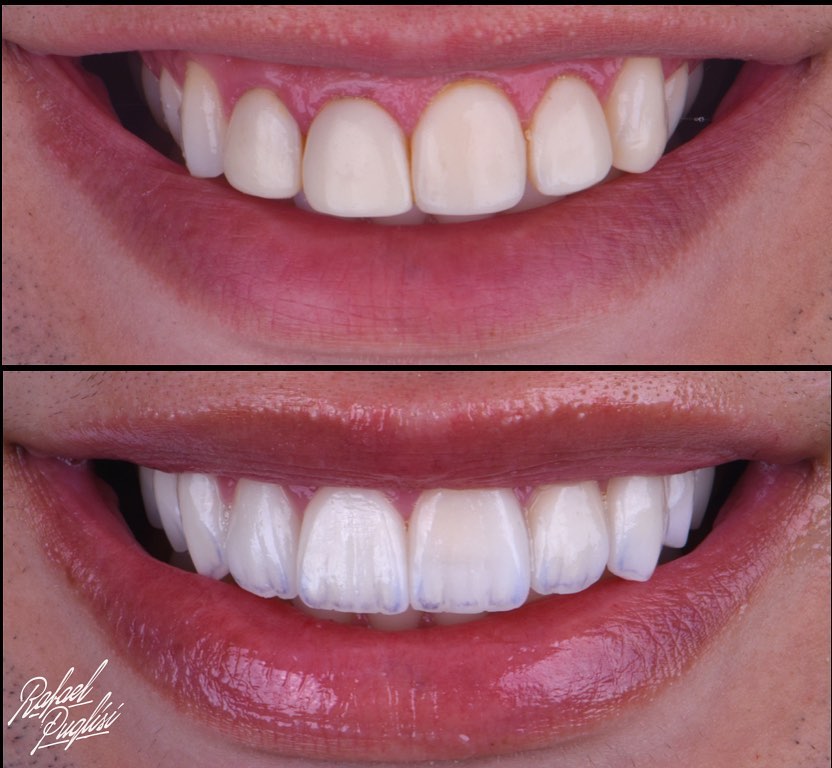
Treatment involved removal of composite resins, gum reshaping and new ceramics. Planning included reducing overcontour and working on the optical properties of the pieces.
Optical work on the new pieces addressed texture, transparency, opalescence and translucency. Reducing overcontour was part of the same proposal to revise the restorations, together with gum reshaping.
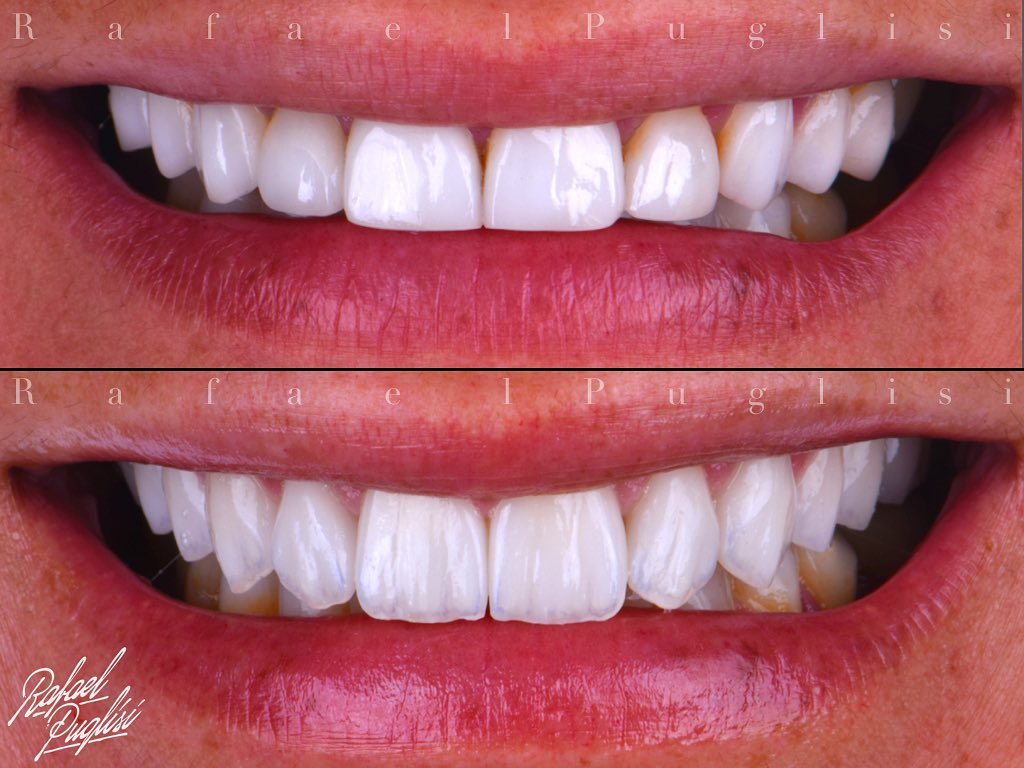
The patient sought retreatment because of dissatisfaction with the appearance of the restorations and reported leakage. Care included removing the veneers with laser and replacing them with ceramics.
The dissatisfaction included a white shade considered excessive and a lack of transparency in the previous pieces. The replacement proposal aimed to revise these aesthetic characteristics, as well as functional issues and the reported leakage.
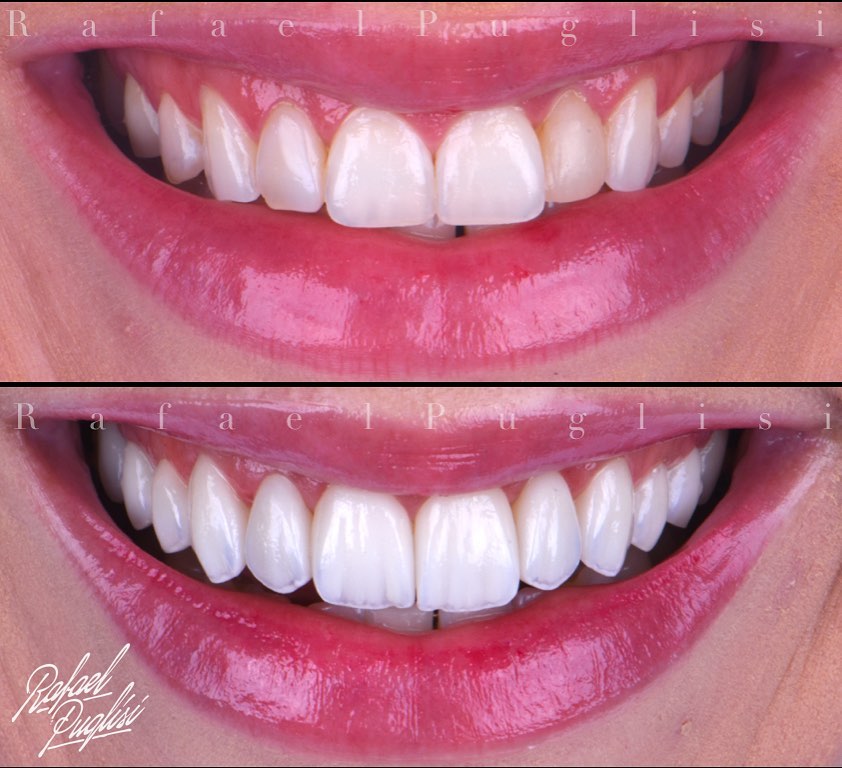
Treatment combined ultrathin dental veneers and gum reshaping, with involvement of the institution’s laboratory.
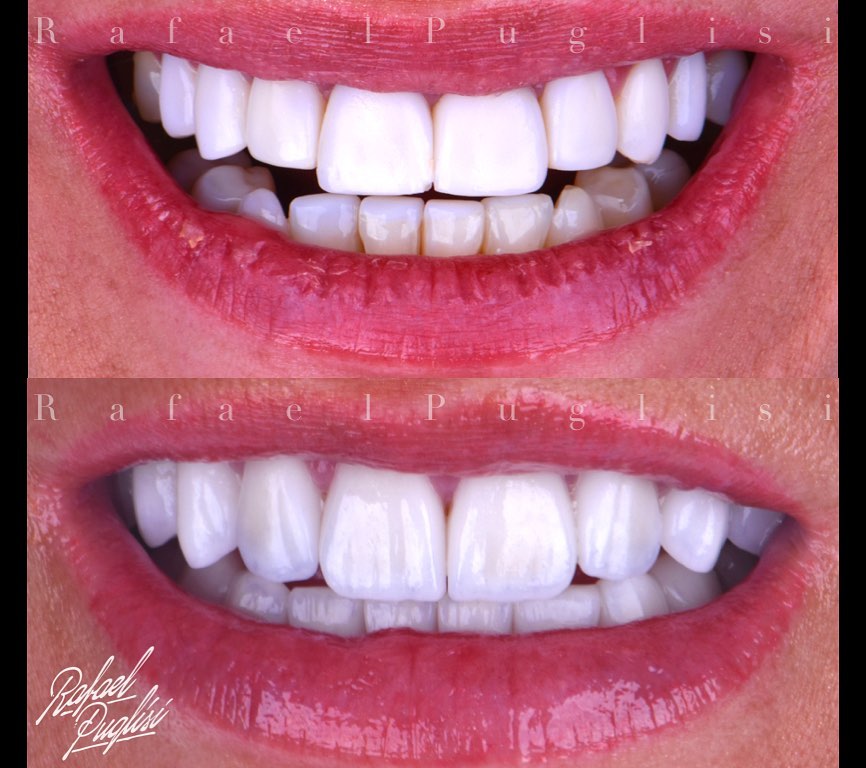
Two frontal images of the smile document retreatment.
The aesthetic aim of retreatment was to revise the appearance of the white shade, seeking an outcome perceived as more natural. The change was presented as revision of existing work.
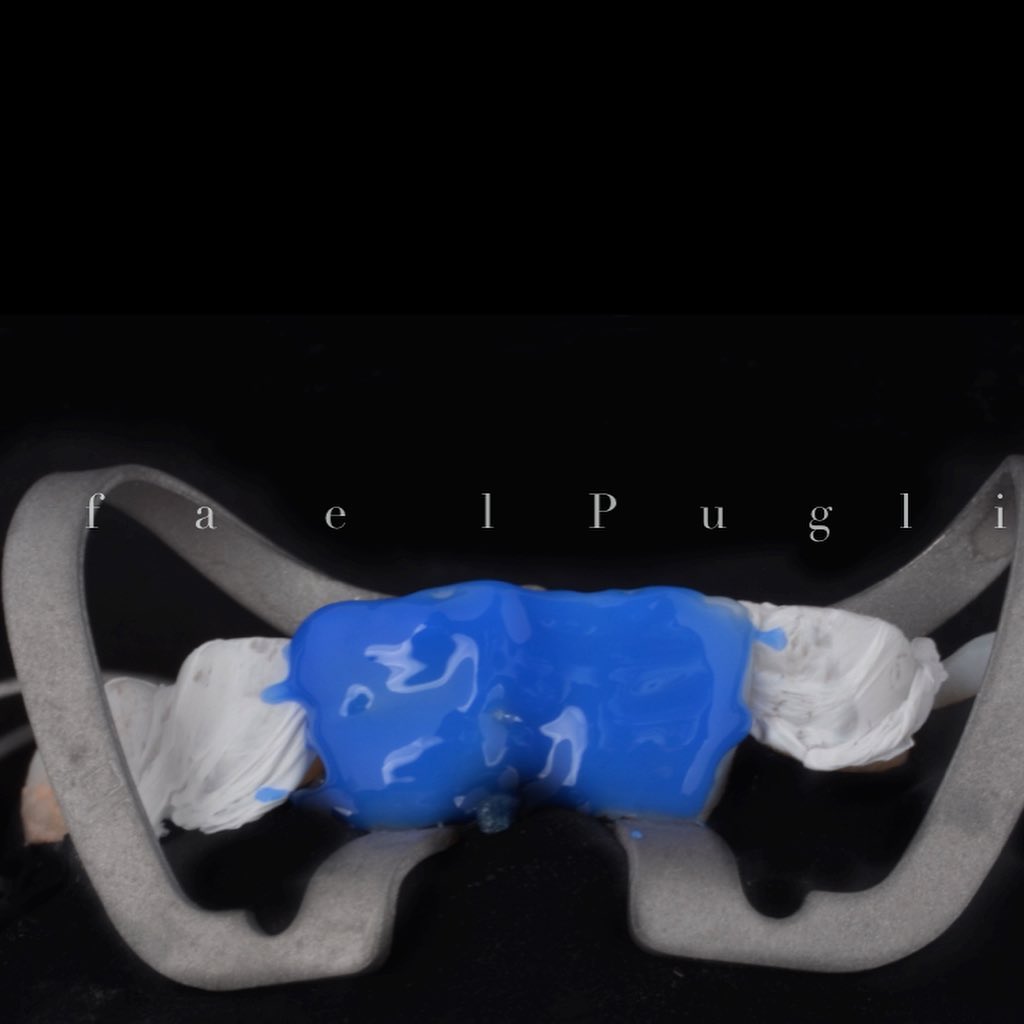
The clinical sequence documents rubber dam isolation of the teeth with modified clamps, followed by cementation of the restorations.
The clamps used for isolation were modified and air-abraded, according to the description of the clinical stage. This technical detail forms part of the documented preparation before cementation.
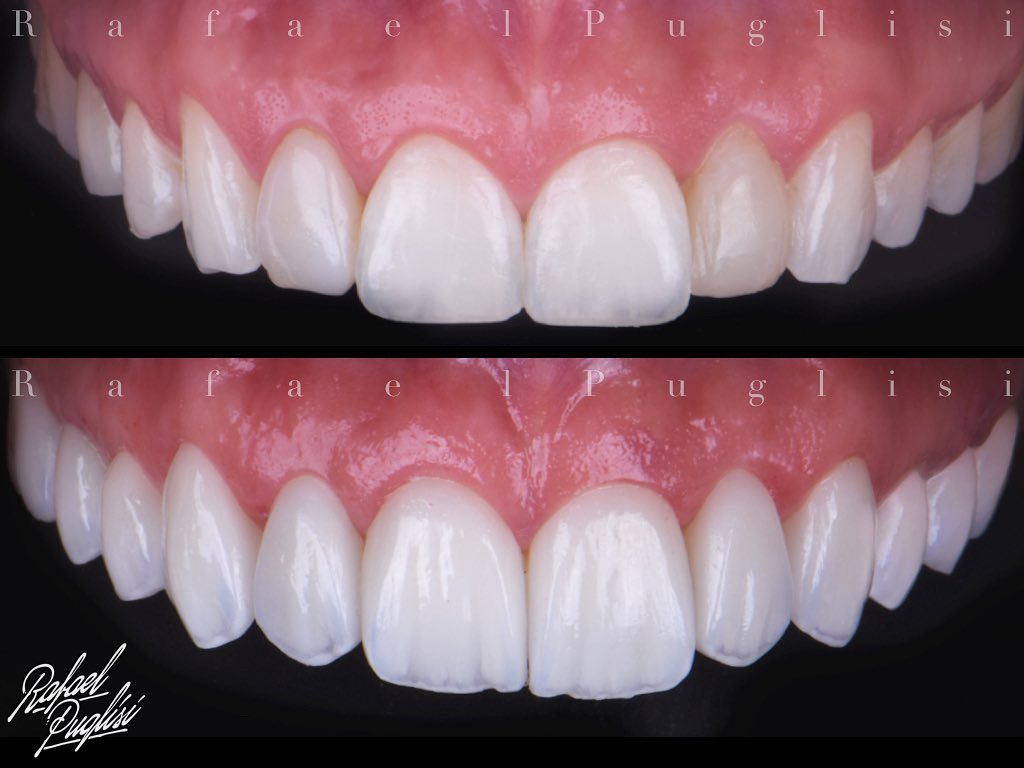
Treatment with 12 ceramic veneers was planned and produced in the institution’s laboratory. Two frontal views document the upper teeth.
Fabrication of the 12 ceramic pieces included texture, transparency and opalescence. These details were highlighted in planning so that the choice of white teeth would preserve visual characteristics of natural teeth.
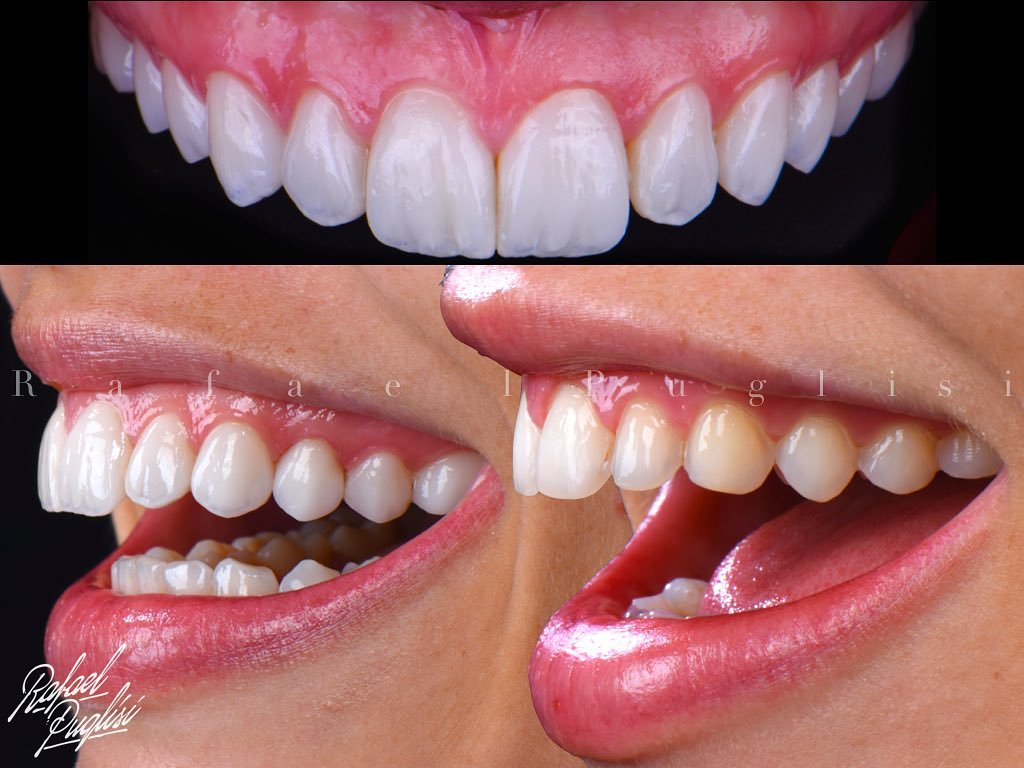
Replacement of existing work is documented in one frontal and two lateral views of the smile.
In the retreatment description, attention focused on preserving the already prepared teeth, the gingival margin and guidance of bite movements. The revision was presented with these preservation and functional criteria, in addition to replacement of the previous work.
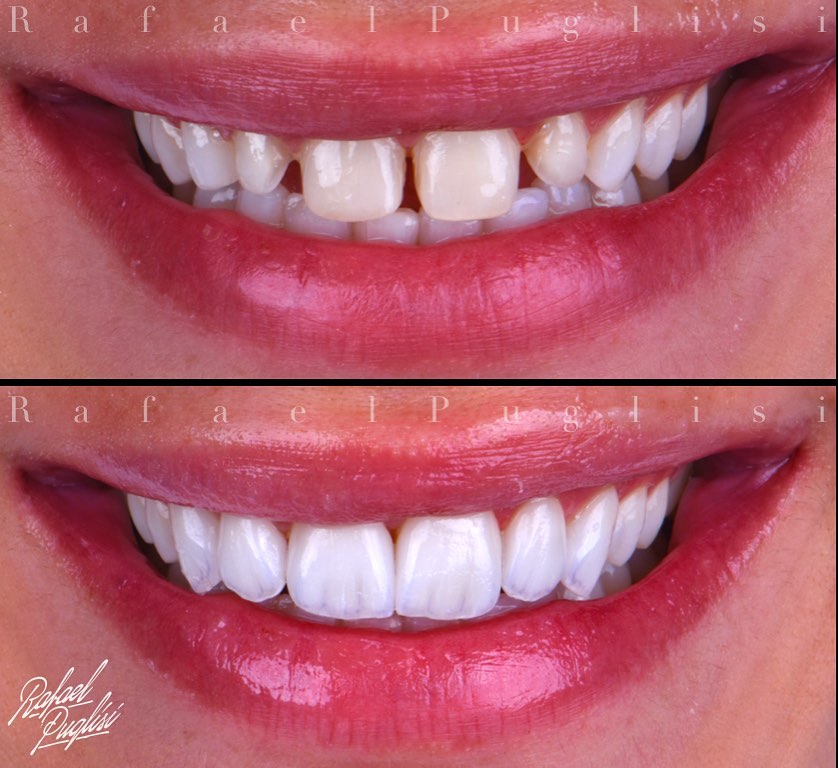
The patient sought retreatment because of aesthetics, the fit of the pieces, function and gum health. Care involved removal with an Er:YAG laser, finishing of the preparations and veneers between the upper canines.
The removed restorations had been used to close spaces between the teeth. After removal, finishing with rubber polishers and tips included redefining the preparation finish lines, before fabrication of the new veneers in the institution’s laboratory.
Care begins by understanding you. Talk to the team and book your assessment.
Each treatment has an individual indication. The images show specific cases, and results vary from person to person.