Are an implant and a prosthesis the same?
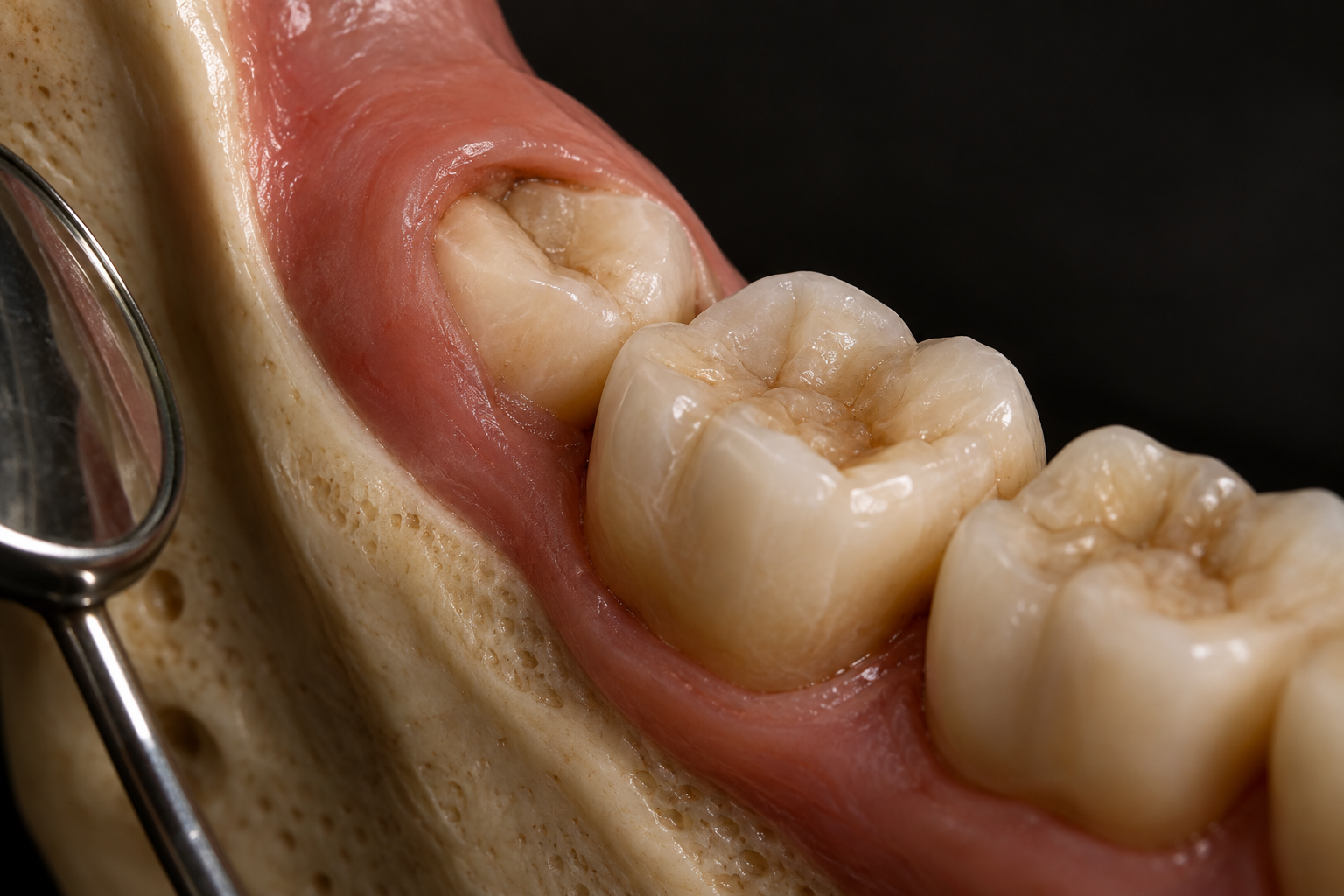
No. The implant is the component placed in bone. The prosthesis replaces the visible part of the tooth or teeth and connects to the implant through components established in planning. A fixed prosthesis may also be supported by natural teeth, depending on the case.
Is guided surgery indicated for everyone?
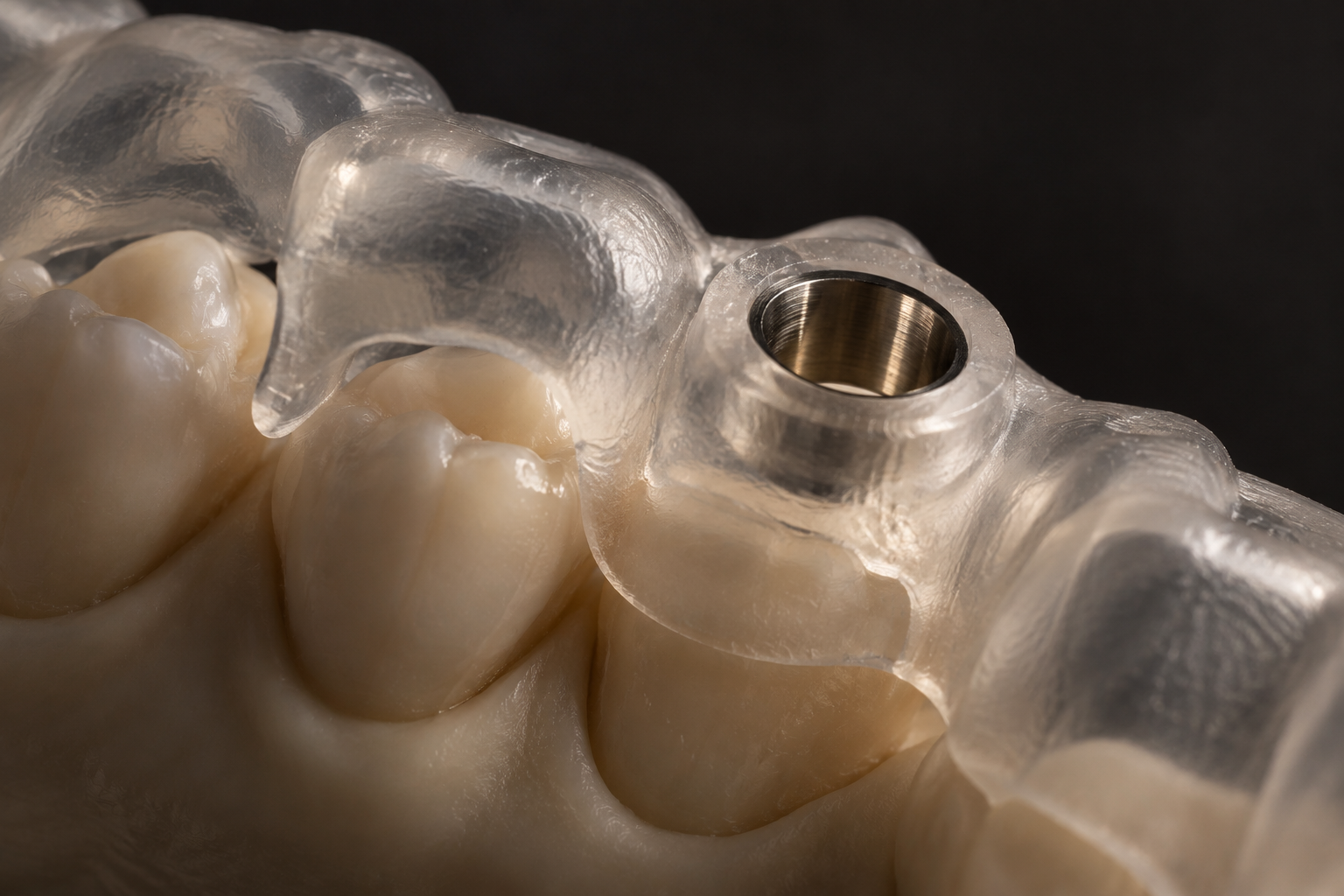
No. It may be useful in selected situations, but suitability, guide type, access and technique depend on anatomy, the planned prosthesis, available records and professional assessment.
Does the guide make implant position exact?
There is no perfectly exact transfer. Studies find deviations between planned and achieved positions. Safety margins and checks during the procedure are therefore used. [4]
Are CT and scanning always needed?
Examinations and records are recommended according to the clinical question and technique being considered. Guided planning usually depends on three-dimensional and digital information, but that does not turn a particular examination into a universal rule for everyone.
Can I leave with fixed teeth on the same day?
In selected cases, a temporary prosthesis may be fitted early. This depends on stability, bone, implant distribution, forces, grafting needs and prosthesis design. It is not a promise that applies to everyone. [5][6]
How long does treatment take?
There is no single timeframe. Assessment, any preliminary care, surgery, healing, the temporary restoration, definitive prosthesis and adjustments form a process that varies by case.
What if there is little bone?
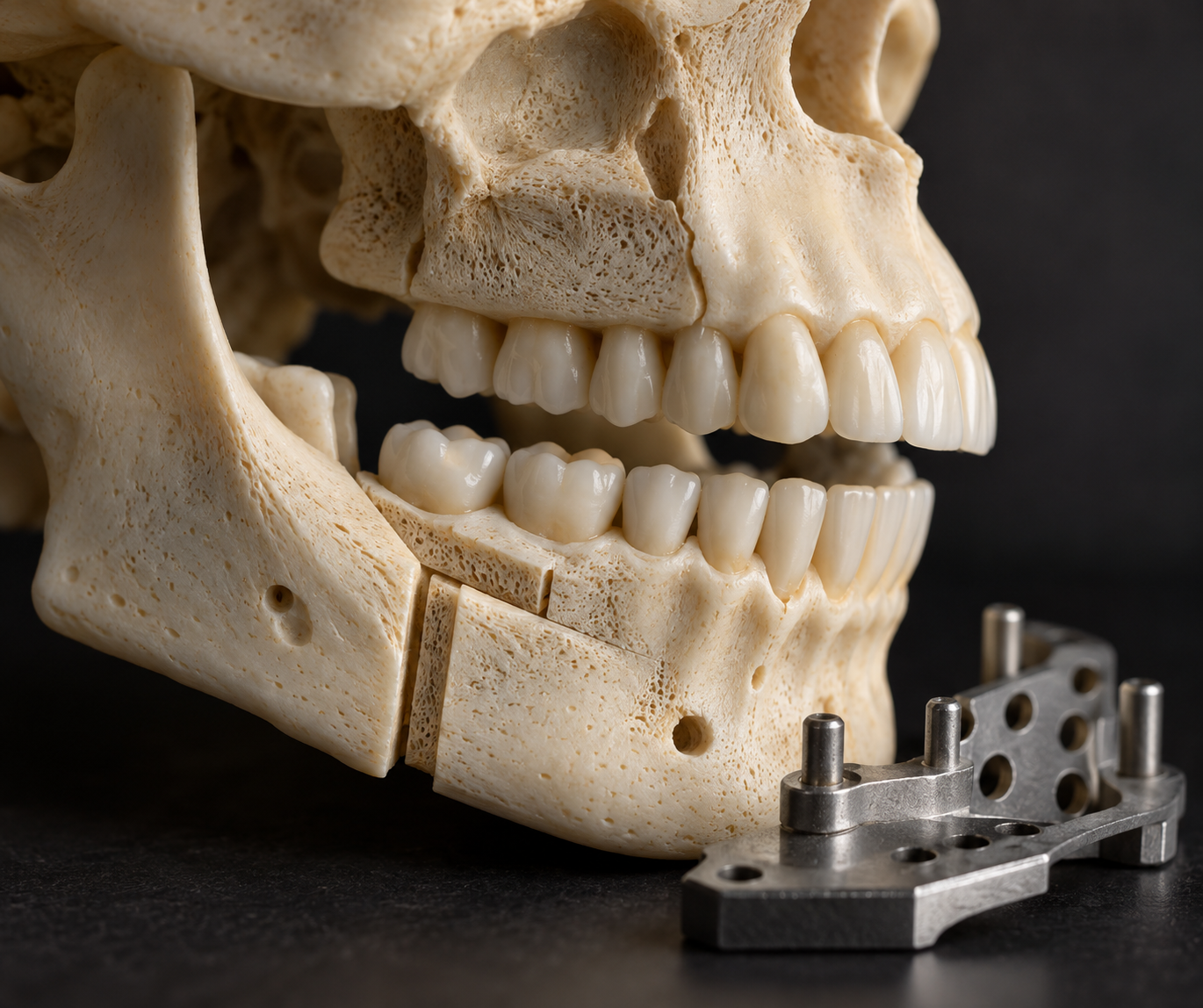
Assessment considers bone volume and quality, prosthetic position and alternatives. Grafts, changes to the plan or another form of rehabilitation may be discussed, without a universal solution.
Do implants need maintenance?
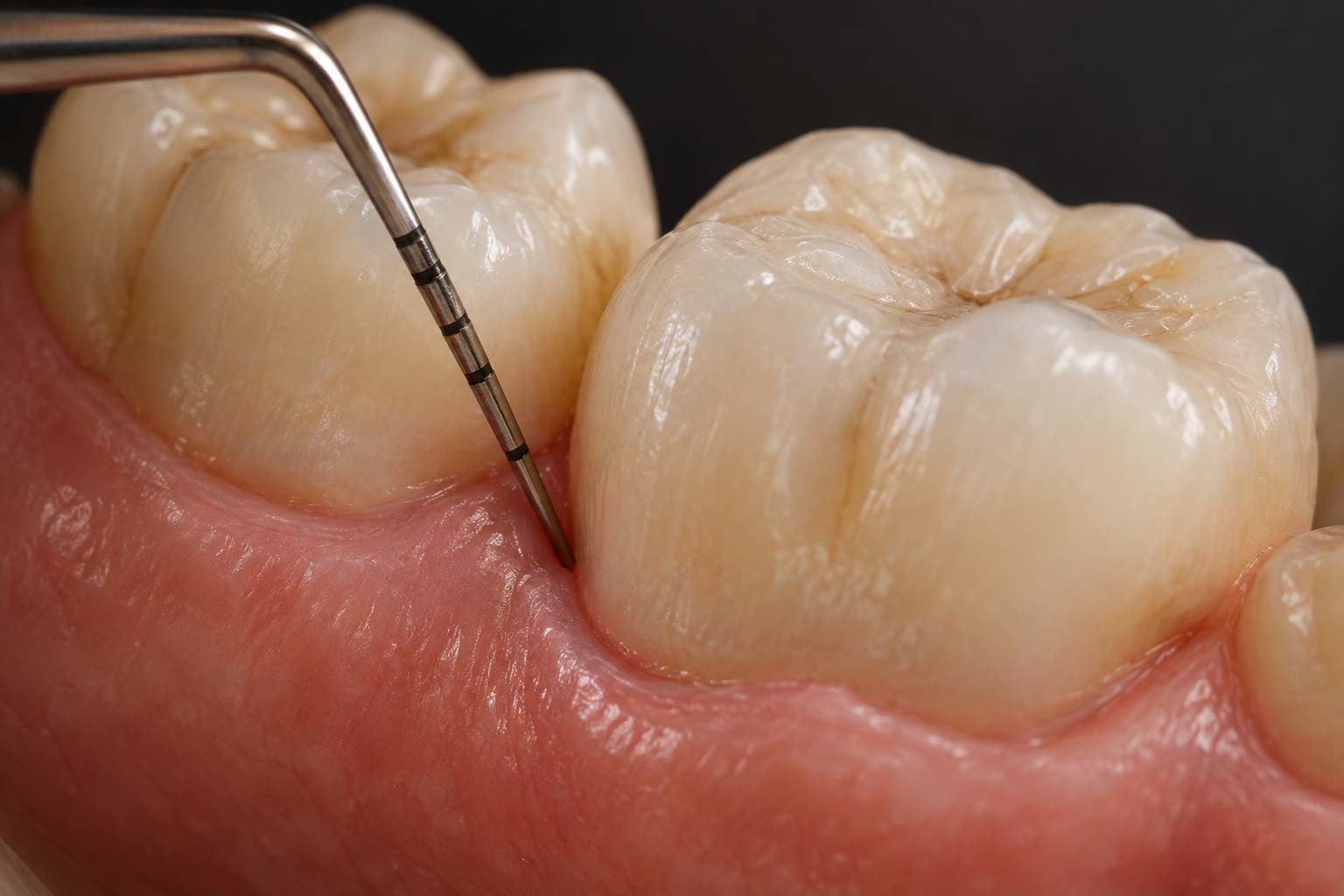
Yes. Daily hygiene and periodic follow-up are part of treatment. Intervals, examinations and care are tailored to tissues, prosthesis, risk factors and history. [2][3]
How long does a dental implant last?
A dental implant's longevity depends on appropriate planning, bone integration, hygiene, gum health, absence of overload, control of systemic disease and periodic follow-up. Professional maintenance is essential to preserve treatment.
Is a dental implant worthwhile?
A dental implant may be a good option to replace missing teeth, improve chewing, restore comfort and contribute to self-esteem. Suitability depends on general health, bone structure, gums, the patient's habits and rehabilitation planning.
Does getting an implant hurt?
The surgery is done under local anaesthesia. In the first days there may be pain, swelling and discomfort, managed with the instructions and medication indicated. In a study of patients followed after surgery, pain dropped considerably in about 3 days, and swelling in 4 to 5 days. [7]
How many days of rest after an implant?
Many people return to light activities within a few days, but the time varies with the number of implants, the area of the mouth and any associated procedures. The team advises on rest, eating and returning to activities for each case. [7]
What types of implants are there?
Implants differ in material, shape and the moment the prosthesis is placed, which may be after healing or, in selected cases, early on. They can also support one tooth, several teeth or a full arch. The choice depends on the bone, the planned prosthesis and general health. [5]
How much does a dental implant cost?
The cost depends on the number of implants, the prosthesis, tests, any grafts and the follow-up. It is presented after the assessment, once the plan is defined. Treatment can be paid in up to 21 credit card instalments, depending on the treatment plan and current conditions.