↗ PT

Other pages are available in Portuguese

Skip to content

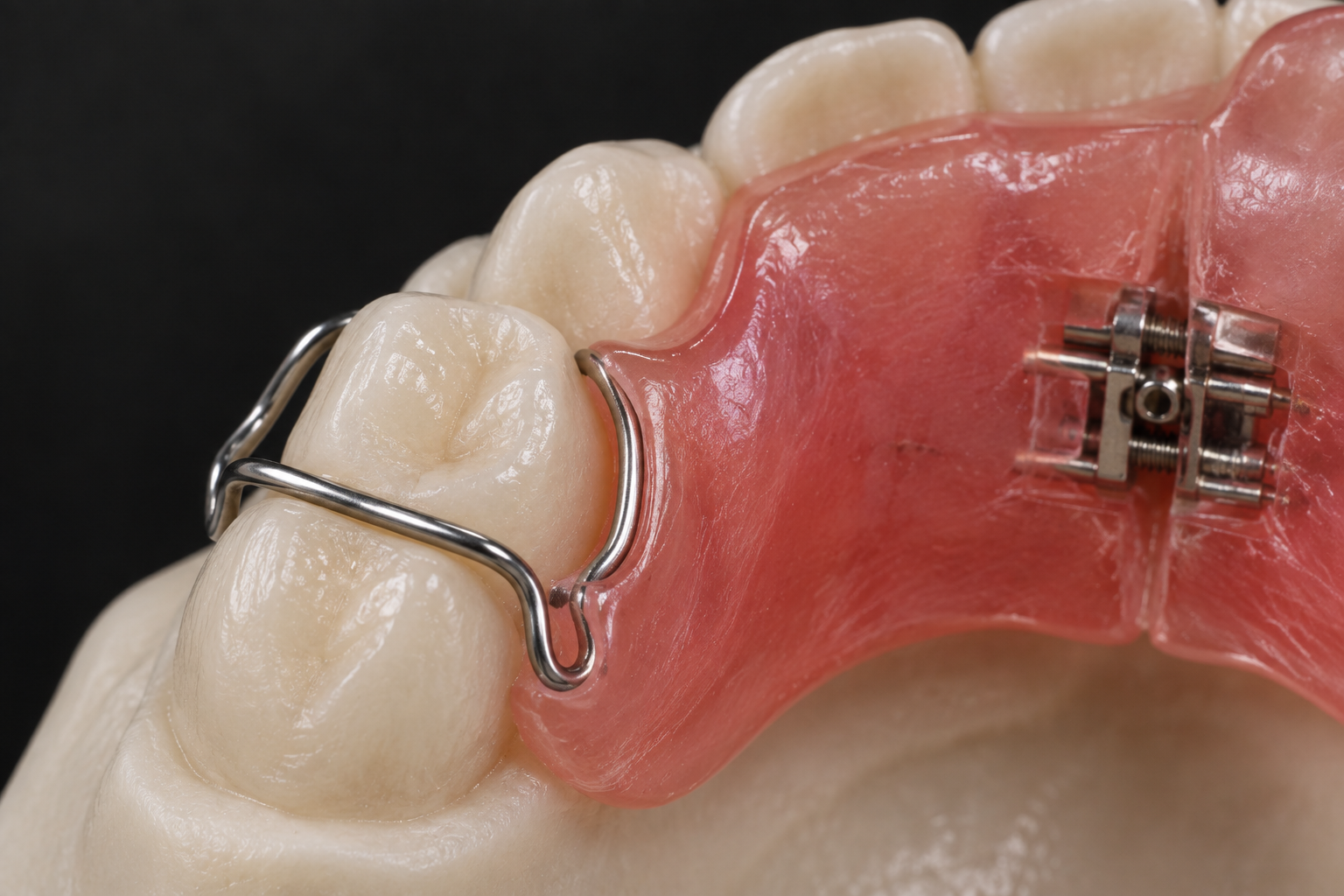
Removable orthodontic appliances

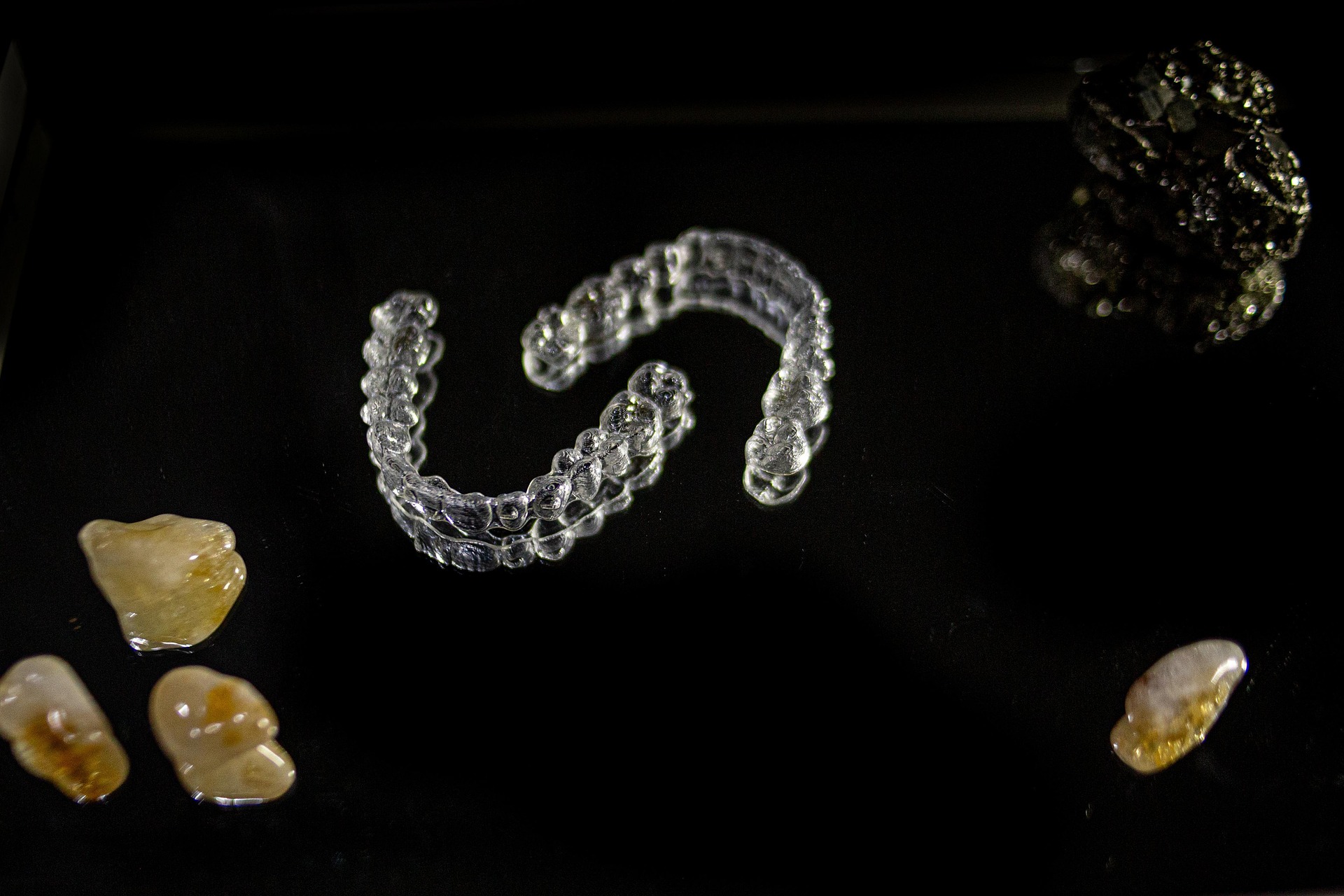
Illustration of three models of removable appliances in recesses.

Not every removable appliance does the same job. There are functional appliances, active appliances and retainers. Assessment determines which resource makes sense and when.

Book an assessment

Functional, active or retention: purpose guides the choice.

One family. Three purposes.

The term 'removable appliance' covers different resources. They are not interchangeable and do not address every type of movement. [2] [3]

  1. Functional

    Works with the upper and lower teeth at the same time. It may help correct certain bite relationships during growth.

  2. Active

    Uses components designed for limited goals, such as simple movements or specific corrections. Complex movements may require a different approach.

  3. Retention

    Helps maintain positions after the active phase. Its main role is stability, rather than replacing the treatment that moved the teeth.

The name does not choose the appliance. Diagnosis does.

Before recommending a removable resource, the team considers what needs to change and the context in which treatment will take place. [1]

Dentition
Which teeth have erupted and their stage of development.
Bite
How the arches and contacts relate at rest and during function.
Growth
When development can play a part in the clinical strategy.
Aim
Whether the plan aims to guide, move, maintain or combine resources.
Routine
Whether the person can follow the wear schedule, hygiene, storage and follow-up instructions.

There is a time for each goal.

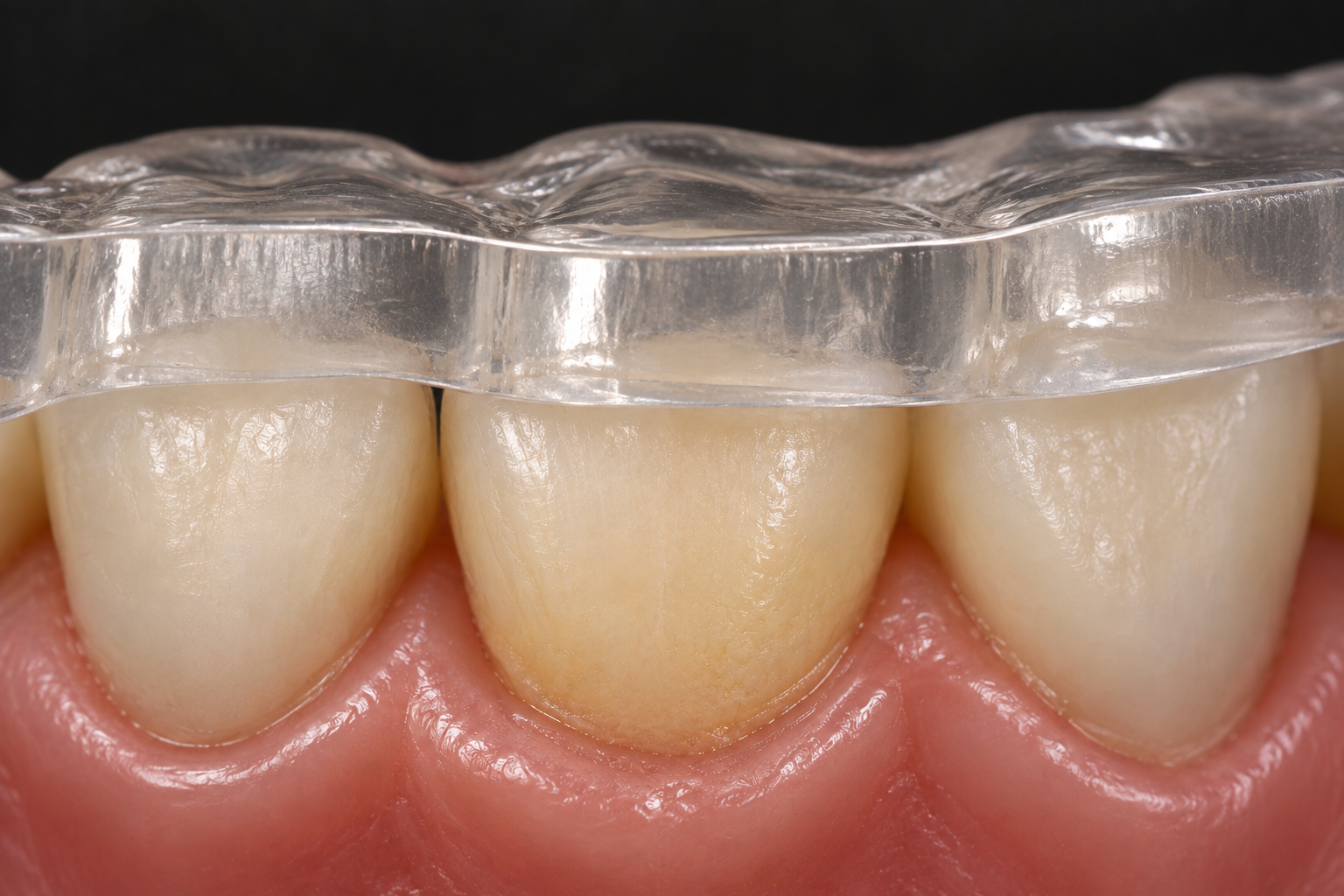
Illustration of upper and lower removable appliances.

Functional appliances may be indicated for some growing people to address particular bite relationships. The outcome does not depend only on starting early. Diagnosis, developmental stage, individual response and cooperation influence the decision. [1] [3] [5]

Earlier does not automatically mean better. The timing needs to make sense for that particular problem.

The illustrations on this page are conceptual artworks. They do not represent specific appliances, procedures or clinical cases.

The appliance leaves your mouth. The commitment remains.

With removable appliances, the outcome may depend directly on hours of wear. Studies using objective measurement show that actual wear is often less than prescribed or reported. [4] [6]

  1. Prescribe

    The team determines when to wear it and when to remove it. There is no universal number of hours.

  2. Adapt

    Speech, saliva and sensitivity may change at the beginning. Adaptation should be monitored.

  3. Follow up

    Follow-up appointments assess fit, response, hygiene, wear and the need for adjustment.

  4. Review guidance

    Difficulties with wear need to be discussed. Hiding the problem does not help the plan.

When it leaves your mouth, it becomes part of a routine.

Illustration of a removable appliance stored in a case.

Hygiene, eating, sport and storage vary according to the appliance. The team's instructions take priority over generic lists.

  • clean teeth and appliance using the technique advised.
  • keep it in a rigid case whenever it is out of your mouth.
  • do not adjust wires, screws or components yourself.
  • bring the appliance to follow-up appointments, even if you are finding it difficult to wear.
  • report any breakage, distortion, injury or loss of fit.

Breakages, losses and long periods without wear may affect treatment. [2]

The old wording stays. The guidance changes.

This page began in 2015 with a short sentence. It is preserved as a historical record, but does not represent the Institute's current clinical guidance.

'We are against fixed braces because they damage tooth enamel.'

Today, the choice is not treated as a contest between formats. Removable appliances, fixed braces and clear aligners have different indications, requirements and limitations.

The risk to enamel and gums is not determined solely by the appliance's name. Hygiene, diet, oral health and follow-up matter in any orthodontic treatment.

Benefits only make sense when limitations are clear.

Removable appliances may form part of useful, conservative plans. They also depend on conditions that need to be discussed before starting.

Not every movement is possibleSome goals are limited or require fixed braces, aligners or combined resources.

Wear is part of treatmentIf the appliance is not worn as prescribed, the response may be reduced or the plan may need to change.

Adaptation variesPressure, sensitivity, changes in speech and increased saliva may occur at first.

The appliance may break or get lostWires, acrylic and fit need to be protected. Problems should be reported.

A second phase may be neededIn some cases, the removable appliance prepares for or accompanies another orthodontic stage.

Stability continues afterwardsRetention and follow-up may be needed after active tooth movement.

Broken, lost or no longer fitting?

Do not force it, adapt it at home or wait silently until your next appointment. Contact the team for guidance appropriate to your appliance.

Contact the Institute

Frequently asked questions

Are removable appliances only for children?

No. Some functional appliances depend on growth and are often used in children or adolescents. Retainers and other removable resources may also form part of adult care. Purpose is more important than the label.

How many hours a day do I need to wear it?

It depends on the appliance and the goal. The team explains the wear routine and may adjust it throughout treatment. Do not adopt someone else's schedule.

Can I remove it to eat?

Some appliances are worn during meals and others should be removed. Follow the instructions for your particular appliance. When it is out of your mouth, keep it in its rigid case.

Is it normal for speech to change at first?

Yes. Changes in speech and increased saliva may occur in the first few days. If adaptation does not progress or the appliance causes injury, tell the team. [2]

Does a removable appliance hurt?

Pressure and sensitivity may occur, particularly after fitting or an adjustment. Severe, persistent pain or a sore area should be reported.

Is a removable appliance better than fixed braces or aligners?

There is no universal winner. Each resource addresses different movements, stages and routines. Diagnosis comes before appearance or the ability to remove it.

What should I do if I lose or break the appliance?

Contact the team as soon as possible. Do not try to glue it, bend wires or adapt its fit yourself. [2]

How long is a removable appliance worn?

It depends on the purpose. Appliances that use growth usually accompany a stage of development, active appliances accompany the planned movements, and retention may continue for a long time afterwards. The team gives an estimate at the assessment and reviews it during treatment. [2]

How much does a removable appliance cost?

The cost depends on the purpose, the type of appliance and the follow-up appointments. It is presented after the assessment. Treatment can be paid in up to 21 credit card instalments, depending on the treatment plan and current conditions.

Beyond aesthetics, we are a multidisciplinary clinic.

Explore options

Care takes place here

Across more than 400 m², seven consulting rooms and an integrated in-house laboratory bring together different stages of care at the same address. Discover the Institute.

A history in dentistry since 1923 connects generations with care today. Explore the Institute's history.

Documentary portrait of Dr Silvana Puglisi

Dr Silvana Puglisi is the dentist responsible for technical oversight. Meet our professionals who continue to provide care and carry on the work of LAB Puglisi.

Spacious reception at the Institute with artwork by Kobra
Lounge with green armchairs, artwork and a garden visible through the glass doors
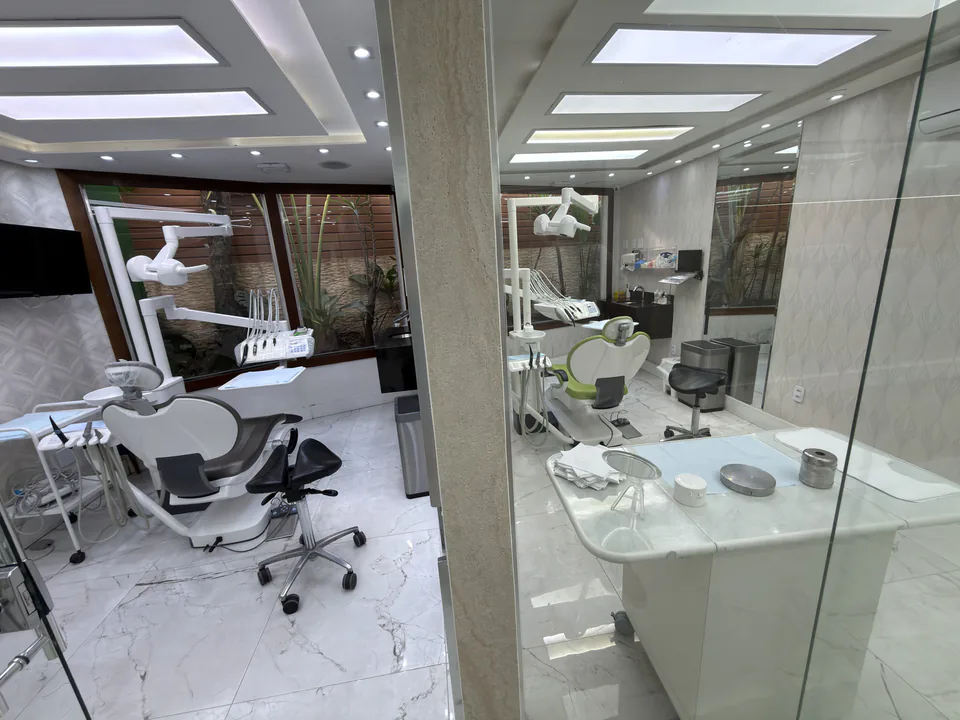
Two dental consulting rooms connected by a glass partition
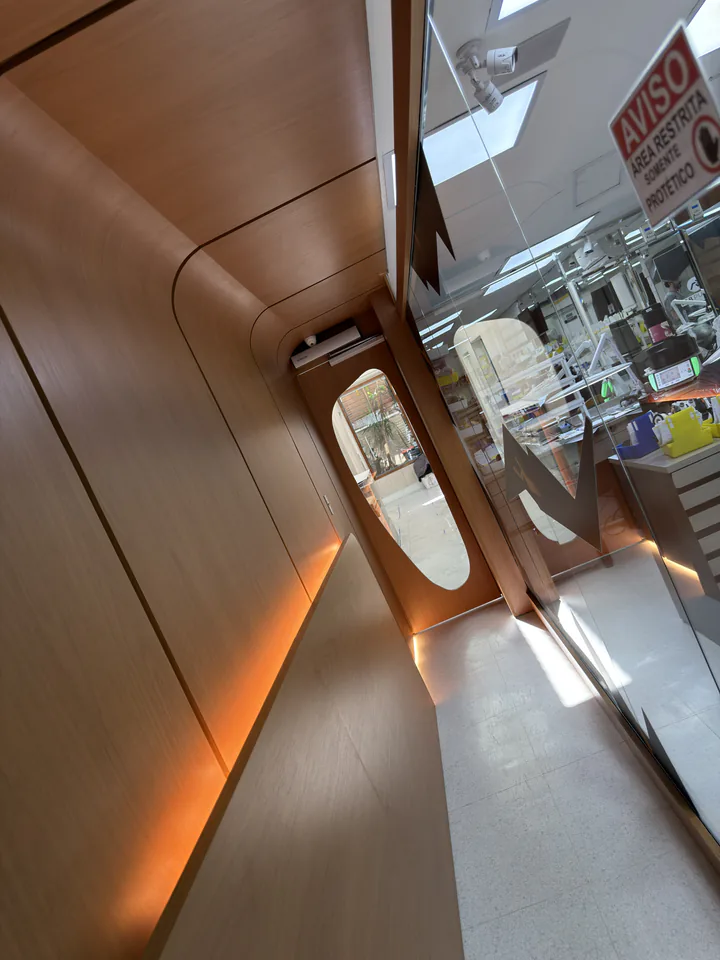
Curved corridor with wood panelling, amber lighting and a door at the far end

First, we understand the goal. Then, we choose the appliance.

Assessment brings together dentition, bite, growth, routine and realistic treatment options.

Book an assessment

Bibliographic references

Sources used for the clinical statements on this page. They inform the discussion but do not replace diagnosis or individual guidance.

Original Portuguese content reviewed by Dr Silvana Puglisi, dental surgeon, CRO 33.773, technical director, on .

  1. American Academy of Pediatric Dentistry. Management of the Developing Dentition and Occlusion in Pediatric Dentistry. The Reference Manual of Pediatric Dentistry. 2025, pages 497 to 515. Official document.
  2. British Orthodontic Society. Removable appliances. Patient information material. Official page.
  3. British Orthodontic Society. Functional appliances. Patient information material. Official page.
  4. Al-Moghrabi D, Salazar FC, Pandis N, Fleming PS. Compliance with removable orthodontic appliances and adjuncts: a systematic review and meta-analysis. American Journal of Orthodontics and Dentofacial Orthopedics. 2017, 152(1), 17 to 32. DOI 10.1016/j.ajodo.2017.03.019.
  5. Koretsi V, Zymperdikas VF, Papageorgiou SN, Papadopoulos MA. Treatment effects of removable functional appliances in patients with Class II malocclusion: a systematic review and meta-analysis. European Journal of Orthodontics. 2015, 37(4), 418 to 434. DOI 10.1093/ejo/cju071.
  6. Nahajowski M, Lis J, Sarul M. Orthodontic Compliance Assessment: A Systematic Review. International Dental Journal. 2022, 72(5), 597 to 606. DOI 10.1016/j.identj.2022.07.004.
  7. Moreno-Fernández A, Iranzo-Cortés JE, Paredes-Gallardo V, et al. Effectiveness of removable appliances with temperature sensors in orthodontic patients: a systematic review and meta-analysis. European Journal of Orthodontics. 2022, 44(2), 134 to 145. DOI 10.1093/ejo/cjab033.
  1. What is orthodontics. American Association of Orthodontists. AAO (2024). . Official source

Public sources consulted on 17/09/2026 for educational support. They do not replace clinical assessment.

Privacy preferences

Your choice is valid for 180 days in this browser. You can change it under “Privacy”.

Forms may use Google reCAPTCHA to prevent abuse. Read the Privacy Policy