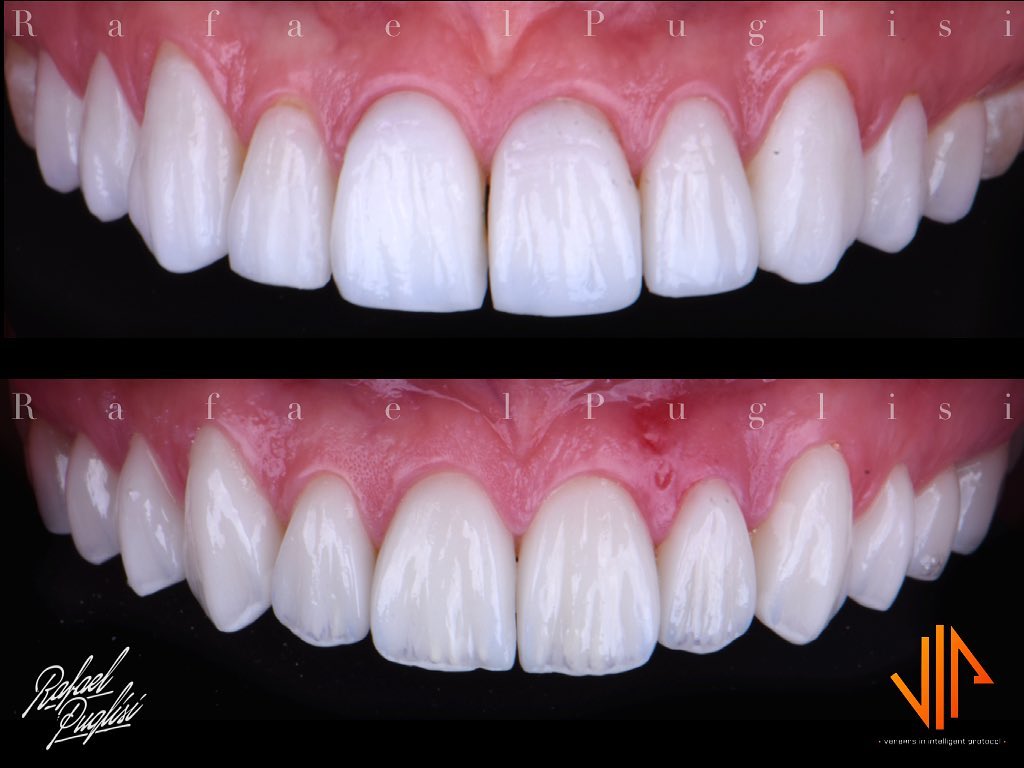
Case imagesEnlarge
Reworking after aesthetic dissatisfaction
The patient sought care after previous treatment that was aesthetically unsatisfactory. The new care involved reworking with laser.
Sources
- Rafa Puglisi. Original publication.
Every smile has its own story. Explore treatments carried out at Instituto Rafa Puglisi and the care behind each case.
The patient sought care after previous treatment that was aesthetically unsatisfactory. The new care involved reworking with laser.
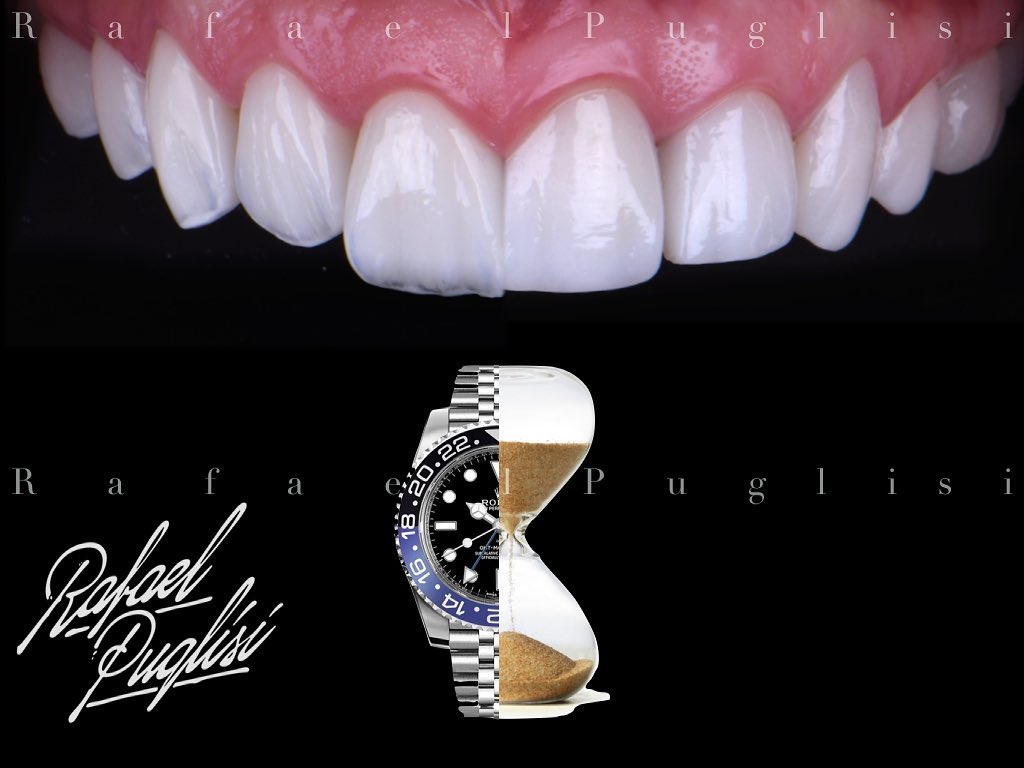
The reworking with laser is documented in a view of the upper teeth bringing together one side with new ultrathin veneers and the other with the old ones.
The preference for very white teeth was maintained. Work on the new ultrathin veneers focused on geometric shapes and optical characteristics of the ceramic, with the intention of reproducing natural enamel.
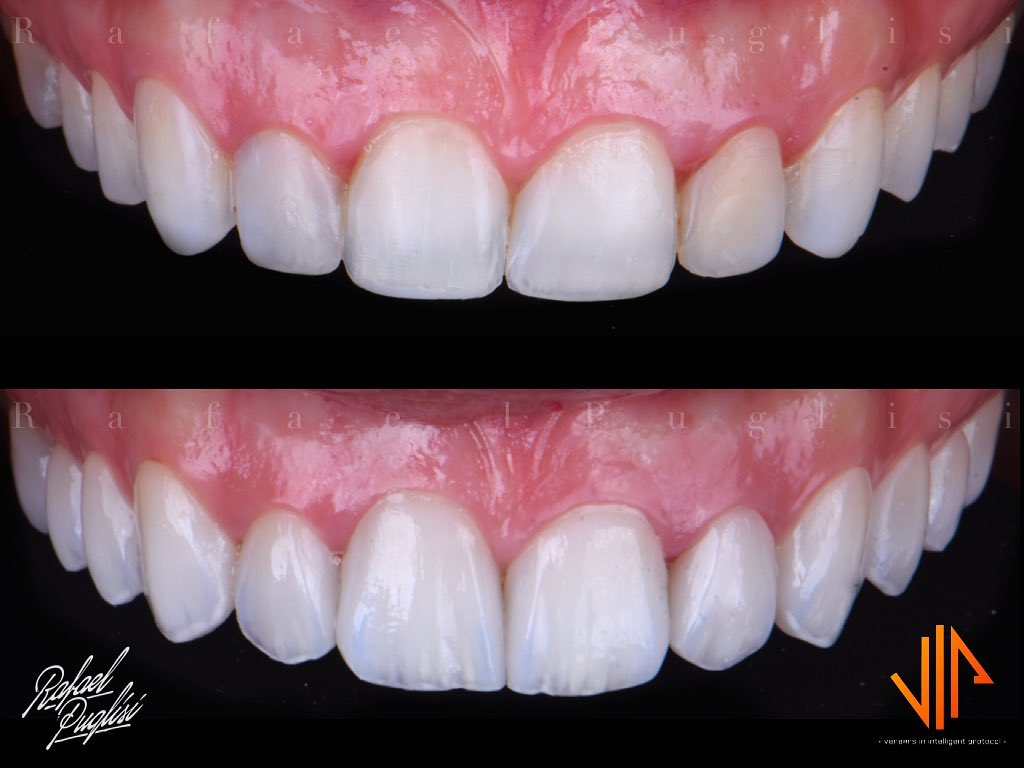
The montage presents two frontal views of the upper anterior teeth against a black background.
The tooth anatomy used drew on the Puglisi R2.0 library, developed in partnership with 3Shape. The aim of the work was to reproduce optical characteristics of natural teeth.
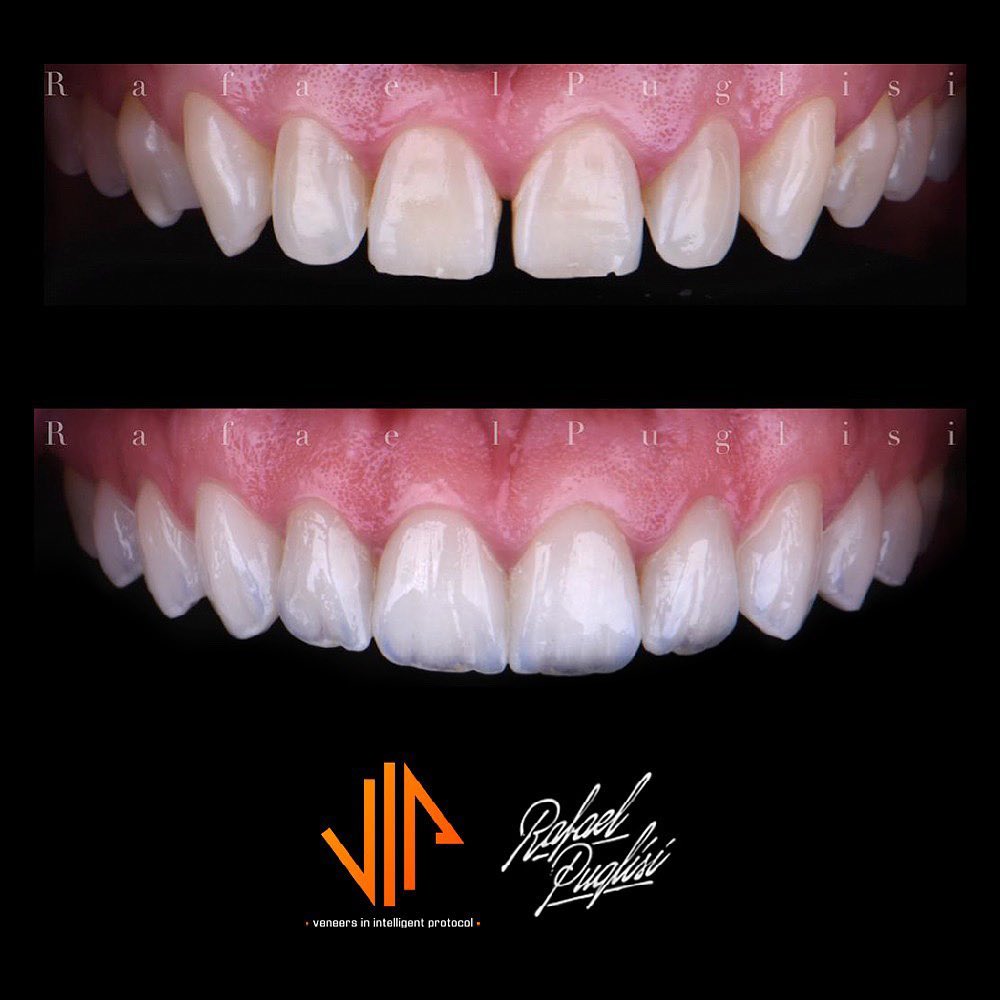
The comparison brings together two records of the upper teeth in an original montage.
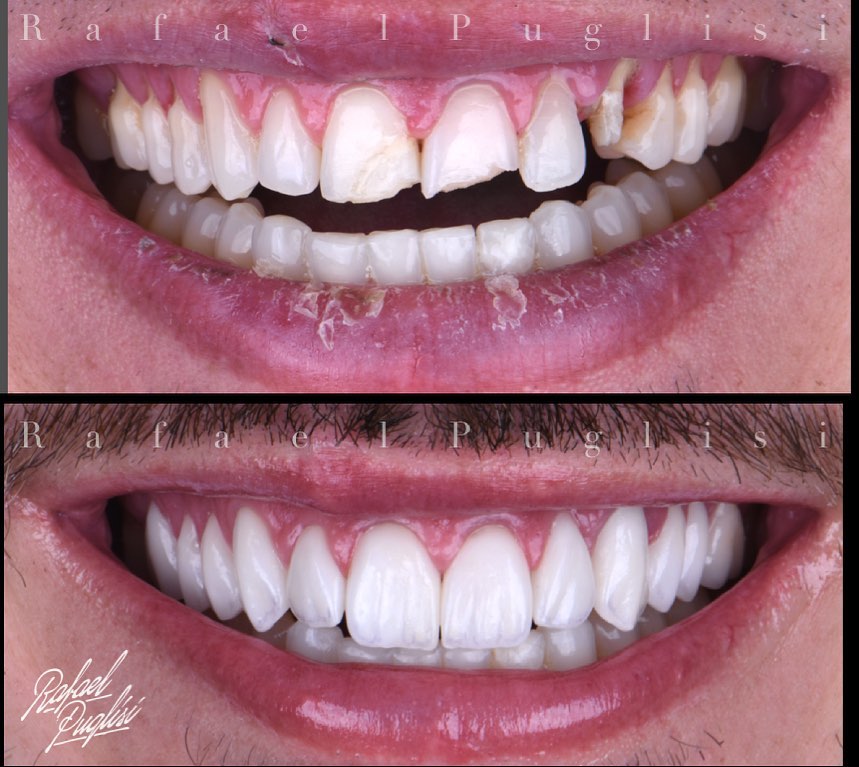
After a rollover car accident and root canal treatment, the case involved darkened teeth. The work combined new ceramics and a fibreglass post to mask this darkening.
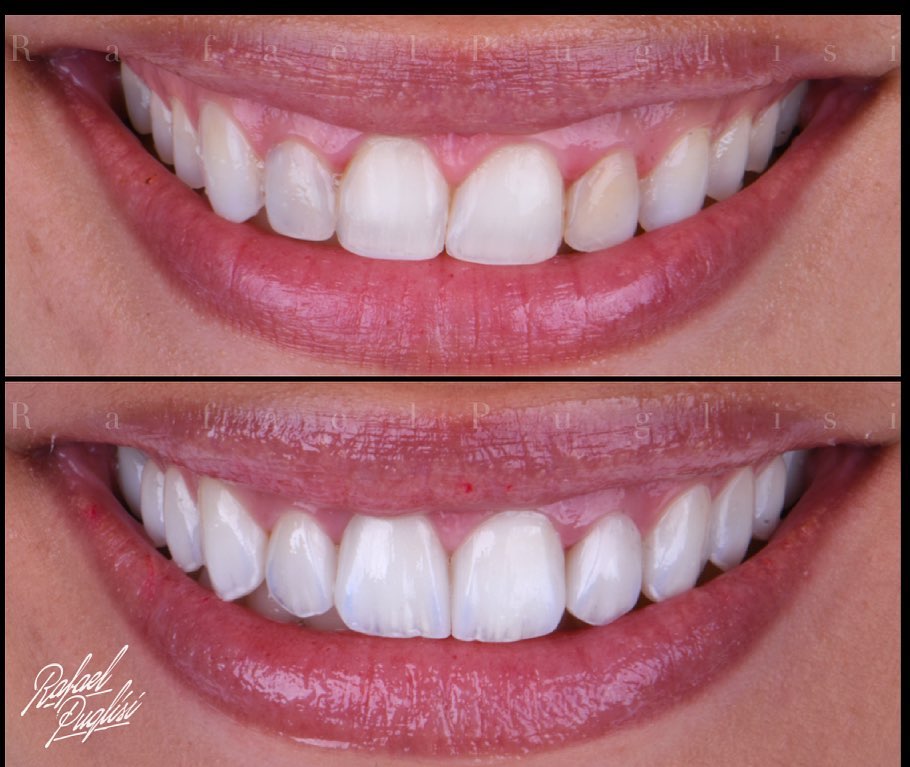
The work with ultrathin dental veneers is documented in two frontal views of the smile.
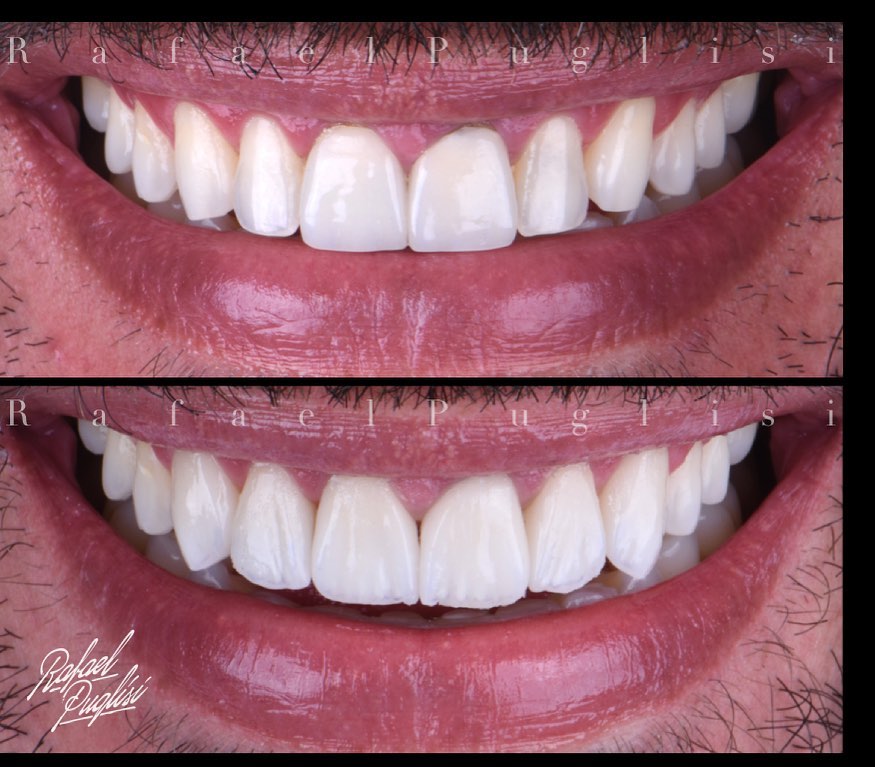
The reworking with laser used six veneers, also known as ultrathin dental veneers. The montage brings together two records of the smile.
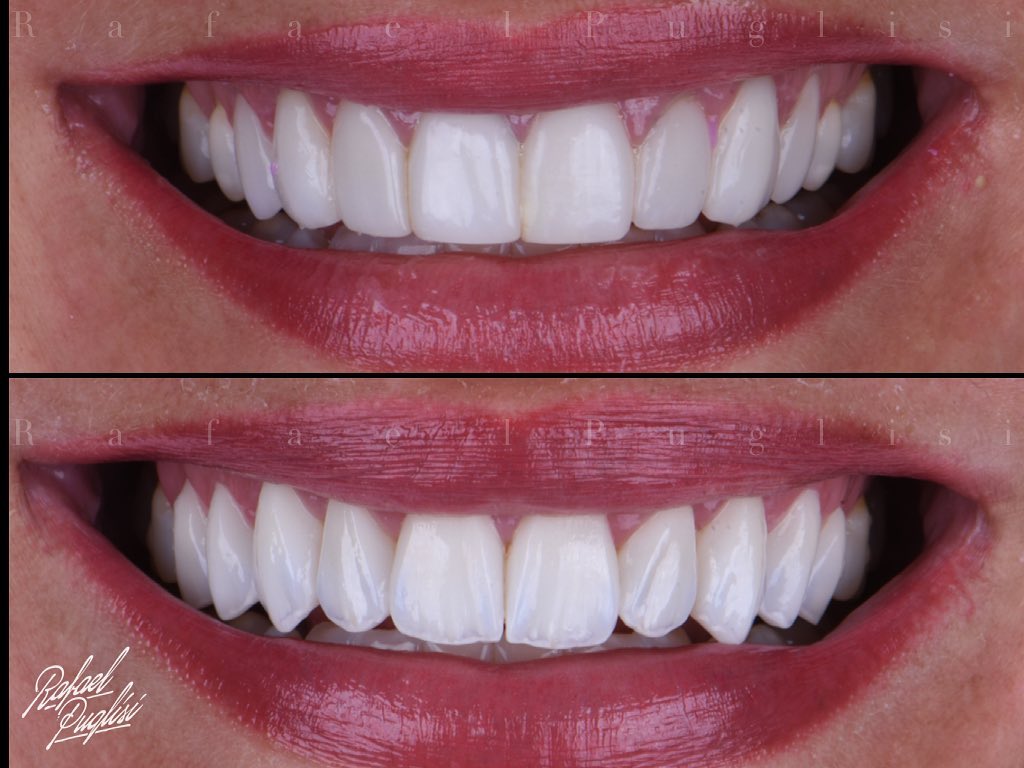
The professional remade the ceramics of his own work ten years later. According to his account, there had been no debonding, cracks or fractures during that period, and the patient had maintained six-monthly follow-up.
The new intervention was presented as an aesthetic evolution of work that had remained in use for ten years. Six-monthly maintenance and preservation of gum health were highlighted by the professional during this follow-up.
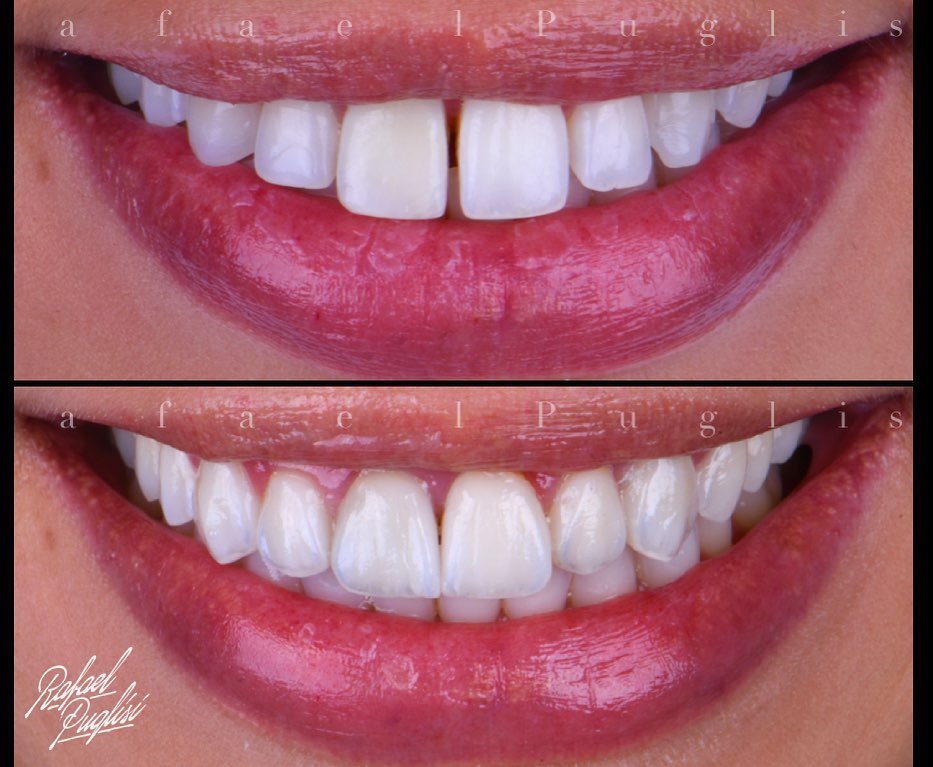
The strategy reported used six ultrathin dental veneers to reduce the height-to-width ratio of the central incisors, according to the institution’s laboratory planning.
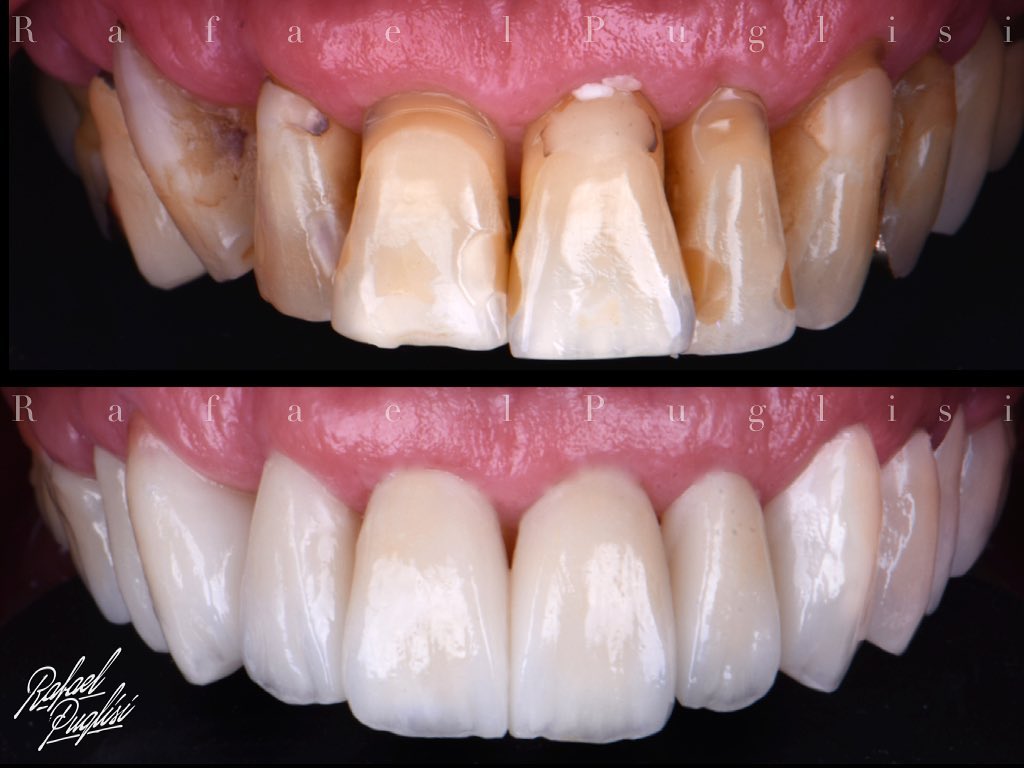
The 76-year-old patient was treated with ultrathin dental veneers in shade B2. The montage brings together two frontal records of the upper teeth.
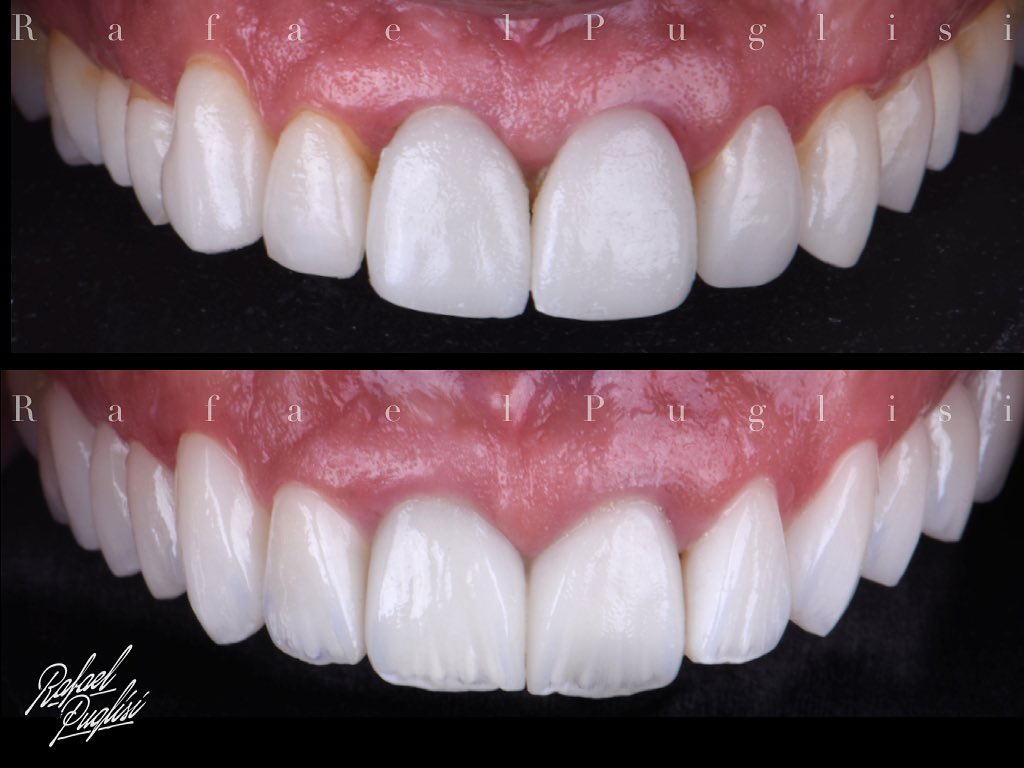
The patient sought care after a previous experience described as traumatic during placement of ultrathin dental veneers. The new work involved reworking with laser and ceramics.
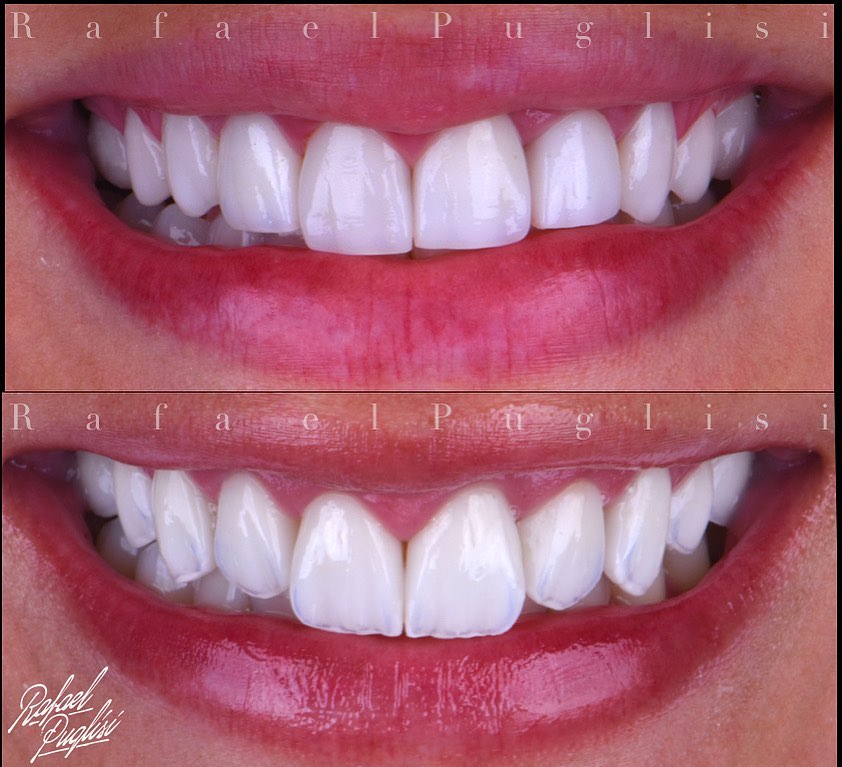
The patient reported greying of the restorations and an unpleasant smell associated with poor fit. The reworking with laser included new disclusion guidance and production in the institution’s laboratory. A second publication attributes the recorded differences to the planning and materials used.
In addition to the greyish shade, the reported assessment identified unfavourable height-to-width ratios of the lateral incisors. The new planning also considered characteristics such as translucency, depth and opalescence of the ceramics, bringing shape revision together with optical work on the restorations.
Care begins by understanding you. Talk to the team and book your assessment.
Each treatment has an individual indication. The images show specific cases, and results vary from person to person.