Replacement of previous restorations
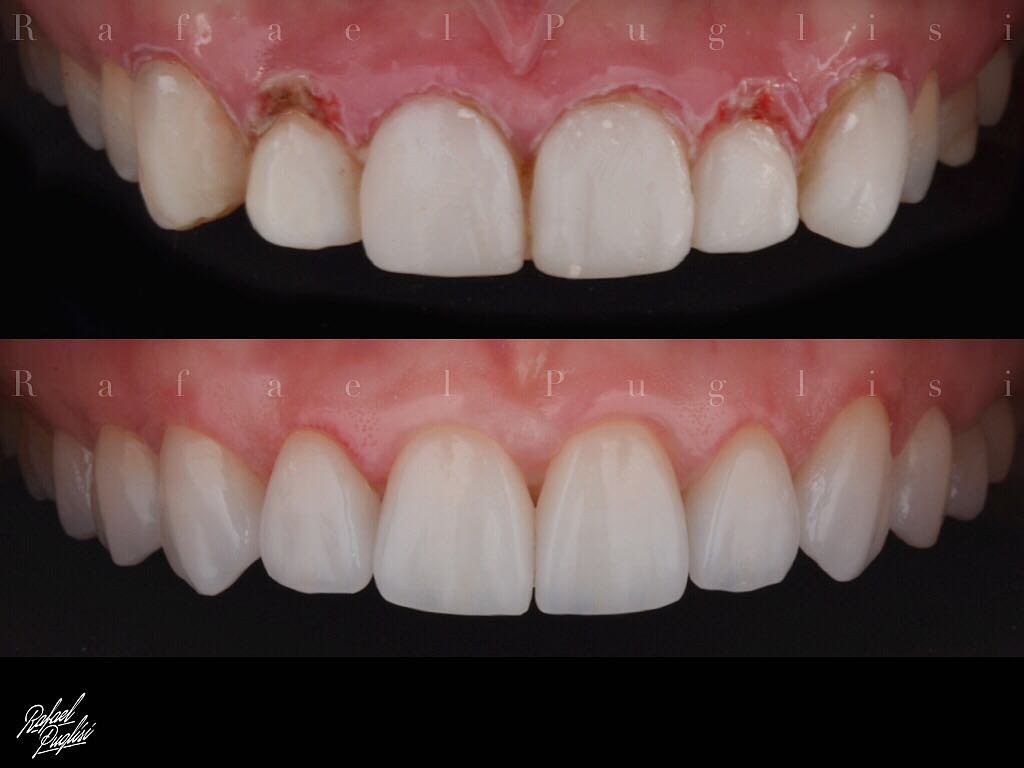
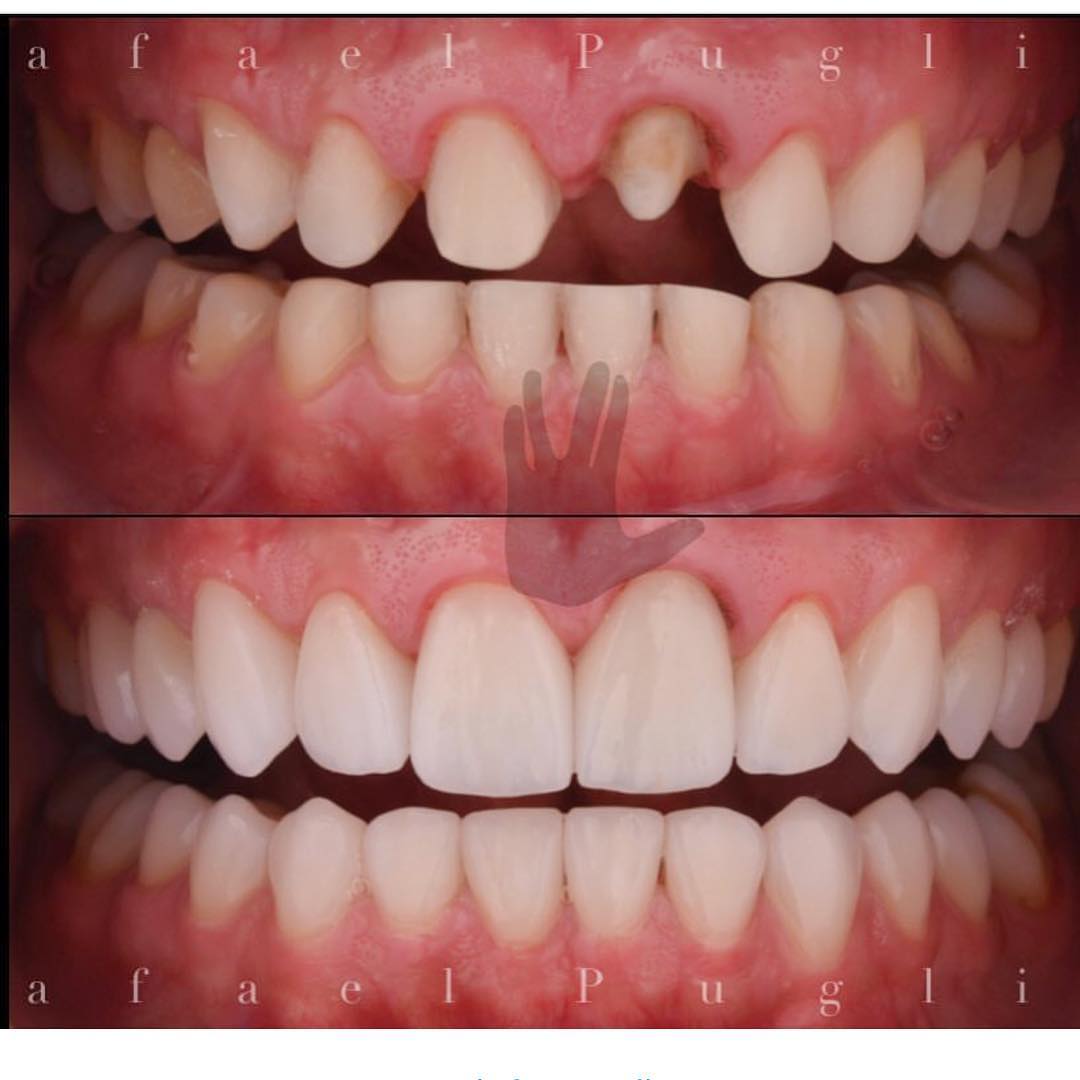
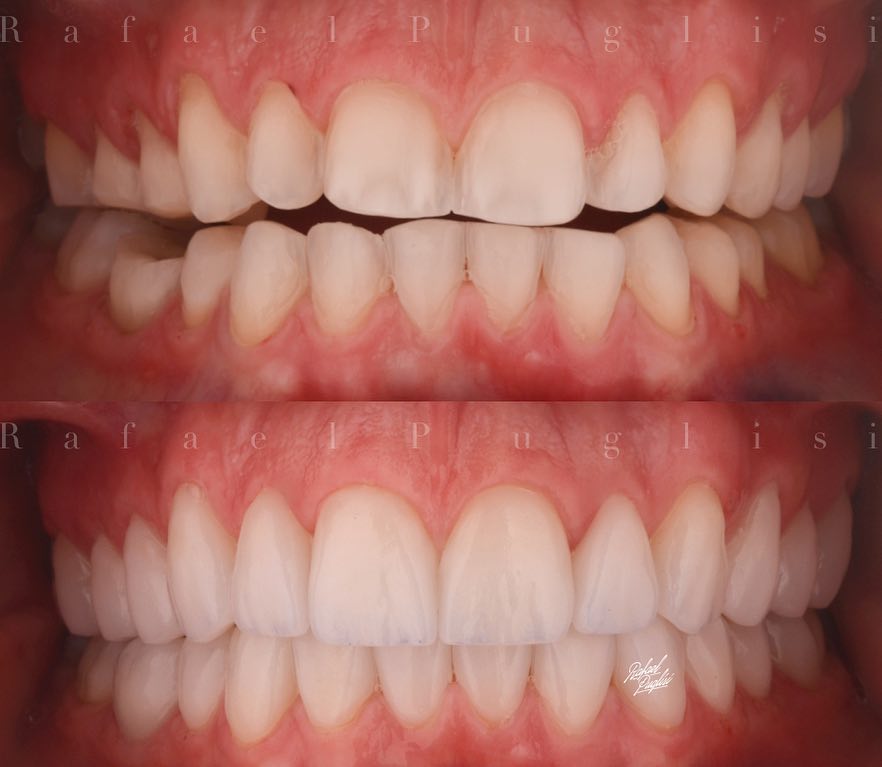
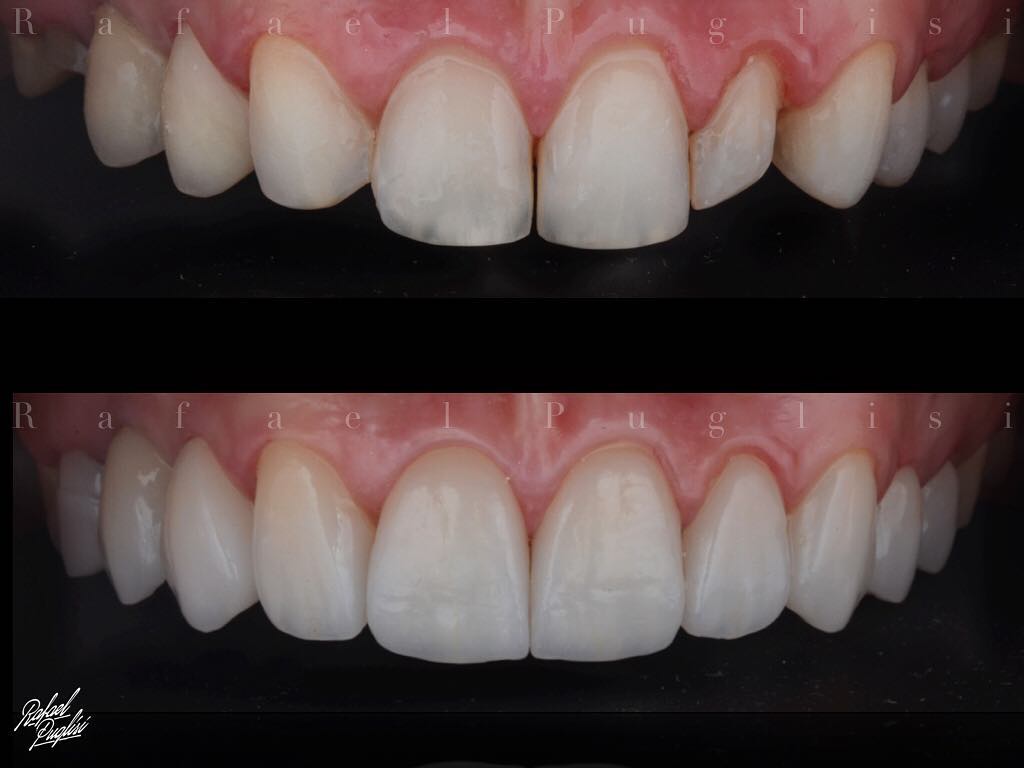
Old restorations were removed and replaced with new pieces. The montage brings these two stages together in the upper tooth region.
Sources
- Rafa Puglisi. Original publication.
Every smile has its own story. Explore treatments carried out at Instituto Rafa Puglisi and the care behind each case.

Old restorations were removed and replaced with new pieces. The montage brings these two stages together in the upper tooth region.


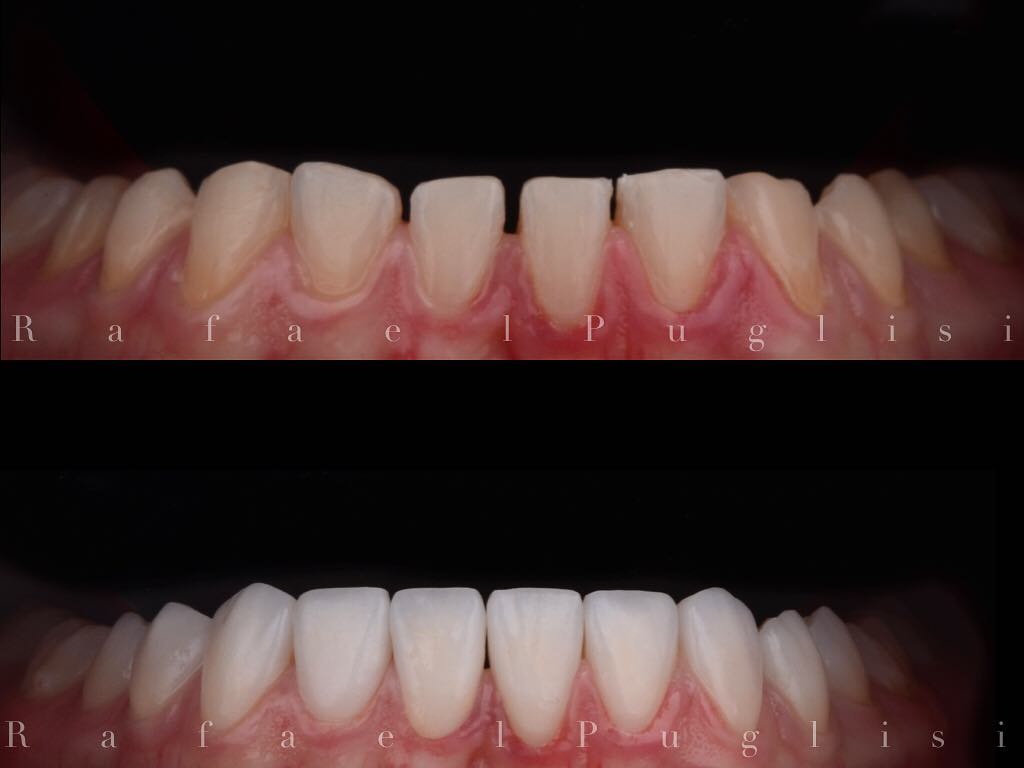
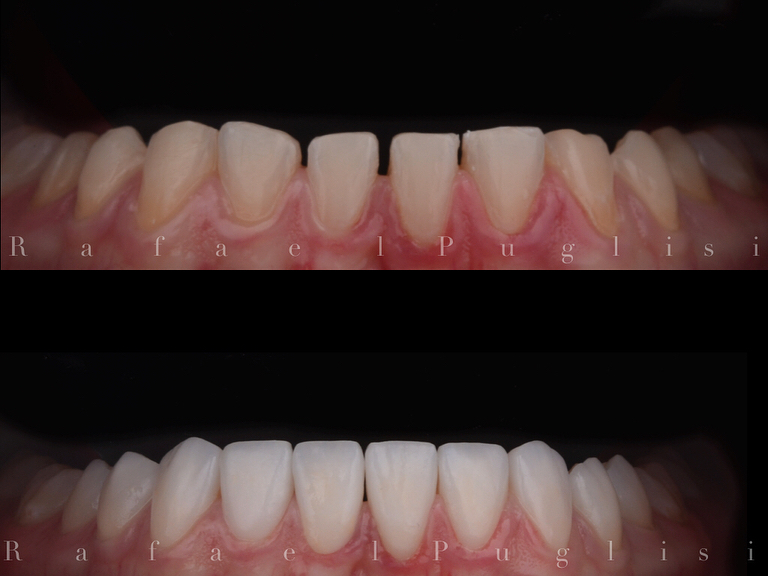
The carousel presents stages of isolation and cementation, including a comparison of the lower teeth. The images show the use of clamps identified as B4 and modified 212 during the cementation sequence.

The first frame shows the lower teeth after removal of composite resins. The second records the moment immediately after cementation of the ultrathin dental veneers.

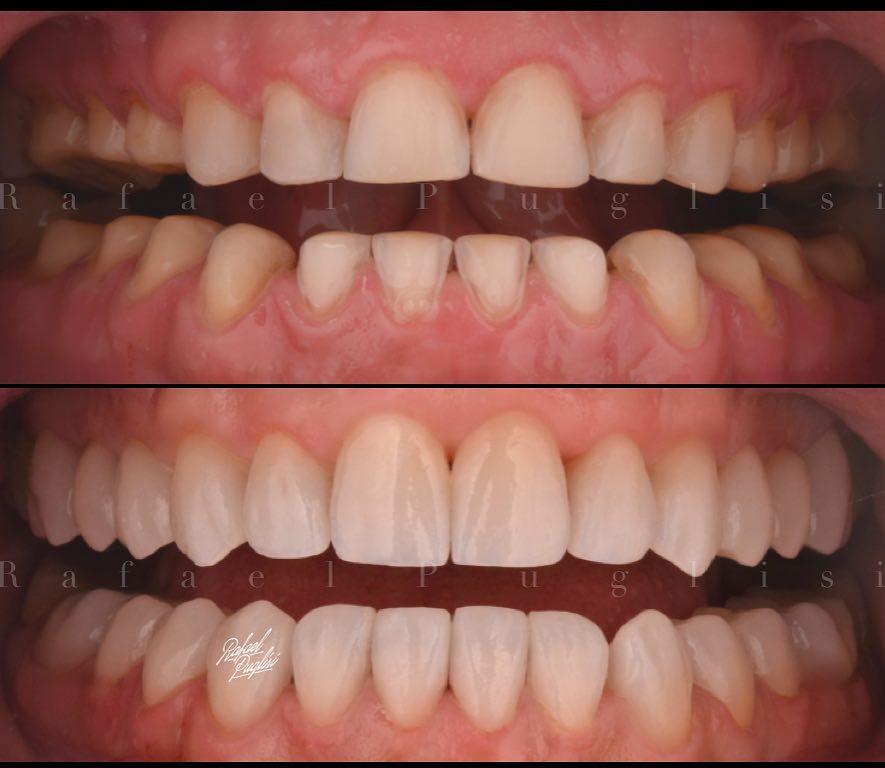
The patient sought the team’s care with gum inflammation and fit problems associated with the old pieces. The montage compares the records and presents the immediate outcome after cementation of the new ultrathin dental veneers.
The previous pieces were around three years old. Reworking considered overcontour and shade changes in the old veneers, as well as the gingival condition described in the care provided.

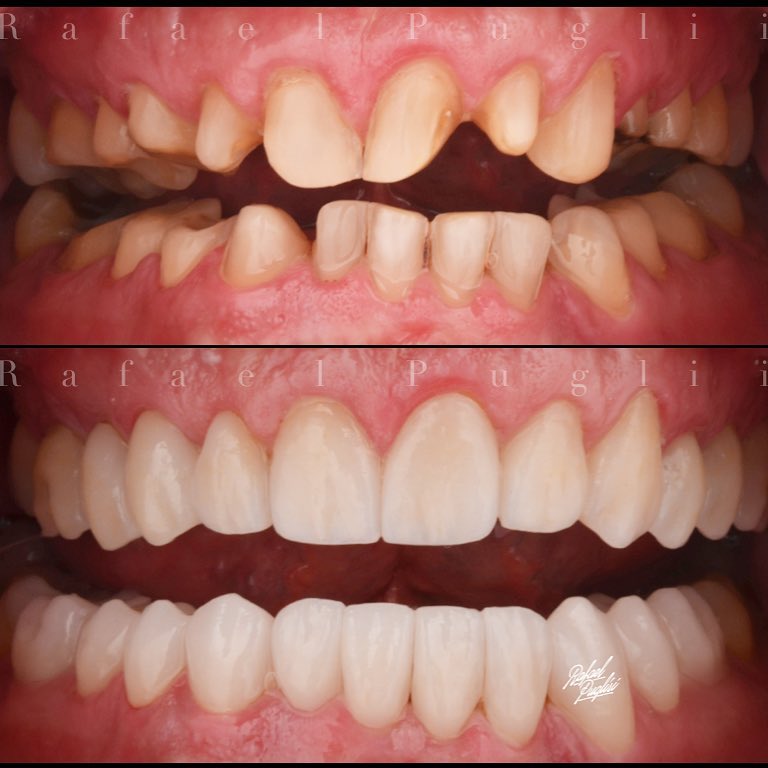
The patient sought care dissatisfied with poorly fitting old ceramic restorations that were coming loose or breaking. The team removed them using an operating microscope and planned new rehabilitation of both arches, with restructuring of occlusion.
The replaced restorations were approximately four years old. Removal under the microscope was carried out with attention to preserving already treated tooth structure.

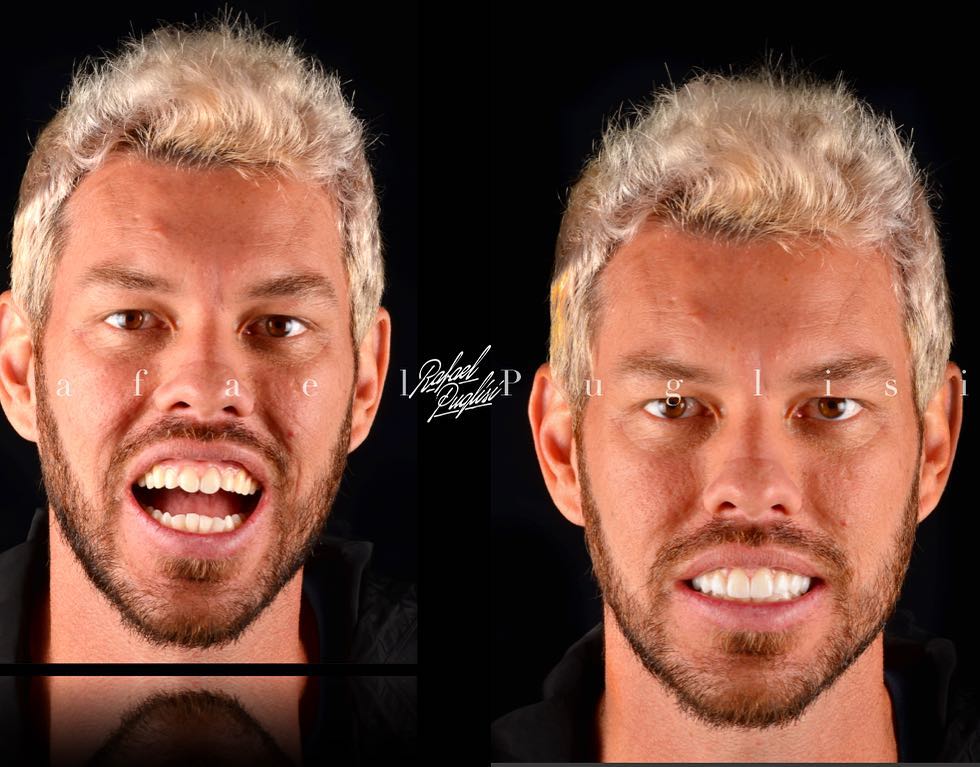
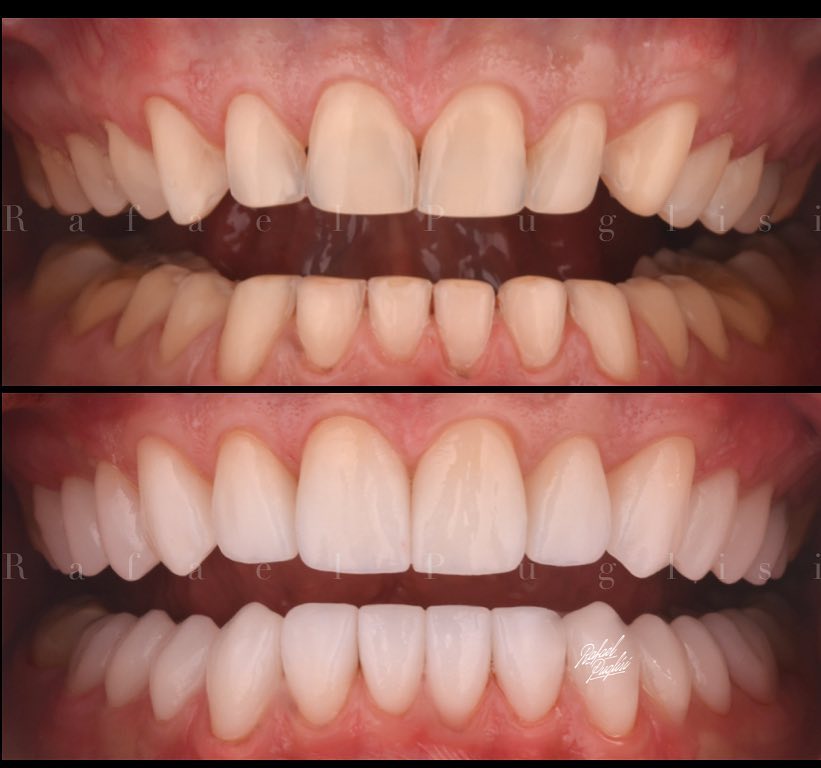
Treatment with ultrathin dental veneers was carried out in three sessions. The montage presents two portraits with different framings of the smile.
Restoring function formed part of the treatment proposal alongside aesthetic change to the smile.

The reworking combined implants, full crowns and fibreglass posts in an adhesive oral rehabilitation carried out in four sessions.

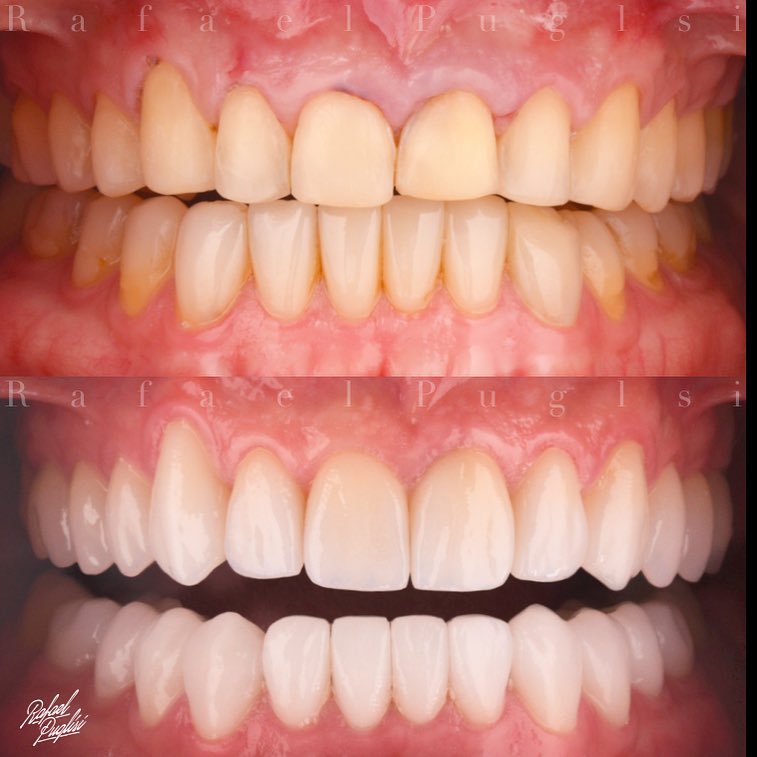
The patient had teeth affected by decay and damaged old restorations. After removal of these pieces, full adhesive oral rehabilitation was carried out in three sessions over two weeks.
An associated publication records a limitation of the plan: it was not possible to perform the gingivoplasties mentioned in the account.

The montage compares teeth prepared for ceramic veneers with the appearance immediately after cementation. The first image corresponds to the preparation stage. The associated publications discuss preservation of enamel in this process.

The full adhesive oral rehabilitation is documented in two frontal records with the upper and lower arches exposed.

Reconstruction of both arches was carried out through full adhesive oral rehabilitation, in three sessions and with a focus on occlusion.
Care begins by understanding you. Talk to the team and book your assessment.
Each treatment has an individual indication. The images show specific cases, and results vary from person to person.