↗ PT

Other pages are available in Portuguese

Skip to content

Bad breath treatment

Conceptual artwork of a translucent container with suspended layers and an amber point at the base

Halitosis is an unpleasant breath odour. When the concern persists, assessment looks for its origin in the tongue, gums, teeth, saliva and habits before recommending care. Most causes begin in the mouth. [1][2]

Book an assessment

A private conversation, without embarrassment, is the starting point.

Breath changes. Persistent halitosis warrants investigation.

Odour on waking or after certain foods may be temporary. When the concern persists, returns frequently or affects relationships, the way forward is not simply to mask it: it is to confirm what is happening and look for its origin. [2]

Temporary
May occur on waking, during prolonged fasting or after particular foods, and disappear with the usual routine.
Persistent
Continues or returns despite usual hygiene and calls for clinical assessment rather than repeated attempts with products.
Perception
It is difficult to assess your own breath accurately. Discussion and examination help distinguish a sensation, an episode and a confirmed change.

The mouth is the first place to look.

Conceptual artwork of pale topographic layers with an amber point

In most cases, the origin is within the mouth. Tongue coating, gum inflammation, periodontitis and insufficient hygiene are among the most frequent associations. Dry mouth and areas that retain biofilm are also considered. [1][2]

Tongue
Coating, anatomy and biofilm retention.
Gums
Bleeding, inflammation and periodontal disease.
Teeth and prostheses
Retention areas, hygiene and restorative conditions.
Saliva
Reduced flow, a feeling of dry mouth and associated factors.

How the origin is investigated

No single test resolves every case. Clinical history, periodontal examination, tongue inspection and professional description of the odour form the recommended basis. [2]

History
When it began, when it occurs, frequency, diet, tobacco, illnesses and medicines.
Tongue
Presence and extent of coating, retention areas and cleaning routine.
Periodontium
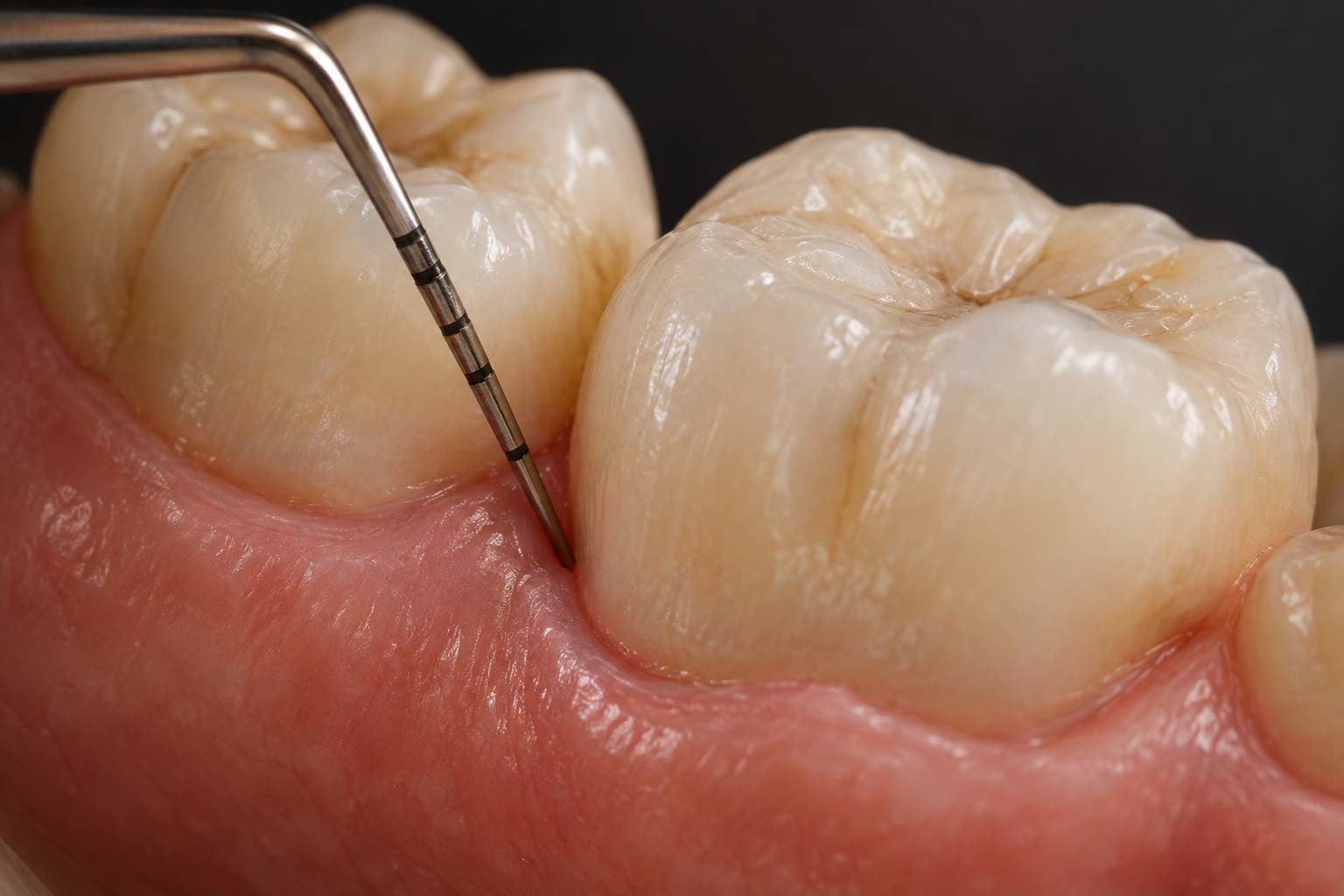
Gums, bleeding, probing depth, mobility and signs of inflammation.
Teeth and restorations
Cavities, contacts, prostheses, restorations and places where hygiene is difficult.
Saliva and routine
Dry mouth, hydration, breathing, fasting, hygiene and factors that change the oral environment.
Odour
Professional assessment describes its presence and intensity within a protocol, without judgement.

Care responds to the cause found.

The plan may bring together hygiene advice, tongue care, periodontal treatment, correction of retention areas and dry-mouth management. The combination varies from person to person.

Tongue coating

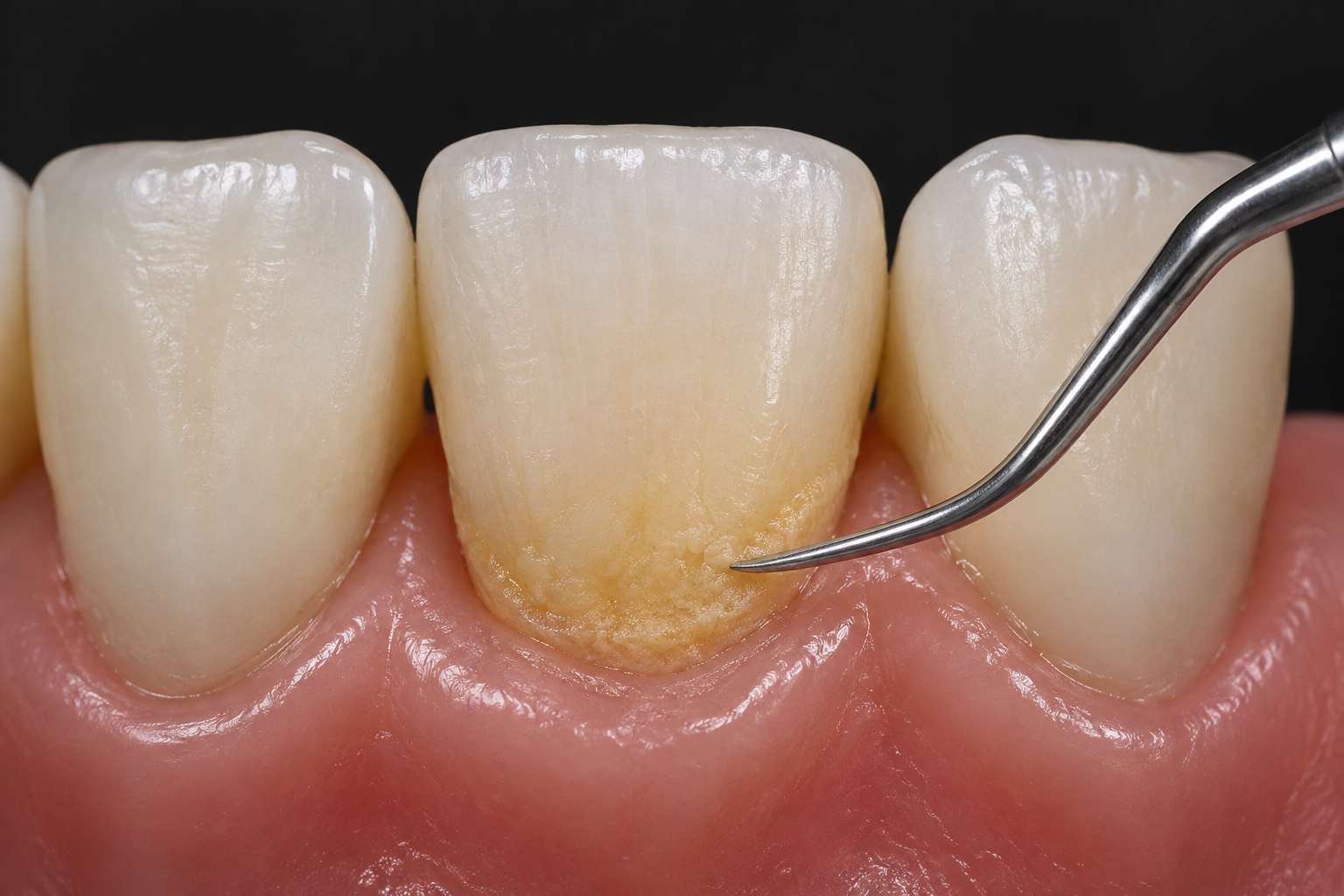
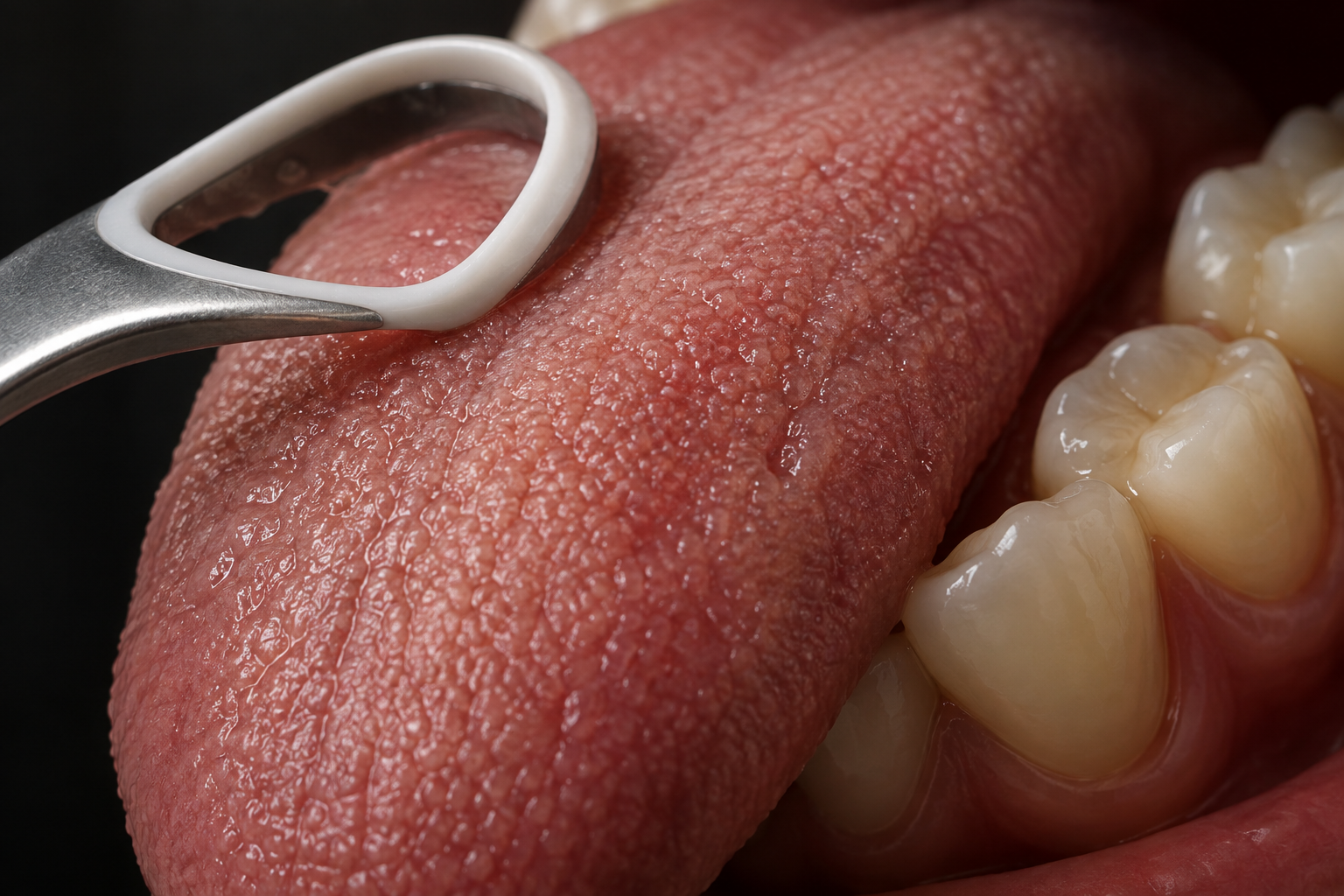
Tongue-cleaning technique may be recommended when the coating contributes to the condition. Frequency, instrument and gentleness need to be appropriate for each person. [4]

Gum inflammation

Gingivitis or periodontitis require their own diagnosis and treatment, as well as daily hygiene suited to the condition.

Retention areas

Cavities, restorations, prostheses or contacts that make cleaning difficult are assessed individually before any correction.

Dry mouth

When salivary flow is reduced, habits, medicines, breathing and health conditions need to be investigated before management is determined.

Talking about breath is also part of care.

Conceptual artwork of two translucent forms connected by a mineral line

Embarrassment and anxiety may delay seeking help. The consultation should address the concern privately, confirm whether a change is present and agree on a clear plan.

  1. Listen

    Understand the impact, duration and previous attempts.

  2. Examine

    Look for oral signs and associated factors.

  3. Explain

    Relate the findings and limits of diagnosis.

  4. Follow up

    Reassess the response and refer when necessary.

Freshening is not the same as treating.

Mints, sprays and some mouthwashes may change odour for a time. This neither confirms the cause nor replaces treatment of the condition found. Evidence on isolated interventions is limited, so a product should not take the place of diagnosis. [3][4]

  • No promise of an instant solution
  • No one-size-fits-all “cleaning”
  • No automatic attribution to the stomach
  • No masking signs of periodontal disease

What if the origin is not in the mouth?

Extraoral causes exist, but are less frequent. If oral examination does not explain the condition, if the odour persists after the indicated care, or if the history suggests another origin, a referral is made to the appropriate health professional. [1][2]

Related topics, distinct treatments.

Halitosis may accompany changes in the gums, tongue or biofilm retention. Each condition has its own page and treatment indications.

Questions about bad breath

Does bad breath always come from the stomach?

No. Most persistent causes are within the mouth, particularly the tongue, gums and hygiene routine. Extraoral causes are investigated when the findings point in that direction. [1]

How can I tell whether it is a temporary episode?

Odour on waking or after certain foods may be temporary. If it persists, returns frequently or causes concern despite usual hygiene, an assessment helps confirm the change.

Can the tongue cause bad breath?

Tongue coating is one of the main intraoral sources. Assessment examines the coating and provides cleaning guidance when appropriate.

Are gingivitis and periodontitis related to halitosis?

They may be. Gum inflammation and periodontal disease are among the associated intraoral factors and require their own diagnosis and treatment.

Does mouthwash solve the problem?

It may offer temporary reduction in some contexts, but does not identify the origin or replace the indicated treatment. A product is included in the plan only when there is a clinical reason.

Can dry mouth make breath worse?

Yes. Saliva helps clean and balance the mouth. When dryness persists, habits, medicines, breathing and health conditions should be considered.

How is halitosis diagnosed?

The basis combines clinical history, examination of the mouth, periodontal assessment, tongue inspection and professional description of the odour. Additional tests depend on the findings.

When is it necessary to see another health professional?

When oral assessment does not find an explanation, when the concern persists after the indicated care, or when symptoms and history suggest an origin outside the mouth.

Why do I have bad breath even when I brush my teeth?

The toothbrush does not always reach the most common sources of odour. Coating on the tongue, debris between the teeth, inflamed gums, dry mouth and areas around prostheses or restorations that are hard to clean can keep bad breath going even with frequent brushing. The assessment looks for which of them is present. [1] [4]

What can cause very strong bad breath?

A strong odour does not, by itself, show the cause. In the mouth, gum disease, infections, deep decay and trapped food debris are among the possible origins. Outside the mouth, the nose, throat, tonsils and some general health conditions are less frequent causes. Strong, persistent odour deserves an assessment. [1] [2]

How much does bad breath treatment cost?

The cost depends on the cause found and the care indicated, such as gum treatment or correcting areas that trap debris. It is presented after the assessment. Treatment can be paid in up to 21 credit card instalments, depending on the treatment plan and current conditions.

Beyond aesthetics, we are a multidisciplinary clinic.

Explore options

Care takes place here

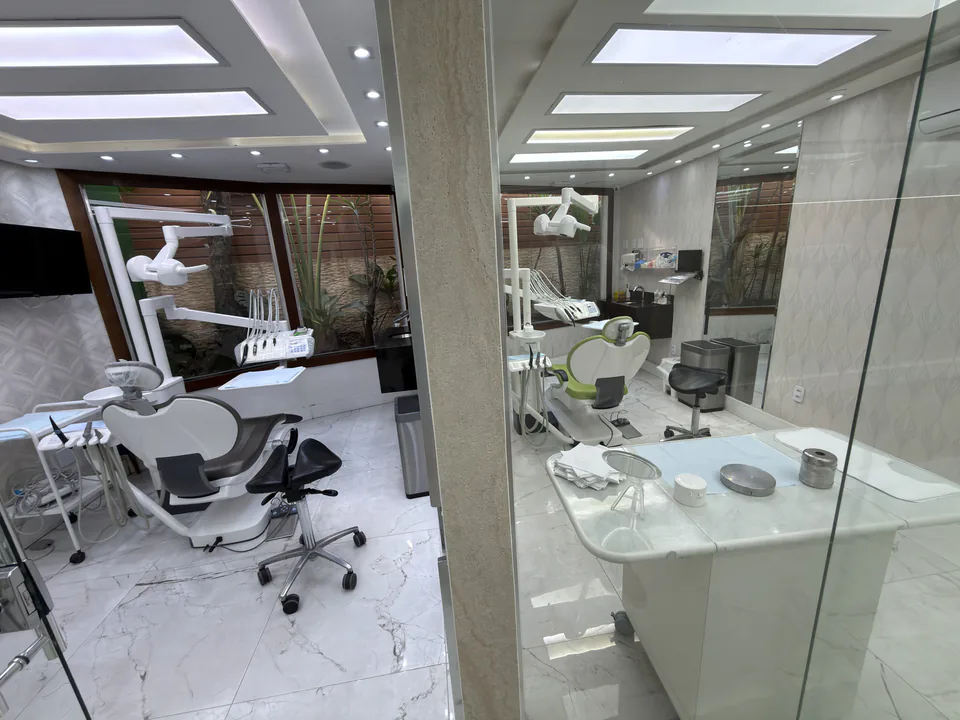
Across more than 400 m², seven consulting rooms and an integrated in-house laboratory bring together different stages of care at the same address. Discover the Institute.

A history in dentistry since 1923 connects generations with care today. Explore the Institute's history.

Documentary portrait of Dr Silvana Puglisi

Dr Silvana Puglisi is the dentist responsible for technical oversight. Meet our professionals who continue to provide care and carry on the work of LAB Puglisi.

Spacious reception at the Institute with artwork by Kobra
Lounge with green armchairs, artwork and a garden visible through the glass doors
Two dental consulting rooms connected by a glass partition
Curved corridor with wood panelling, amber lighting and a door at the far end

The next step is to understand the origin.

Assessment brings together the tongue, gums, teeth, saliva and routine so that each aspect of care has a clear reason.

Book a halitosis assessment

Bibliographic references

Sources supporting the clinical information. They do not replace individual assessment.

Original Portuguese content reviewed by Dr Silvana Puglisi, dental surgeon, CRO 33.773, technical director, on .

The three artworks on this page are conceptual. They do not represent anatomy, an examination, a procedure or a clinical result. The actual picture is built from history and clinical findings, and the consultation begins with a private conversation.

  1. Memon MA, Memon HA, Muhammad FE, et al. Aetiology and associations of halitosis: a systematic review. Oral Dis. 2023, 29(4):1432-1438. PMID 35212093. DOI 10.1111/odi.14172.
  2. European Federation of Periodontology. Guidelines for Management of Malodour: efficacy of mechanical and/or chemical agents: Guidance for Dentist and Dental Hygienist. XI European Workshop in Periodontology, 2015. Guideline.
  3. Slot DE, De Geest S, van der Weijden FA, Quirynen M. Treatment of oral malodour. Medium-term efficacy of mechanical and/or chemical agents: a systematic review. J Clin Periodontol. 2015, 42 Suppl 16:S303-S316. PMID 25682952. DOI 10.1111/jcpe.12378.
  4. Khounganian RM, Alasmari ON, Aldosari MM, Alghanemi NM. Causes and Management of Halitosis: A Narrative Review. Cureus. 2023, 15(8):e43742. PMID 37727189. DOI 10.7759/cureus.43742.

Privacy preferences

Your choice is valid for 180 days in this browser. You can change it under “Privacy”.

Forms may use Google reCAPTCHA to prevent abuse. Read the Privacy Policy