↗ PT

Other pages are available in Portuguese

Skip to content

Gum depigmentation

Conceptual artwork formed by translucent mineral membranes in different natural shades

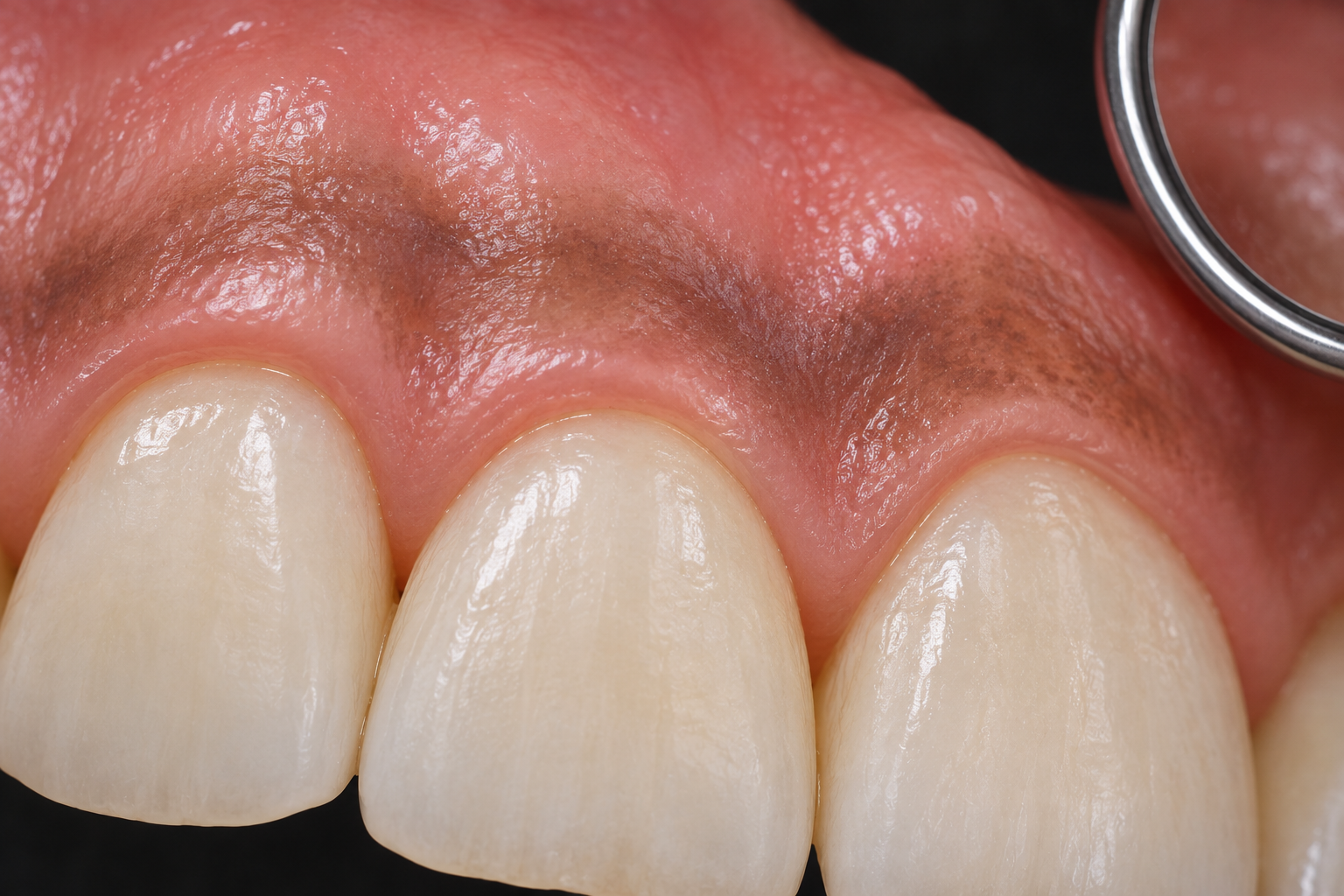
Gingival peeling is the popular name for depigmentation, an aesthetic treatment that reduces visible gum pigments. Darker gums may be a natural variation. The origin of pigmentation needs assessment before treatment. [1]

Book an assessment

Gum shades vary between people. An aesthetic choice needs to respect health, identity and limitations.
Colour needs to be understood before it is changed.

What is natural
The amount and distribution of melanin vary between people. Darker gums do not in themselves mean disease.
When to investigate
A new, isolated, irregular or changing area needs assessment before any aesthetic intervention.
What treatment does
Depigmentation removes or reduces superficial pigment when indicated. It does not create a universal colour.
Conceptual artwork of a mineral lens with layers in different shades

Colour is not a diagnosis.

Physiological pigmentation usually accompanies individual characteristics. Smoking is also associated with oral pigmentation and periodontal changes. A localised lesion or one changing shape, colour or size requires its own investigation. [1][5]

History
When it appeared, whether it has changed and which habits, medicines or conditions form part of the context.
Examination
Distribution, symmetry, surface, periodontal health and relationship to other areas of the mouth.
Decision
Treat, monitor or investigate further. The approach comes before technique selection.

An aesthetic choice with clear limitations.
The goal is to address an individual aesthetic concern without imposing an 'ideal' gum. Planning includes baseline colour, extent, periodontal health, expectations and the possibility of pigment returning.

Reduce visible pigment

Selected areas are treated to make colour distribution more uniform.

Preserve health and anatomy

The extent needs to respect tissue thickness, biological limits and periodontal control.

Align expectations

Final shade, discomfort, healing and duration of change are not the same for everyone.

The technique is selected for the situation.

Scalpel, laser and electrosurgery are among the techniques described for gingival depigmentation. Systematic reviews do not support one option as best in every case. Professional experience, extent, tissue, equipment and follow-up planning influence the choice. [2][3]

Techniques mentioned in the literature do not mean that all are indicated or available for every appointment.

  1. 1

    Listen

    Understand the concern and the outcome the person imagines.

  2. 2

    Examine

    Confirm the origin of the pigment and the periodontal condition.

  3. 3

    Prepare

    Control inflammation and advise on hygiene when needed.

  4. 4

    Decide

    Establish the technique, area, stages, care and feasible limitations.

  5. 5

    Follow up

    Monitor healing, comfort and pigmentation behaviour.

Healing and repigmentation are part of the discussion.

Conceptual artwork of mineral layers reappearing along a line of continuity

The colour seen immediately after the procedure is not the final result. Tissue heals and matures. Over time, some pigment may reappear. Studies report repigmentation with different techniques and follow-up periods. [2][4]

Recovery depends on extent and technique.

Local anaesthesia is part of the procedure. Afterwards, sensitivity, burning, slight swelling or bleeding may occur. Diet, hygiene, medication and return to activities receive individual guidance.

  • First few daysProtect the area and follow instructions on hygiene, food and prescribed medication.
  • HealingAppearance changes over the weeks. Assessing too early gives an incomplete picture.
  • Follow-up appointmentsFollow-up assesses comfort, tissue repair, hygiene and the need for additional care.

Teeth and gums need different care.

Whitening acts on natural teeth. Depigmentation acts on gum tissue. One does not replace the other, and restorations, veneers and crowns also retain their existing colour.

When the concern involves the whole smile, planning considers teeth, gums, lips and restorations before establishing any sequence.

Questions about gingival depigmentation

What is gum depigmentation?

It is the popular name for gingival depigmentation, an aesthetic treatment that reduces visible pigment in selected gum areas.

Do dark gums mean disease?

No. Physiological pigmentation varies between people and is usually related to individual characteristics. Recent, isolated or irregular changes require assessment.

Does coffee darken the gums?

The relationship between coffee, food and gum pigmentation does not support a clinical indication on its own. The origin needs assessment before treatment.

Does smoking affect pigmentation?

Smoking is associated with pigmentation of the oral mucosa. It also increases periodontal risks, which is why it is considered in assessment and health guidance.

Which technique is best?

There is no universally best technique. Selection considers extent, tissue, equipment, professional experience, recovery and follow-up.

Does the procedure hurt?

It is performed with local anaesthesia. Sensitivity and discomfort may occur afterwards and vary with extent and technique.

Does pigmentation return?

It may reappear over time. Frequency and intensity vary between people, techniques and follow-up periods.

Does gingival depigmentation whiten teeth?

No. Depigmentation treats gums. Tooth whitening acts on natural teeth and needs its own plan.

Can I lighten my gums at home?

There is no safe home method to lighten the gums. Acidic or abrasive products can injure the tissue. Before any lightening, the colour needs to be assessed, because not every dark area on the gums is just pigment. [1] [2]

How much does gum depigmentation cost?

The cost depends on the technique indicated, the size of the area and the follow-up. It is presented after the assessment.Treatment can be paid in up to 21 credit card instalments, depending on the treatment plan and current conditions.

Beyond aesthetics, we are a multidisciplinary clinic.

Explore options

Care takes place here

Across more than 400 m², seven consulting rooms and an integrated in-house laboratory bring together different stages of care at the same address. Discover the Institute.

A history in dentistry since 1923 connects generations with care today. Explore the Institute's history.

Learn about the Institute's professionals and their careers.

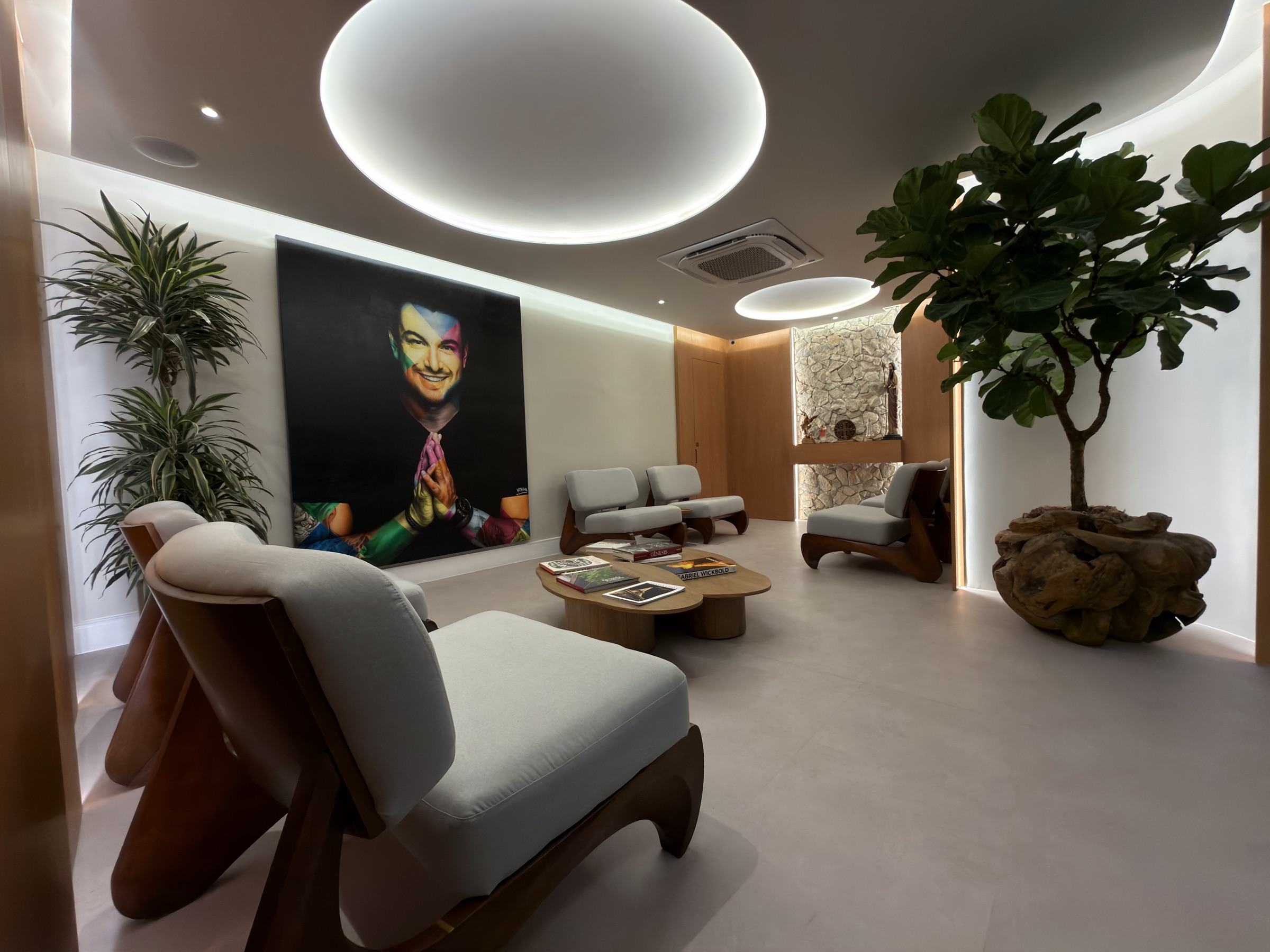
Spacious reception at the Institute with artwork by Kobra
Lounge with green armchairs, artwork and a garden visible through the glass doors
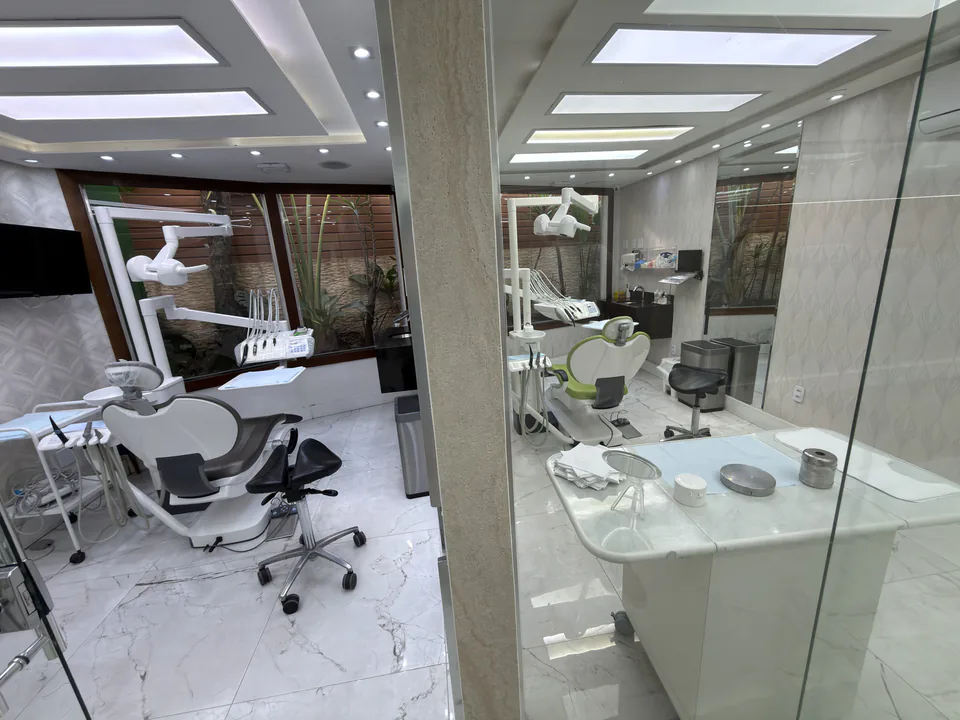
Two dental consulting rooms connected by a glass partition
Curved corridor with wood panelling, amber lighting and a door at the far end

Understand your gums before deciding.

Assessment brings together pigmentation origin, gum health, expectations, technique and the possibility of repigmentation before any treatment.

Book a gingival depigmentation assessment

Bibliographic references

Sources supporting the clinical information. They do not replace individual assessment.

Original Portuguese content reviewed by Dr Silvana Puglisi, dental surgeon, CRO 33.773, technical director, on .

  1. Mobio S, Noujeim Z, Boutigny H, et al. Pigmentation and pigmented lesions of the gingival mucosa. Rev Belge Med Dent. 2008. 63(1):15-28. PMID 18754536.
  2. Lin YH, Tu YK, Lu CT, et al. Systematic review of treatment modalities for gingival depigmentation: a random-effects poisson regression analysis. J Esthet Restor Dent. 2014. 26(3):162-178. PMID 24418367. DOI 10.1111/jerd.12087.
  3. Gul M, Hameed MH, Nazeer MR, et al. Most effective method for the management of physiologic gingival hyperpigmentation: A systematic review and meta-analysis. J Indian Soc Periodontol. 2019. 23(3):203-215. PMID 31143000. DOI 10.4103/jisp.jisp_555_18.
  4. Abduljabbar T, Vohra F, Akram Z, et al. Efficacy of surgical laser therapy in the management of oral pigmented lesions: A systematic review. J Photochem Photobiol B. 2017. 173:353-359. PMID 28641206. DOI 10.1016/j.jphotobiol.2017.06.016.
  5. Multani S. Interrelationship of smoking, lip and gingival melanin pigmentation, and periodontal status. Addict Health. 2013. 5(1-2):57-65. PMID 24494159.

Privacy preferences

Your choice is valid for 180 days in this browser. You can change it under “Privacy”.

Forms may use Google reCAPTCHA to prevent abuse. Read the Privacy Policy