Before choosing treatment.
Direct answers to common questions. Actual suitability depends on individual examination.
Is every dark stain decay?
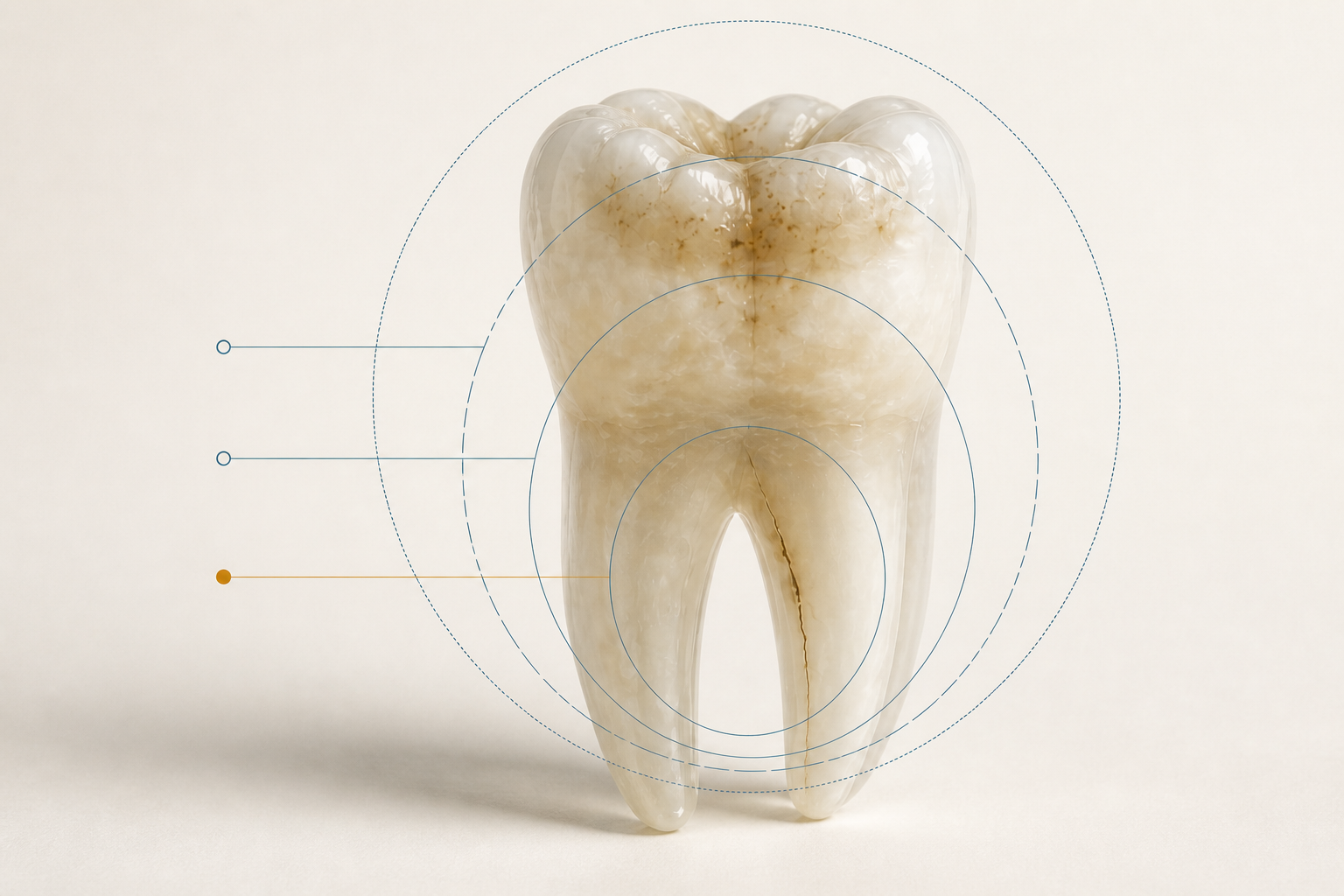
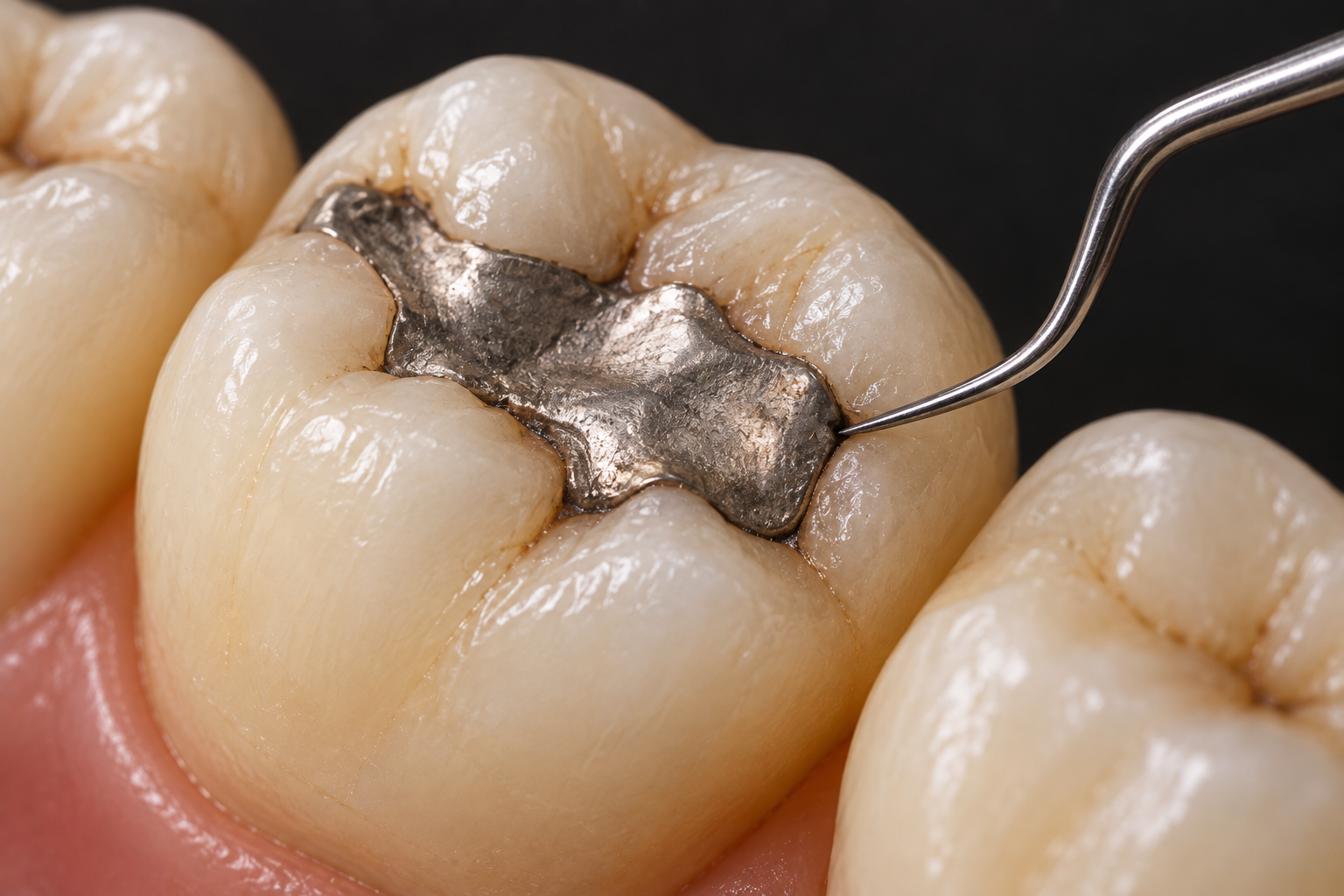
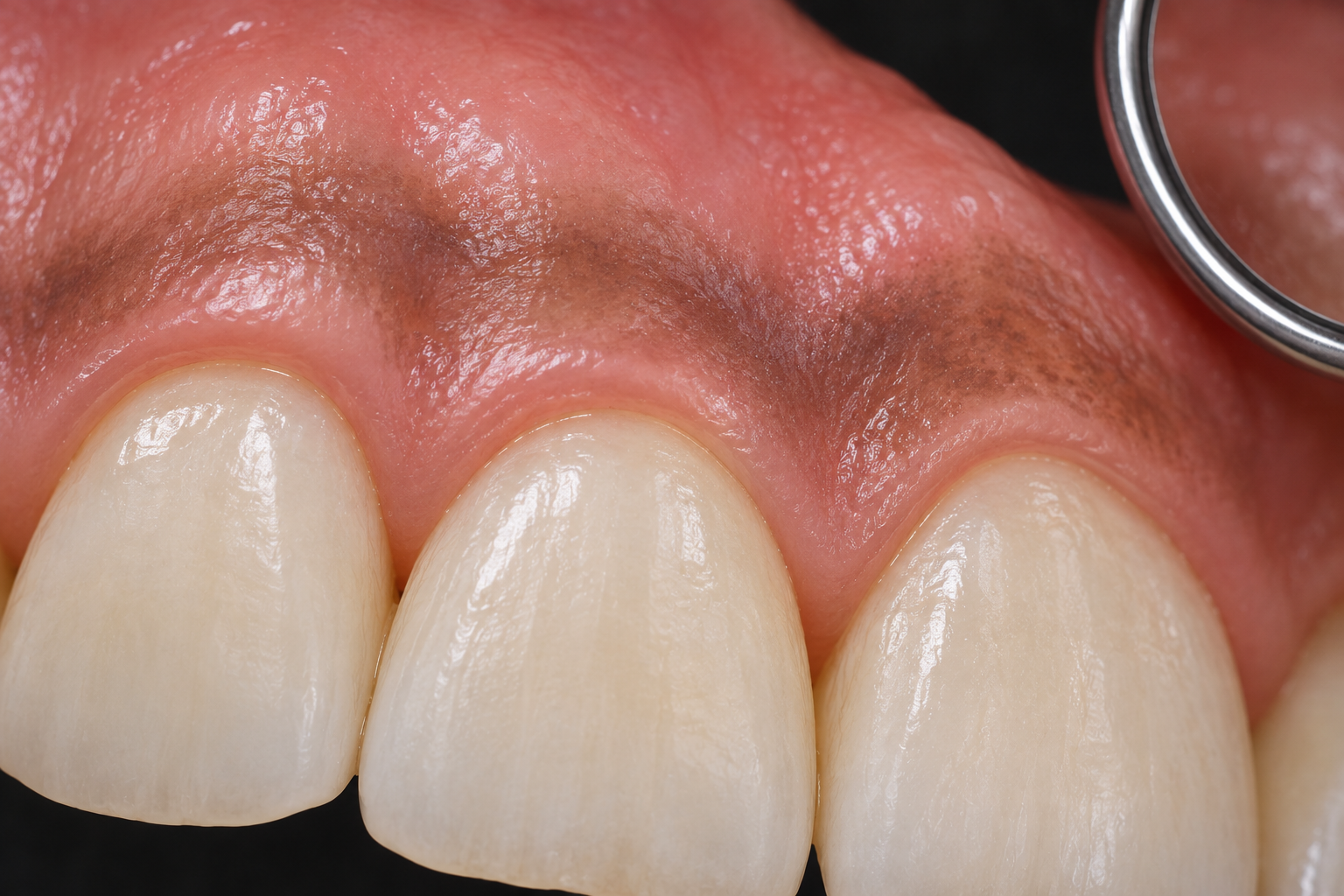
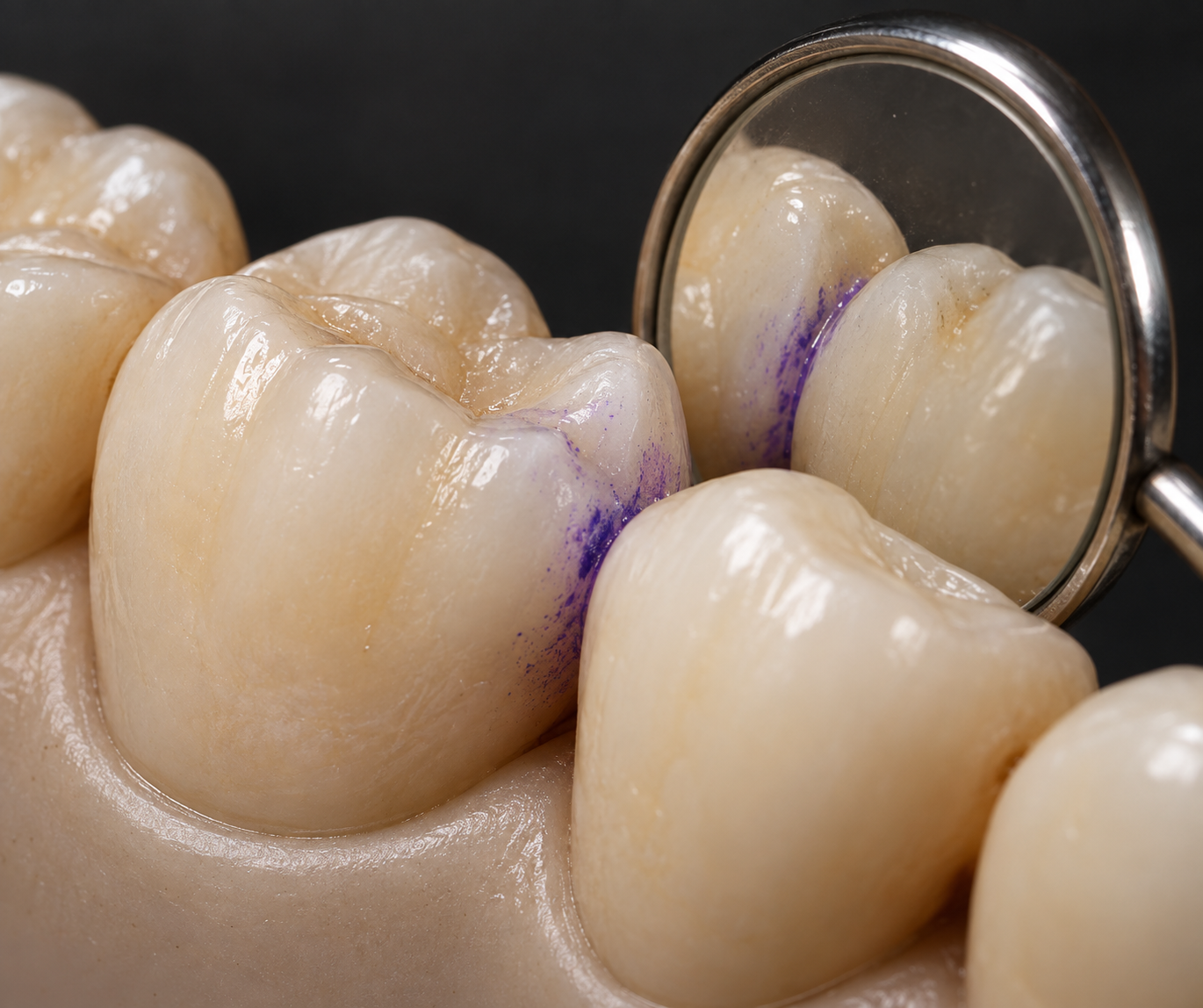
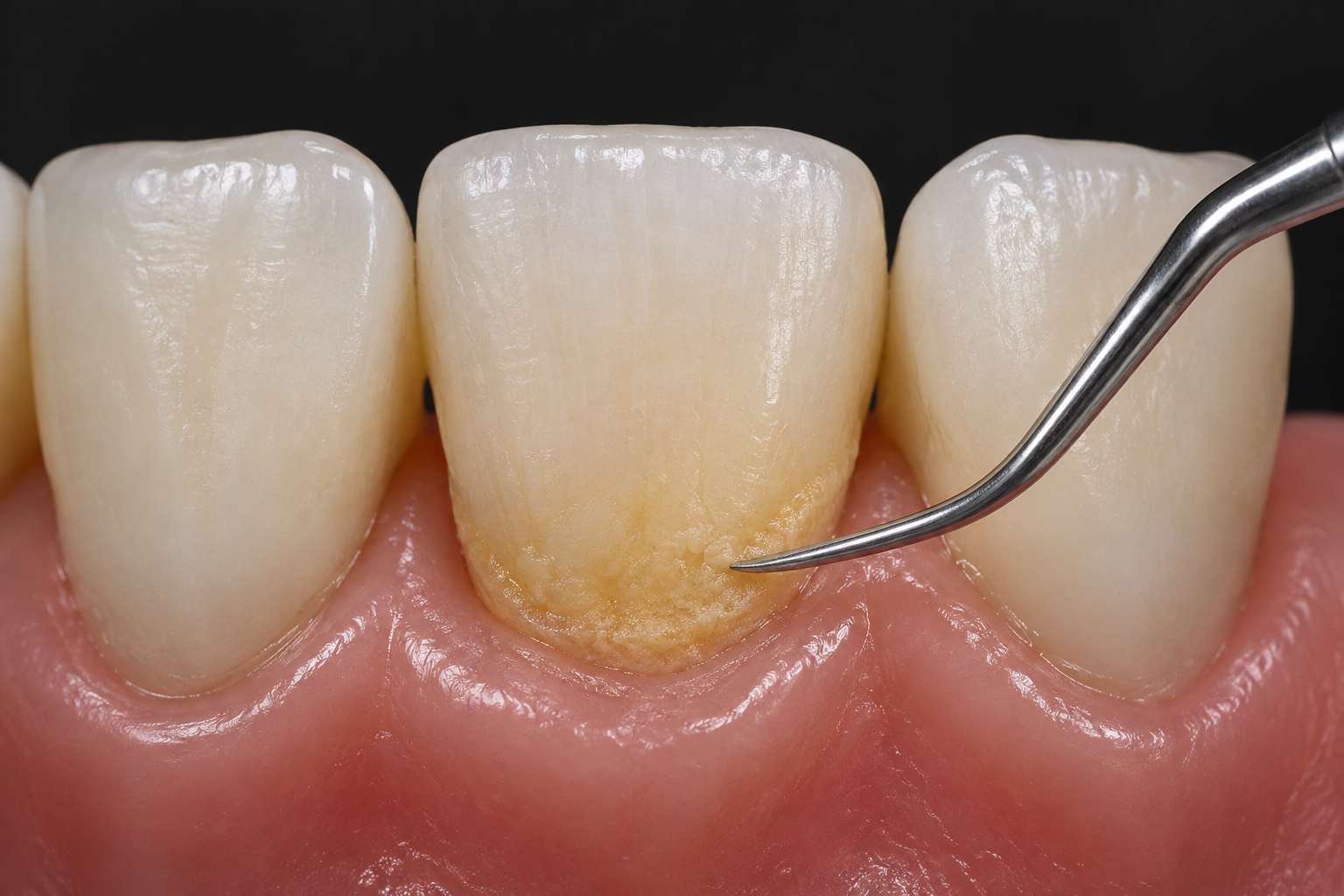
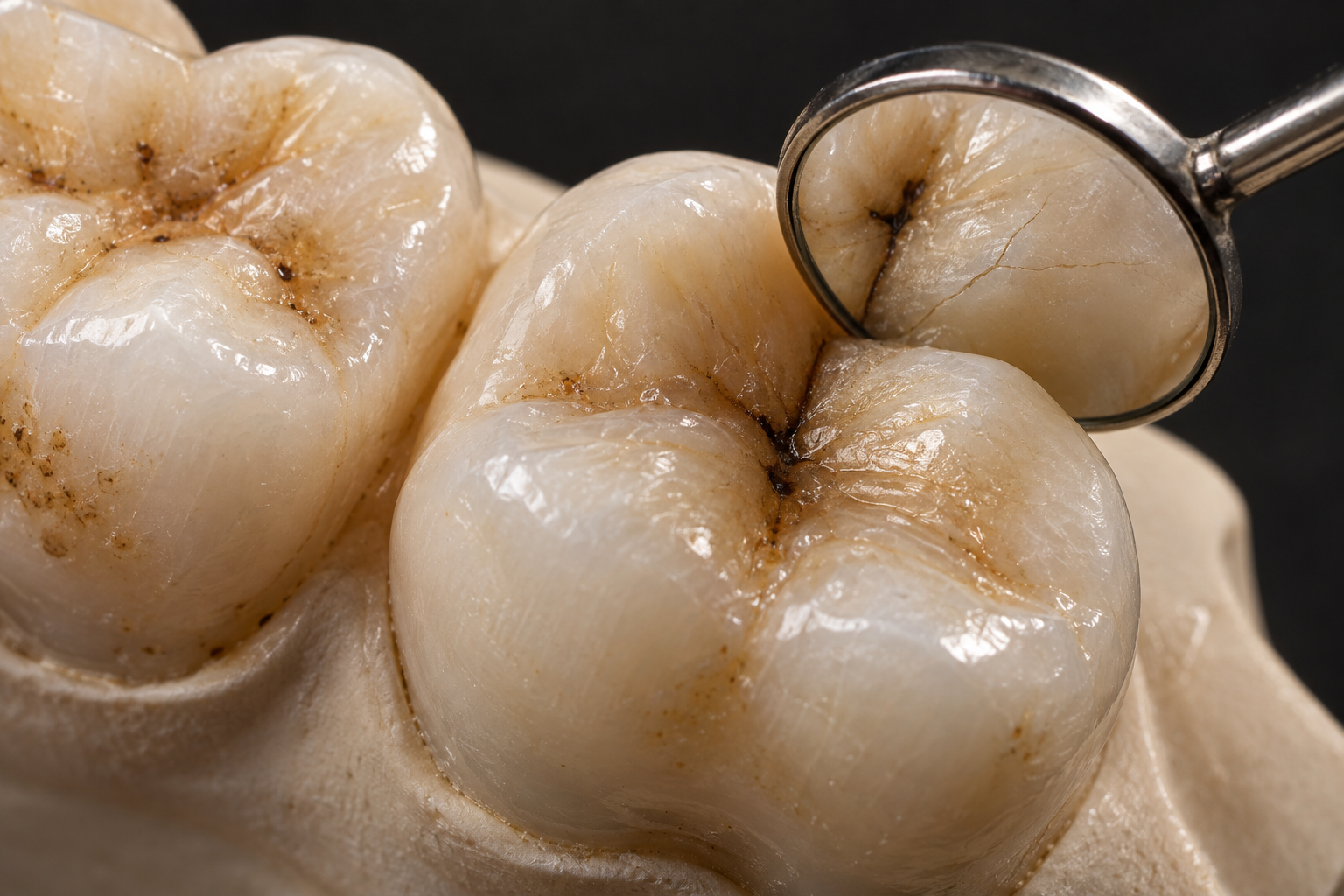
No. Surface pigmentation, internal changes, old restorations and decay may change colour. Appearance needs to be related to texture, activity, depth and context. [4]
Could a white spot be decay?
It may represent an early mineral change, but other enamel conditions also create white areas. Assessment distinguishes origin and activity before recommending an approach.
Does all decay need a restoration?
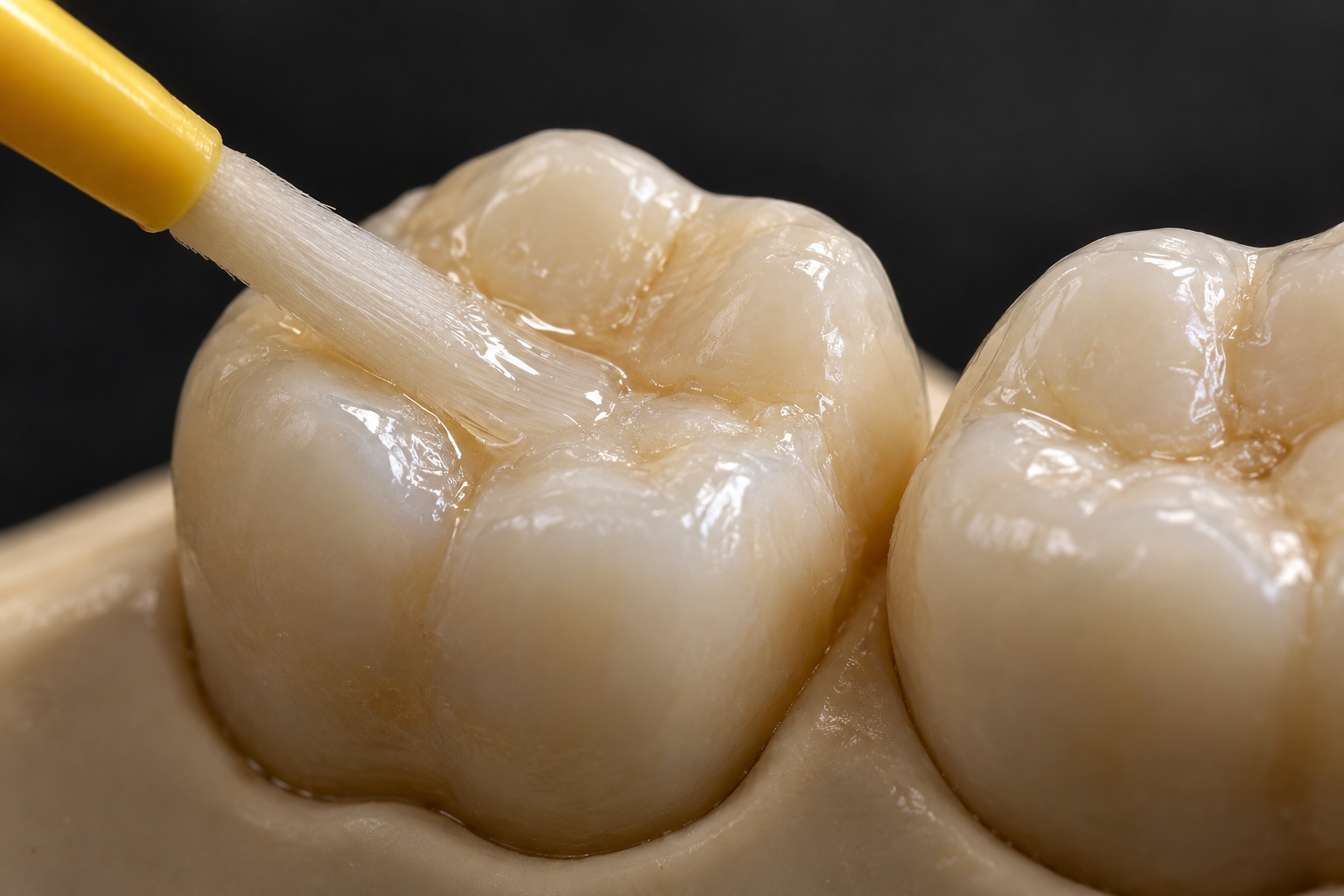
No. Depending on stage and surface, non-restorative approaches can control or arrest lesions. Cavitation, depth and individual risk change the decision. [1] [2]
Does a cracked tooth always hurt?
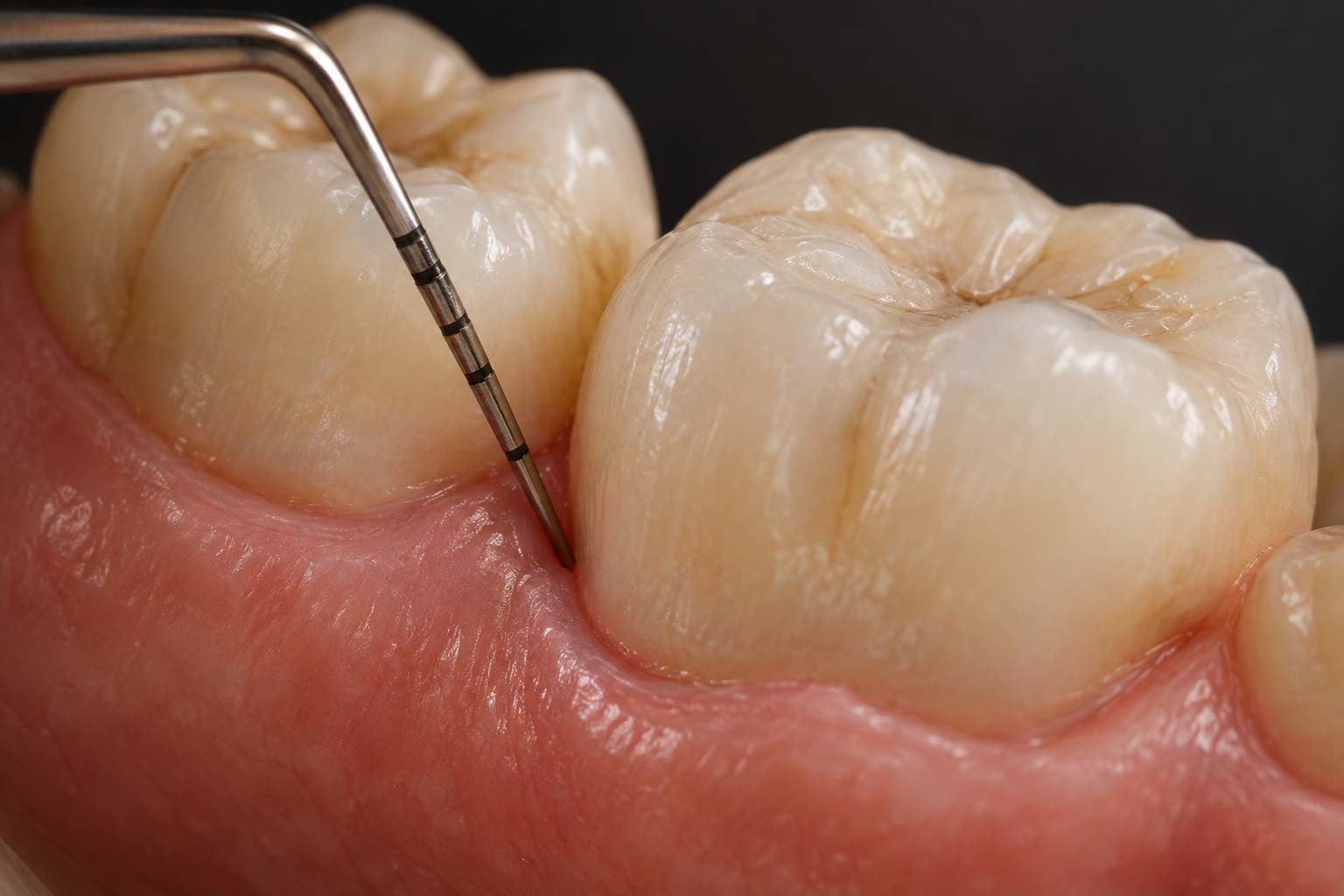
No. Some lines are limited to enamel and cause no pain. Others may cause pain when chewing or thermal sensitivity. Type, location and extent determine their significance. [3]
Does a crack close by itself?
Not like a bone. Treatment seeks to protect the tooth, control symptoms and reduce the chance of progression, but prognosis varies and no protection guarantees absolute success. [3]
Can I whiten before investigating a stain?
It is best to understand the cause and check the health of teeth and restorations first. Pigments from different origins do not respond in the same way.
Is treatment the same in children and adults?
Not necessarily. Tooth type, developmental stage, decay risk, structure and the possibility of follow-up influence the choices.
How long does it take?
There is no single timeframe. Cleaning surface pigment, controlling a decay lesion and caring for a deep crack are different situations. Timing only makes sense after diagnosis.
What happens if tooth decay is not treated?
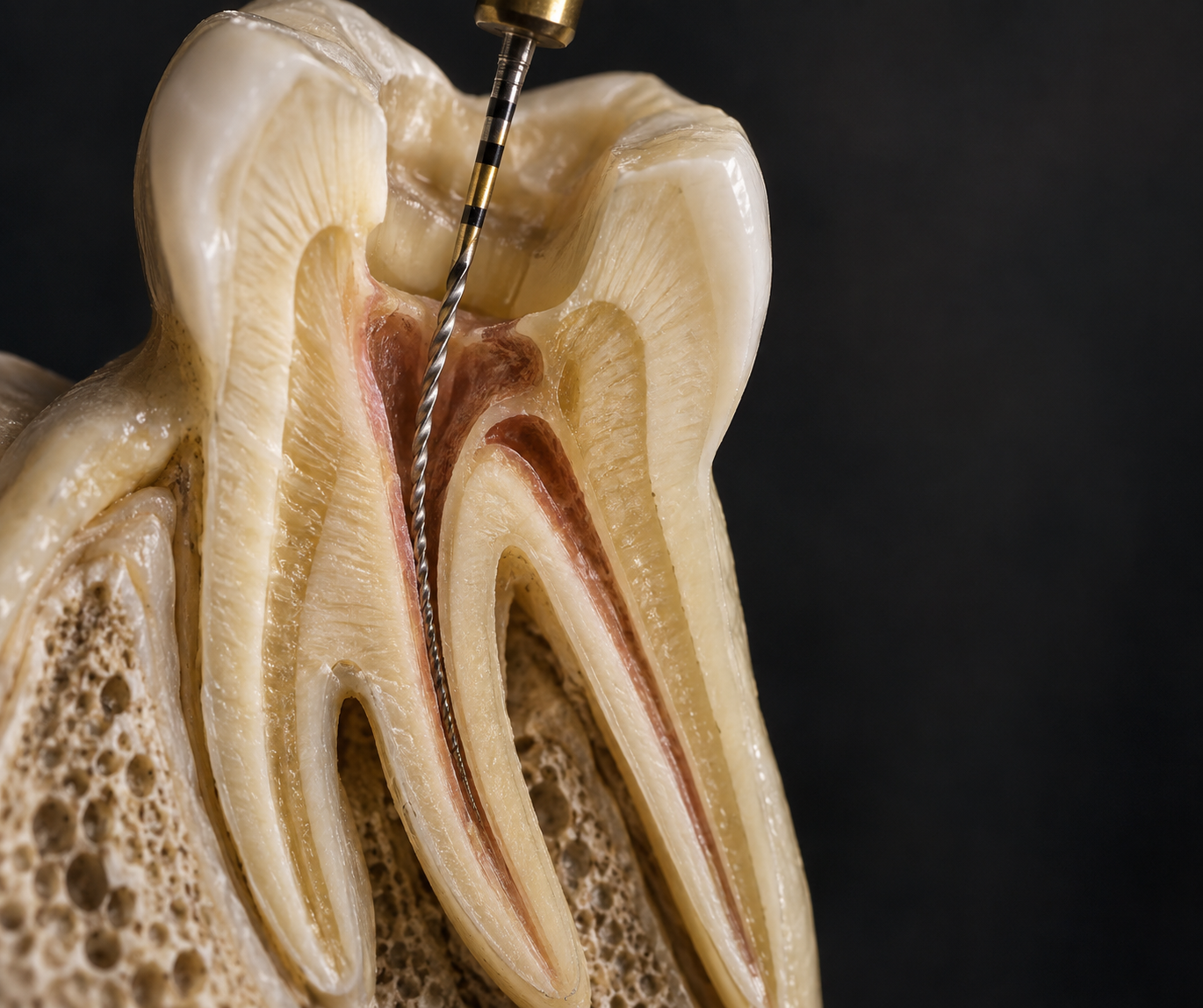
Decay can advance from the enamel to the inner layers of the tooth. Over time, it can cause pain, reach the pulp, lead to infection and result in tooth loss. The speed varies from person to person, and there is not always pain at the start. That is why regular check-ups matter. [5]
What causes tooth decay?
Some plaque bacteria use the sugar in food to produce acids, which remove minerals from the tooth. Frequent sugar intake, insufficient hygiene, little saliva and little contact with fluoride increase the risk. The assessment considers these factors for each person. [5]
Can tooth decay be cured?
At the start, before a cavity forms, decay can be stopped and even reversed with fluoride, saliva and control of plaque and sugar. When structure has already been lost, the tooth does not rebuild itself, and treatment aims to control the lesion and restore what was lost. [2] [1] [5]
How much does treating decay, stains or cracks cost?
The cost depends on the diagnosis, the number of teeth, the material and the type of care indicated. It is presented after the assessment. Treatment can be paid in up to 21 credit card instalments, depending on the treatment plan and current conditions.