↗ PT

Other pages are available in Portuguese

Skip to content

Fluoride application

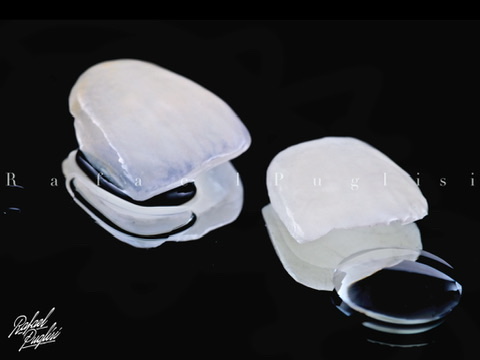
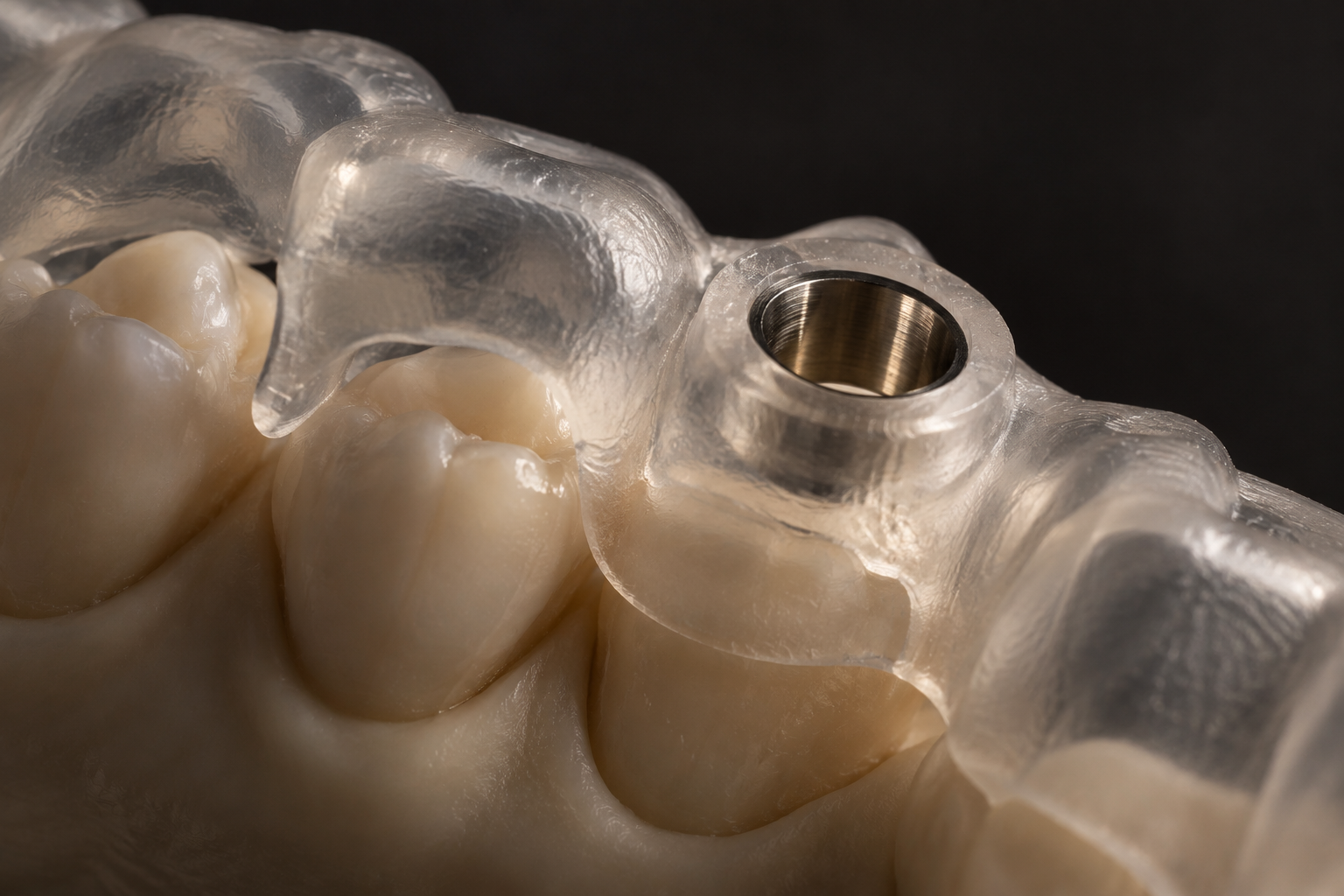
Conceptual artwork of a translucent tooth-like form crossed by mineral particles

Professional fluoride application may support the prevention and control of tooth decay when individual risk calls for it. Children and adults may be suitable, depending on history, saliva, diet, appliances and root exposure.

Book an assessment

At Instituto Rafa Puglisi, assessment guides product selection and the need for application.

Conceptual artwork. It does not represent anatomy, a product or a clinical procedure.

Suitability comes before application.

Age provides context, but does not decide on its own. Examination brings together factors that increase or reduce the chance of new decay lesions. [1][2]

History
Recent lesions and previous treatment change the assessment of risk.
Saliva
Dry mouth, illnesses and some medicines reduce an important natural protection.
Routine
Frequency of sugar intake, hygiene and daily fluoride exposure are part of the decision.
Surfaces
Appliances, exposed roots, restorations and anatomy may create more vulnerable areas.
Age and independence
Children, adults and older people have different needs for supervision and care.
Preferences
Comfort, ability to follow the routine and the person's choices are also part of the plan.

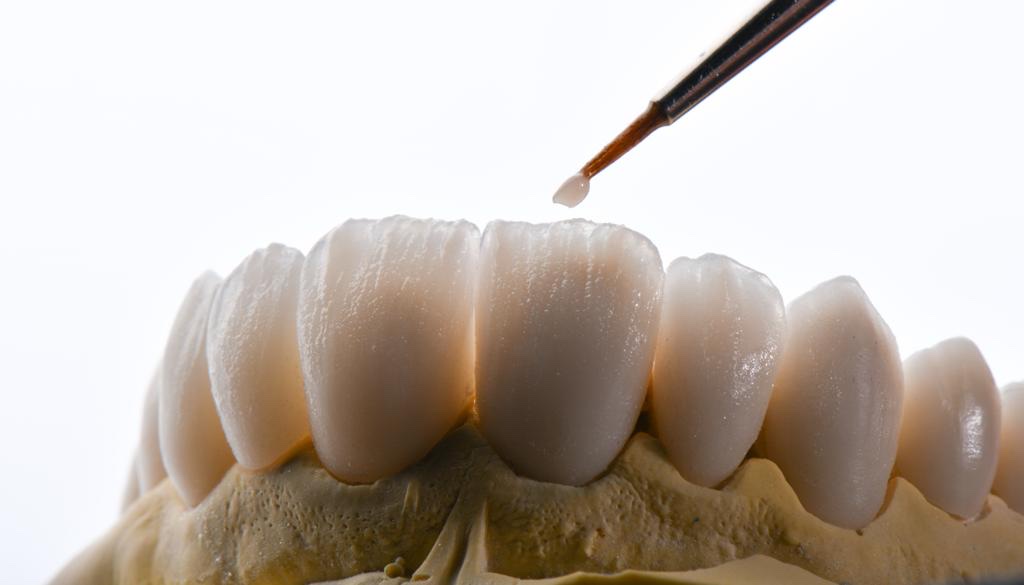
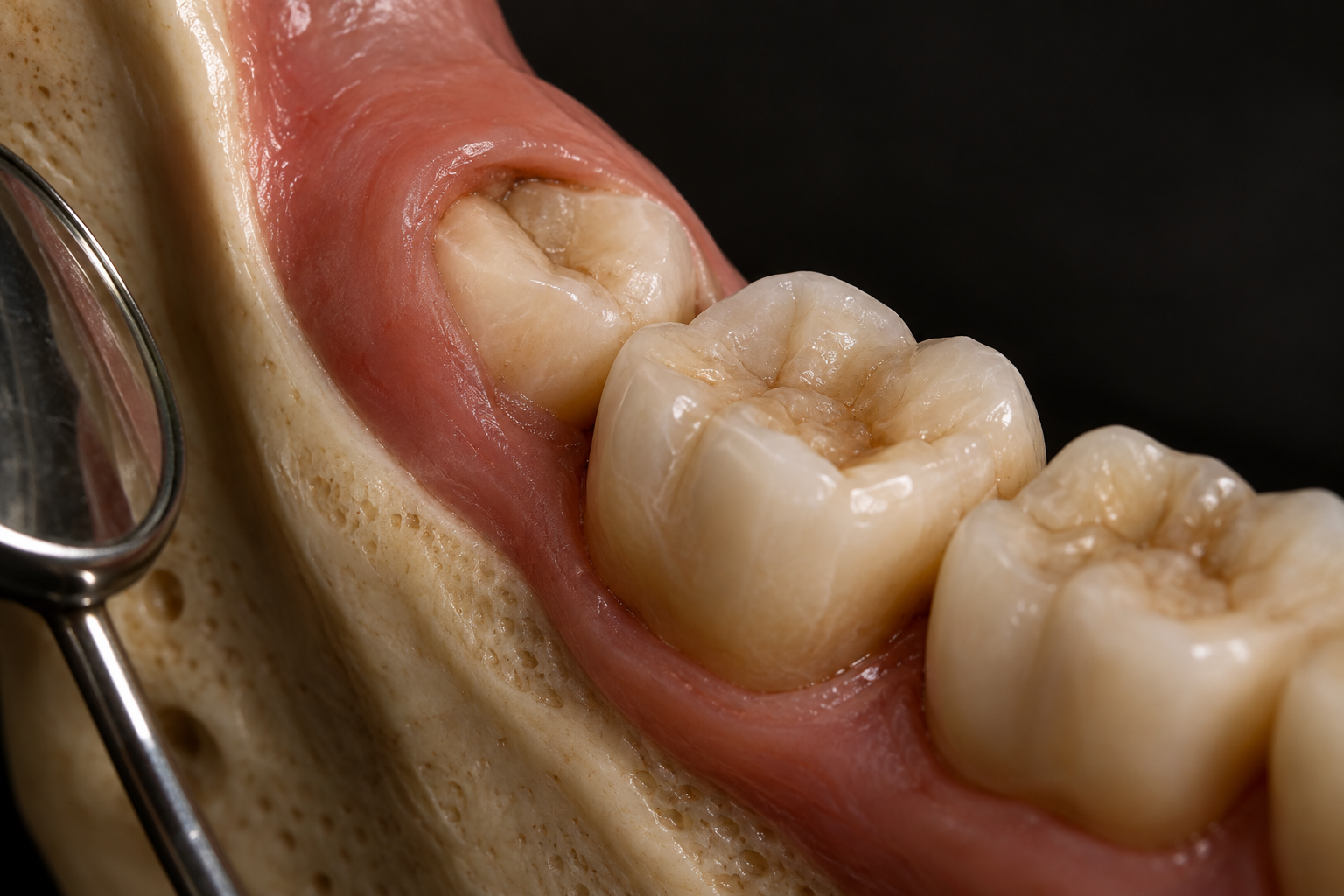
The image is conceptual. Mineral exchange is continuous and does not occur as visible particles.

Conceptual artwork of mineral particles crossing a porcelain surface

How fluoride helps protect teeth

Acids produced after sugar consumption may remove minerals from the surface. Saliva, hygiene and fluoride contribute to their return. When losses repeatedly exceed recovery, decay has room to progress. [2][5]

Demineralisation
Minerals leave the surface during episodes of falling pH.
Remineralisation
Minerals return to the surface when the environment allows recovery.
The role of fluoride
It helps reduce losses and supports mineral recovery, without replacing the rest of care.

Daily use, professional application and decay treatment

Fluoridated water, toothpaste, professional products and lesion treatments have different concentrations, frequencies and goals. Confusing them hinders the decision.

Everyday exposure

Fluoridated water and toothpaste provide frequent contact with the teeth at a lower concentration. They form the population-level and home-care basis of prevention.

Frequent contact. A daily routine.

Professional application

Varnishes and gels have higher concentrations and are used less frequently. Product, quantity and interval depend on assessment. [3]

Indicated support. Controlled use.

Managing a lesion

When decay is already present, diagnosis determines whether non-restorative measures, a restoration or another treatment are needed. Applying fluoride does not conclude that investigation. [4]

Diagnosis first. Appropriate treatment.

Children and adults may need it. For different reasons.

Suitability follows life stage and actual risk, rather than an automatic calendar.

Children

Erupting teeth, hygiene difficulties, a diet with frequent sugar, appliances and a history of decay may increase the need for additional support.

For children under six, fluoride varnish is the professional form recommended by the guidelines consulted. [2][3]

Adults

Exposed roots, dry mouth, medical treatment, appliances, extensive rehabilitations and new decay lesions may change the preventive plan.

Adulthood does not eliminate risk. What matters is the combination of surface, oral environment and routine.

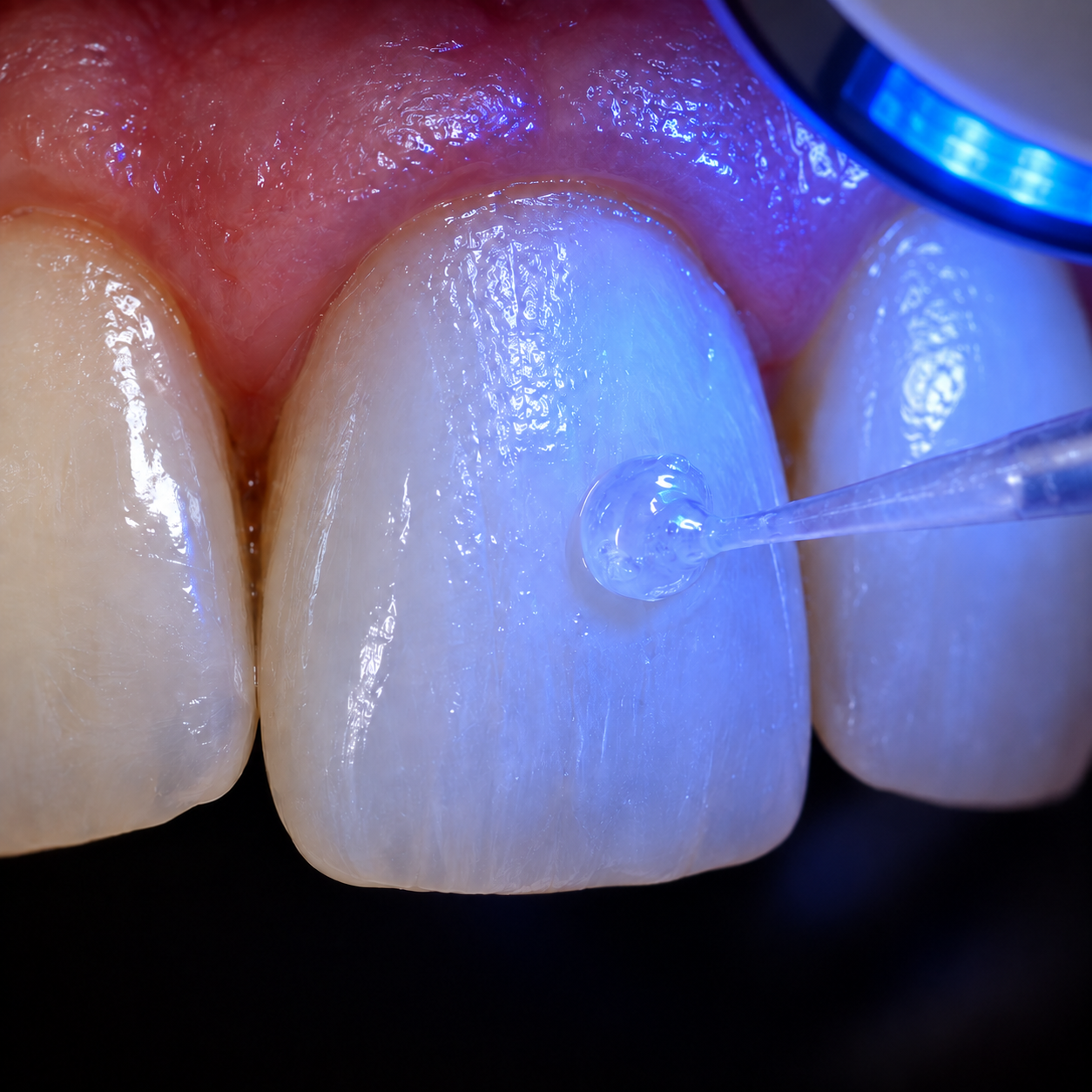
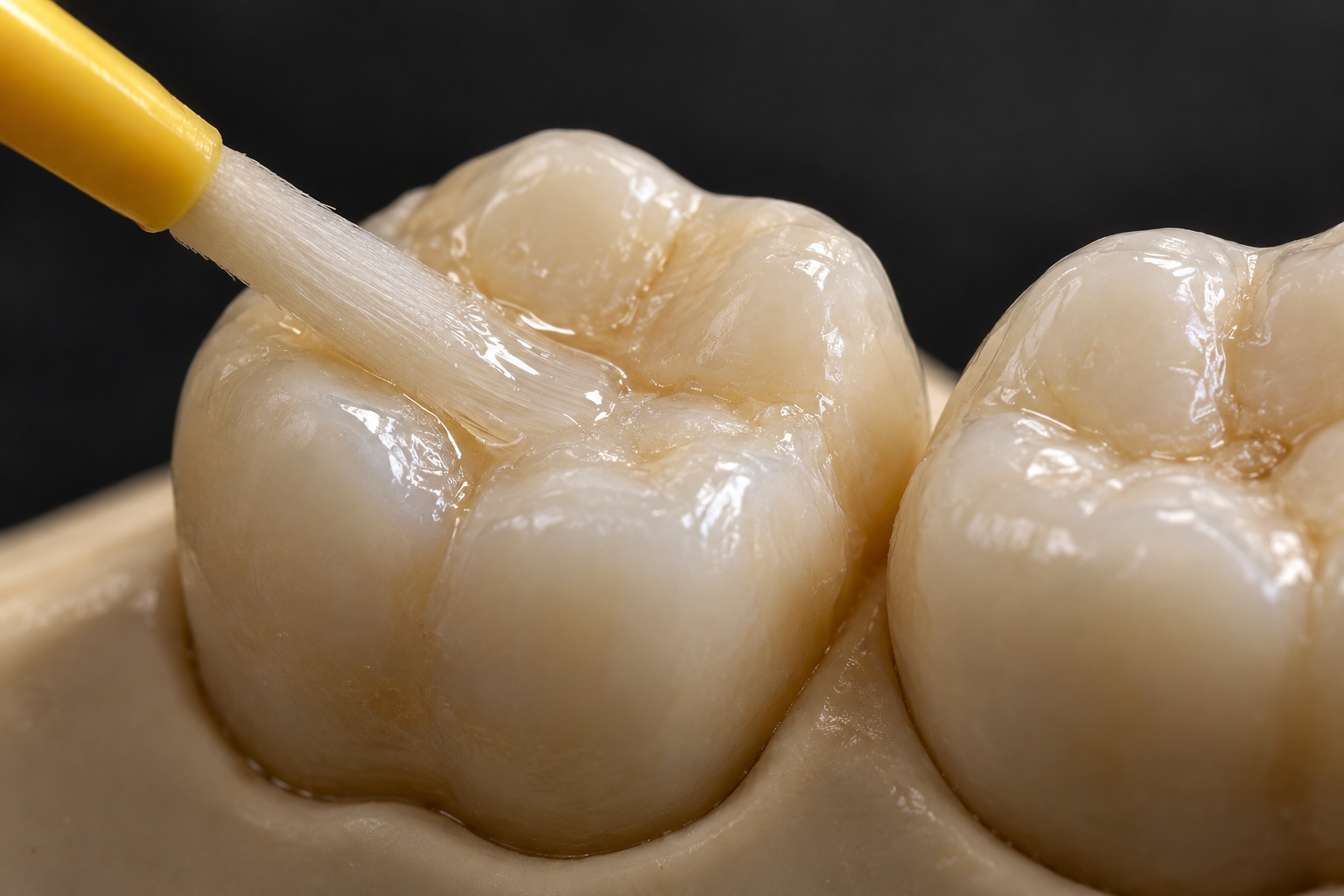
The image is conceptual. The actual instrument, product and technique are determined at the consultation.

Conceptual artwork of a microapplicator depositing a small amount of material on a porcelain tooth-like form

How professional application is carried out

The procedure usually uses a small amount of material on selected areas. Preparation, product and instructions vary with age, risk and goal.

  1. Assess

    Identify risk, priority surfaces, fluoride sources and treatment needs.

  2. Prepare

    Arrange access, moisture control and comfort according to the material selected.

  3. Apply

    Distribute a small quantity on the indicated areas, without turning the procedure into a universal 'bath'.

  4. Provide guidance

    Explain texture, eating, hygiene and follow-up according to the product actually used.

Afterwards, guidance depends on what was applied.

Varnish, gel and other products do not leave the same sensation or call for exactly the same routine. Instructions from the consultation matter more than a rule found out of context.

Temporary texture
Some varnishes leave a noticeable film for a few hours. This does not mean a permanent layer.
Taste or appearance
The product may slightly change taste, shine or sensation until it is removed by the hygiene routine advised.
Eating and hygiene
When to eat, drink or brush varies with the material. Follow the recommendation received.
Follow-up
Another application only makes sense if reassessment shows that risk and benefit are still present.

Additional support is not a substitute.

Professional application alone does not make up for inadequate hygiene, frequent sugar exposure, dry mouth without investigation or a lesion that needs treatment.

  • Fluoride toothpaste and daily cleaning
  • An understandable eating routine
  • Investigation of dry mouth and medical factors
  • Treatment of already diagnosed lesions

Frequency cannot be reduced to a fixed number.

People at high risk may benefit from periodic professional applications, but the interval depends on the product, age, history and response to the preventive plan. Guidelines and clinical judgement need to take individual needs and preferences into account. [2][3]

Related subjects, different decisions.

Fluoride prevents and helps control decay. Mineralised biofilm and periodontal disease require different assessments.

Frequently asked questions

What is professional fluoride application used for?

It may reinforce prevention and control of decay when individual risk justifies more concentrated professional exposure.

Does every child need fluoride applied at the practice?

The decision considers the teeth present, decay history, diet, hygiene, water, toothpaste, ability to spit and other fluoride sources. Age alone does not establish suitability.

Can adults receive an application too?

Yes. Dry mouth, exposed roots, appliances, new lesions, hygiene difficulties and some medical treatments may increase the need.

Is professional application the same as toothpaste?

No. Professional products have different concentrations, methods of use and frequencies. Fluoride toothpaste remains central to the daily routine.

Is fluoride always applied with cleaning?

No. Removing biofilm or calculus and recommending fluoride answer different clinical questions, even when they happen at the same appointment.

Can I eat or brush straight afterwards?

It depends on the product. After varnish, the usual advice is not to eat or drink for at least half an hour, preferably to wait a few hours, and to choose soft foods for the rest of the day. When to brush and how to use other products are explained at the appointment. [6]

How often do I need an application?

There is no correct interval for everyone. Risk, age, product, fluoride sources and response to care guide frequency.

Does topical application cause fluorosis?

Fluorosis develops while teeth are forming when excessive fluoride is swallowed. Teeth that have already erupted do not develop fluorosis, but young children need the right product, quantity and supervision. [4]

Does fluoride application whiten teeth?

No. Fluoride strengthens enamel and helps prevent decay, but it does not change the colour of the teeth. Changing colour is a different treatment, assessed in teeth whitening. [1]

From what age does a child use fluoride?

Fluoride toothpaste becomes part of the routine from the first tooth, in an amount smaller than a grain of rice, with brushing done by an adult. Professional application does not depend on age alone: it is recommended when the risk of decay calls for it. [7]

How much does fluoride application cost?

The cost depends on the product and on how many applications the plan includes. It is presented after the assessment. Treatment can be paid in up to 21 credit card instalments, depending on the treatment plan and current conditions.

Beyond aesthetics, we are a multidisciplinary clinic.

Explore options

Care takes place here

Across more than 400 m², seven consulting rooms and an integrated in-house laboratory bring together different stages of care at the same address. Discover the Institute.

A history in dentistry since 1923 connects generations with care today. Explore the Institute's history.

Documentary portrait of Dr Silvana Puglisi

Dr Silvana Puglisi is the dentist responsible for technical oversight. Meet our professionals who continue to provide care and carry on the work of LAB Puglisi.

Spacious reception at the Institute with artwork by Kobra
Lounge with green armchairs, artwork and a garden visible through the glass doors
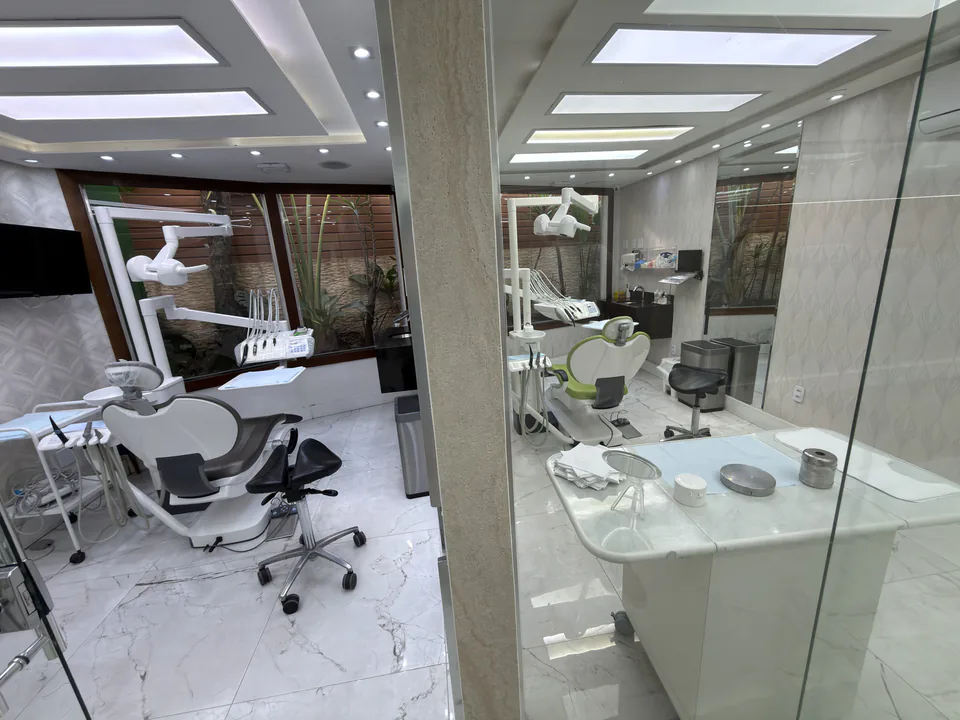
Two dental consulting rooms connected by a glass partition
Curved corridor with wood panelling, amber lighting and a door at the far end

Before choosing the product, we understand why risk has increased.

Assessment organises daily prevention, professional application and treatment so that each resource has its proper place.

Book an assessment

Bibliographic references

These sources support the information on prevention and fluoride care. They do not replace individual assessment.

Original Portuguese content reviewed by Dr Silvana Puglisi, dental surgeon, CRO 33.773, technical director, on .

  1. Brasil. Ministério da Saúde. Guia de recomendações para o uso de fluoretos no Brasil. 2nd ed. Brasília: Ministério da Saúde, 2026. ISBN 978-65-5993-980-0. Official PDF.
  2. American Academy of Pediatric Dentistry. Fluoride Therapy. The Reference Manual of Pediatric Dentistry. Chicago, IL: AAPD, 2025:372–378. Official guideline.
  3. American Dental Association. Professionally-Applied and Prescription-Strength, Home-Use Topical Fluoride Agents for Caries Prevention Clinical Practice Guideline. 2013. Official guideline.
  4. American Dental Association. Fluoride: Topical and Systemic Supplements. Oral Health Topics. Official source.
  5. Weyant RJ, Tracy SL, Anselmo TT, et al. Topical fluoride for caries prevention: executive summary of the updated clinical recommendations and supporting systematic review. J Am Dent Assoc. 2013, 144(11):1279–1291. PMID 24177407. DOI 10.14219/jada.archive.2013.0057.
  6. Royal Devon University Healthcare NHS Foundation Trust. Fluoride varnish: information for parents and carers. Leaflet 844, version 1. 2023. Official document.
  7. Brasil. Ministério da Saúde. Saúde bucal na primeira infância. Official source.

Further reading

  1. Fluoridation in Water. American Dental Association. ADA (2024). . Official source
  2. Fluoride varnishes for preventing dental caries. Marinho VC et al.. Cochrane Database Syst Rev (2013). (DOI: 10.1002/14651858.CD002279.pub2). DOI 10.1002/14651858.CD002279.pub2

Privacy preferences

Your choice is valid for 180 days in this browser. You can change it under “Privacy”.

Forms may use Google reCAPTCHA to prevent abuse. Read the Privacy Policy